Scientists have amassed genome data for dozens of “magic mushroom” isolates and cultivars, with the goal to learn more about how their domestication and cultivation has changed them. The findings, published December 4 in the journal Current Biology, may point the way to the production of intriguing new cultivars, say the researchers.
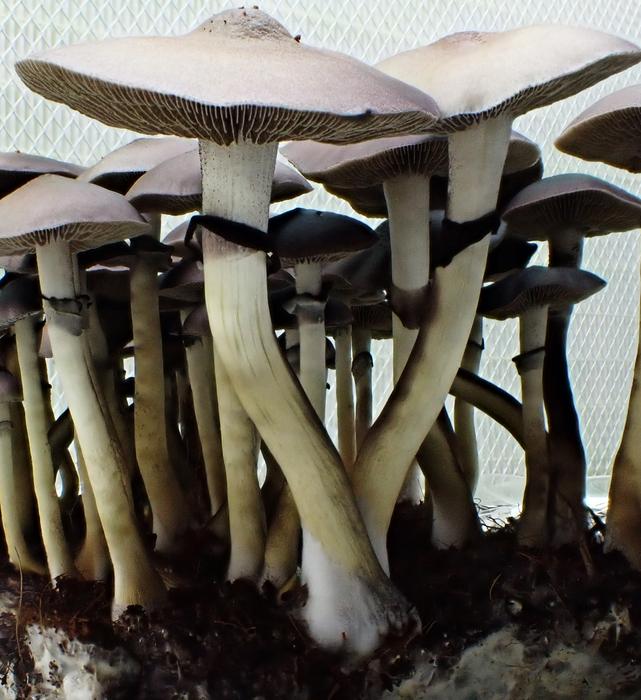
Credit: Alistair McTaggart
Scientists have amassed genome data for dozens of “magic mushroom” isolates and cultivars, with the goal to learn more about how their domestication and cultivation has changed them. The findings, published December 4 in the journal Current Biology, may point the way to the production of intriguing new cultivars, say the researchers.
The study shows that commercial cultivars of the mushroom Psilocybe cubensis lack genetic diversity because of their domestication for human use. Meanwhile, a naturalized population of mushrooms in Australia has maintained much more diversity, they show, including unique gene variants controlling the production of the mushroom’s active ingredient, psilocybin.
“What was surprising was the extreme homozygosity of some cultivars of magic mushroom,” says Alistair McTaggart of The University of Queensland, Australia. “Some of these cultivars have been nearly stripped of any diversity except at their genes controlling sexual reproduction.”
“Whether this happened intentionally, by targeted inbreeding to fix traits over the last half century, or unintentionally through a lack of diversity to cross against is hard to know,” he says. “The trailblazers who domesticated magic mushrooms have set the stage for how we can advance cultivation and innovate with shrooms as we improve our understanding of psilocybin and its benefits.”
McTaggart says that research into these mushrooms has been driven by an underground community of people interested in magic mushrooms, many of whom are co-authors on the new study. With no financial support for the effort, the wider community of people interested in magic mushrooms collected the cultivars and isolates under study, sending samples at their own expense and risk. Ultimately, the researchers sequenced and assembled DNA data for more than 100 varieties of magic mushrooms.
As part of the study, the team sequenced genomes from 38 isolates from Australia and compared them to 86 commercially available cultivars. They wanted to find out whether the mushrooms were introduced to Australia and how domestication has changed those that are commercially available.
Their analyses showed that the Australian mushrooms are naturalized, having bounced back to a population size large enough to maintain genetic diversity after their initial introduction to the country. By comparison, commercial cultivars are sorely lacking in diversity across their genomes. The findings suggest that some of the unique gene variants in Australia may allow for differences in the synthesis of psilocybin and related compounds.
The data they’ve generated on mating compatibility and diversity at the genes controlling production of psilocybin “will advance breeding for ‘designer shrooms,’ in which heterozygosity of psilocybin alleles may unlock variety in the production of psychedelic tryptamines,” McTaggart says. In fact, he reports, their start-up company, Funky Fungus, has already started to translate the findings for developing designer cultivars.
McTaggart says these developments may have significance for the use of psilocybin as a natural compound, with potential benefits for treating mental health disorders.
“Magic mushrooms are the cheapest source of psilocybin and may fill a niche in natural drug development,” he said. “There is yet more to understand about how magic mushrooms produce other compounds that may impact a psilocybin experience, and this will be an exciting area of research to watch unfold.”
###
The researchers received support from the University of Queensland RSP Fellowships. Alistair McTaggart and co-author Chris Appleyard are owners of Funky Fungus, a company that grows magic mushrooms to produce medicinal psilocybin.
Current Biology, McTaggart et al.: “Domestication through clandestine cultivation constrained genetic diversity in magic mushrooms relative to naturalized populations.” https://www.cell.com/current-biology/fulltext/S0960-9822(23)01460-4
Current Biology (@CurrentBiology), published by Cell Press, is a bimonthly journal that features papers across all areas of biology. Current Biology strives to foster communication across fields of biology, both by publishing important findings of general interest and through highly accessible front matter for non-specialists. Visit: http://www.cell.com/current-biology. To receive Cell Press media alerts, contact [email protected].
Journal
Current Biology
DOI
10.1016/j.cub.2023.10.059
Method of Research
Observational study
Subject of Research
Not applicable
Article Title
Domestication through clandestine cultivation constrained genetic diversity in magic mushrooms relative to naturalized populations
Article Publication Date
4-Dec-2023
COI Statement
Authors Alistair McTaggart and Chris Appleyard are owners of Funky Fungus, a company that grows magic mushrooms to produce medicinal psilocybin.