BLOOMINGTON, Ind. — Similar to a burglar breaking a window to get into a house, Indiana University researchers have discovered a previously unknown process by which pathogens enter a cell with physical force, breaching the body’s immune defenses that prevent infection.
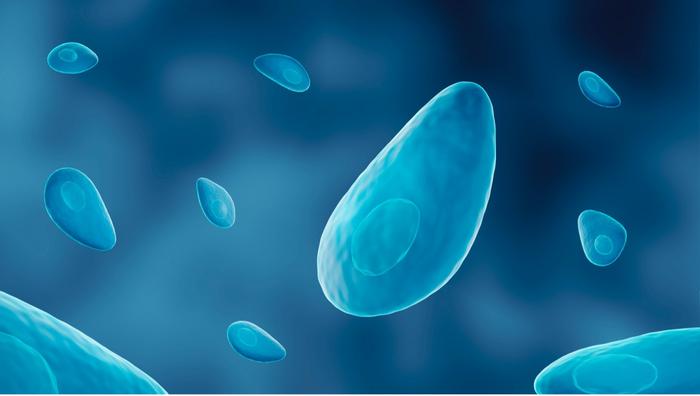
Credit: Illustration courtesy the Science Photo Library
BLOOMINGTON, Ind. — Similar to a burglar breaking a window to get into a house, Indiana University researchers have discovered a previously unknown process by which pathogens enter a cell with physical force, breaching the body’s immune defenses that prevent infection.
The work, published in the journal Proceedings of the National Academy of Sciences, introduces a potential game-changer in the fight against intracellular pathogens responsible for causing devastating infectious diseases, such as tuberculosis, malaria and chlamydia. These diseases are notoriously difficult to treat because the pathogens are protected inside host cells.
“Using the parasite Toxoplasma as our representative pathogen, our work shows that some intracellular pathogens can apply physical forces during their entry into host cells, which then allow the pathogens to evade degradation and to survive intracellularly,” said study lead author Yan Yu, professor in the College of Arts and Sciences’ Department of Chemistry at IU Bloomington. “This work suggests that targeting the motility of pathogens may be a new way to combat infection inside cells.”
Normally, when an invading pathogen encounters a phagocyte — a type of white blood cell responsible for destroying bacteria, viruses and other types of foreign particles — it is caught and ingested by the phagocyte. For pathogens that escape this process, it is commonly thought that those pathogens must release a “secret arsenal” to “paralyze” the degradative machineries in the cell.
However, Yu’s study shows that this common belief is not true. She and collaborators have found that pathogens can avoid being ingested within the immune cell by exerting a “propulsive force.” With this forceful entry, the pathogens are diverted into vacuoles that lack the ability to break down these infiltrators. A vacuole is a structure reserved for storage and digestion within a cell.
To conduct the research, Yu and colleagues introduced the disease-causing parasite Toxoplasma into mouse-derived cells, observing their behaviors through a fluorescence microscope. These live parasites forcefully entered and thrived within immune cells.
The biggest challenge then was to determine whether the live parasite escapes the immune defense with unknown chemical substances, or simply through force. To tackle this question, Yu and her team took an inventive approach: They created inactivated parasites that cannot exert force or create chemical substances. Unlike live parasites, these “zombie” parasites were swiftly degraded in the cell.
The researchers then employed magnetic tweezers to push the inactivated parasite into the immune cell to mimic the forceful entry observed in live Toxoplasma. The inactivated parasite, now subjected to simulated forceful entry, evaded degradation, akin to its live counterpart. This suggests that the force of entry, not chemicals, explains the pathogen’s survival, Yu said.
To manipulate the movement of the parasite in the second experiment, the researchers had to develop the “tweezer system” with magnetic nanoparticles. They also collaborated with a team at the University of Tennessee to develop computational models to simulate the behavior.
In addition, the researchers conducted the same experiments using yeast to confirm that the mechanism observed could also be found in other infectious agents, not just Toxoplasma.
“This study elucidates the contribution of physical forces in immune evasion and underscores the importance of targeting pathogen movement to combat intracellular infections,” Yu said. “We’re hopeful this work may ultimately contribute to new efforts to fight a variety of infections that are harmful to human health.”
Other IU researchers on the study were first author Zihan Zhang, as well as Jin Ou, Yanqi Yu and Qiong Zhou. Additional co-authors are Thomas K. Gaetjens and Steven M. Abel at the University of Tennessee. This work was supported by the National Institutes of Health and the National Science Foundation.
Journal
Proceedings of the National Academy of Sciences
DOI
10.1073/pnas.2306788120
Method of Research
Experimental study
Subject of Research
Cells
Article Title
Propulsive cell entry diverts pathogens from immune degradation by remodeling the phagocytic synapse
Article Publication Date
30-Nov-2023
COI Statement
The authors declare no conflict of interest.