• HOME
  • NEWS
  • EXPLORE
    • CAREER
      • Companies
      • Jobs
    • EVENTS
    • iGEM
      • News
      • Team
    • PHOTOS
    • VIDEO
    • WIKI
  • BLOG
  • COMMUNITY
    • FACEBOOK
    • INSTAGRAM
    • TWITTER
Wednesday, April 1, 2026
BIOENGINEER.ORG
No Result
View All Result
  • Login
  • HOME
  • NEWS
  • EXPLORE
    • CAREER
      • Companies
      • Jobs
        • Lecturer
        • PhD Studentship
        • Postdoc
        • Research Assistant
    • EVENTS
    • iGEM
      • News
      • Team
    • PHOTOS
    • VIDEO
    • WIKI
  • BLOG
  • COMMUNITY
    • FACEBOOK
    • INSTAGRAM
    • TWITTER
  • HOME
  • NEWS
  • EXPLORE
    • CAREER
      • Companies
      • Jobs
        • Lecturer
        • PhD Studentship
        • Postdoc
        • Research Assistant
    • EVENTS
    • iGEM
      • News
      • Team
    • PHOTOS
    • VIDEO
    • WIKI
  • BLOG
  • COMMUNITY
    • FACEBOOK
    • INSTAGRAM
    • TWITTER
No Result
View All Result
Bioengineer.org
No Result
View All Result
Home NEWS Science News Biology

Social media helping to protect biodiversity

Bioengineer by Bioengineer
November 17, 2023
in Biology
Reading Time: 2 mins read
0
Red-base jezebel
Share on FacebookShare on TwitterShare on LinkedinShare on RedditShare on Telegram

Nature photographers posting to social media are helping improve biodiversity conservation mapping in South Asia, and the method could go global.
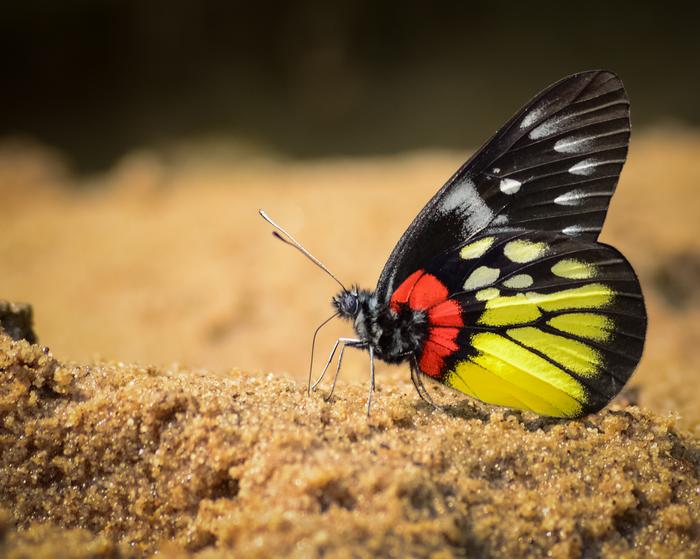
Red-base jezebel

Credit: Dr Shawan Chowdhury

Nature photographers posting to social media are helping improve biodiversity conservation mapping in South Asia, and the method could go global.

Dr Shawan Chowdhury from UQ’s School of the Environment led an international team which scoured images on Facebook nature photography groups in Bangladesh, to add to the existing Global Biodiversity Information Facility database.

“We found 44,000 photos of almost 1,000 animal species, including many birds and insects, 288 of which are considered threatened in Bangladesh,” Dr Chowdhury said.

“This has vastly improved habitat mapping across the country where only 4.6 per cent of land is designated as protected.

“We identified many more high-priority areas for conservation, spanning 4,000 square kilometres for birds and 10,000 square kilometres for butterflies.

“We’d been missing out on the distribution data of hundreds of endangered species in Bangladesh so this is a big result.

“This could change the way scientists gather biodiversity information in the future, especially in regions where there is a lack of reliable and up-to-date structured monitoring to inform conservation efforts.”

In Australia, social media posts are being used to track pest species.

“A South Asian butterfly, called the tawny coster, entered Australia in 2012,” Dr Chowdhury said.

“We’ve searched for additional locality records from Facebook to analyse the movement, ecology and colonisation status of this species and shown that it expanded at about 135 kilometres per year in Australia between 2012 and 2020.”

Co-author Professor Richard Fuller from UQ said while Facebook had been helpful, there are some big opportunities for social media companies.

“There is currently no automated way to collect this information, and it was a very arduous task for us to do it manually.” Professor Fuller said.

“We hope our research can inspire the development of technology such as an app that transfers biodiversity data posted on Facebook directly to the global biodiversity databases.

“This way, conservation scientists can easily access that data and use it.”

The research is published in Bioscience, One Earth, and Conservation Biology.

Dr Chowdhury is also a researcher at the German Centre for Integrative Biodiversity Research (iDiv) Halle-Jena-Leipzig, the Helmholtz Centre for Environmental Research and the Friedrich Schiller University Jena.


Journal

One Earth

DOI

10.1016/j.oneear.2023.08.025

Article Publication Date

26-Sep-2023

Share12Tweet8Share2ShareShareShare2

Related Posts

Do Your Genes Influence How Lifestyle Choices Affect Aging?

Do Your Genes Influence How Lifestyle Choices Affect Aging?

April 1, 2026
Combining Single-Cell Multiomics Unlocks Precise Identification of Rare Cell Types and States

Combining Single-Cell Multiomics Unlocks Precise Identification of Rare Cell Types and States

March 31, 2026

Genetically Engineered Marmosets Pave the Way for Advancements in Human Deafness Research

March 31, 2026

How Great Hammerhead Sharks Outsmart Ocean Temperature Swings: Insights from FIU Researchers

March 31, 2026

POPULAR NEWS

  • blank

    Revolutionary AI Model Enhances Precision in Detecting Food Contamination

    96 shares
    Share 38 Tweet 24
  • Imagine a Social Media Feed That Challenges Your Views Instead of Reinforcing Them

    1006 shares
    Share 398 Tweet 249
  • Promising Outcomes from First Clinical Trials of Gene Regulation in Epilepsy

    51 shares
    Share 20 Tweet 13
  • Popular Anti-Aging Compound Linked to Damage in Corpus Callosum, Study Finds

    43 shares
    Share 17 Tweet 11

About

We bring you the latest biotechnology news from best research centers and universities around the world. Check our website.

Follow us

Recent News

Unveiling the Biological Pathways Linking Pesticides to Cancer Risk: New Study Sheds Light on Environmental Health Impacts

Inequities in Family Engagement Within the NICU

FGFR2b Links to Biomarkers, Tumor Diversity, Survival

Subscribe to Blog via Email

Success! An email was just sent to confirm your subscription. Please find the email now and click 'Confirm' to start subscribing.

Join 78 other subscribers
  • Contact Us

Bioengineer.org © Copyright 2023 All Rights Reserved.

Welcome Back!

Login to your account below

Forgotten Password?

Retrieve your password

Please enter your username or email address to reset your password.

Log In
No Result
View All Result
  • Homepages
    • Home Page 1
    • Home Page 2
  • News
  • National
  • Business
  • Health
  • Lifestyle
  • Science

Bioengineer.org © Copyright 2023 All Rights Reserved.