A new study involving University of Portsmouth researchers has uncovered key molecular defects underlying a rare developmental brain condition in children.
Credit: UCL Queen Square Institute of Neurology
A new study involving University of Portsmouth researchers has uncovered key molecular defects underlying a rare developmental brain condition in children.
The research team, led by Dr Reza Maroofian, Dr Rauan Kaiyrzhanov and Professor Henry Houlden at University College London Queen Square Institute of Neurology, investigated the role of a specific regulatory protein in the brain known as acyl-CoA-binding domain-containing protein 6, or ACBD6. Up until now, the implication of defects in this protein have been unknown.
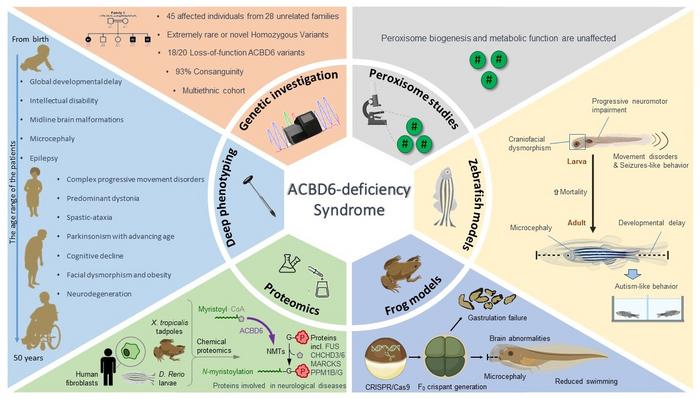
This study, published in the journal Brain, uncovered the role of malfunctioning ACBD6 in an ultra-rare condition in children, known as Autosomal Recessive ACBD6-related disorder. This is characterised by delays in the development of cognitive and motor skills, and is associated with dystonia and parkinsonism.
Co-lead author Dr Rauan Kaiyrzhanov said: “The direct and immediate impact of this study is by introducing these genetic disorders to the medical community will help to diagnose the families affected by this condition worldwide. However, the long-term and wider effect of this study is that this ultra-rare condition can help us better understand the biology of these conditions in humans and advance our knowledge of biological mechanisms linked to much more common neurodegenerative movement disorders, like Parkinson’s disease and dystonia.”
This discovery was made possible through the use of advanced genomic technologies and extensive global data sharing, with 89 clinicians and scientists from 72 institutes involved worldwide.
Co-author Professor Matt Guile, Professor of Developmental Genetics at the University of Portsmouth said: “We are delighted to contribute to this important piece of new research which will help improve the lives of patients and their families. This is part of our wider work to discover how Xenopus tadpoles can be used to support the diagnosis of rare genetic diseases.”
The understanding of this rare disorder began with the study of a complex neurological disorder affecting three siblings from a single family, who had mutations in the ACBD6 gene. Thanks to extensive international collaboration over the following years, more affected families with similar genetic disorders were identified, and gradually a resemblance began to emerge among the distinct clinical and radiological features of those affected.
The researchers investigated 45 affected individuals from 28 unrelated families and extended their study to include animal models. This multifaceted approach uncovered evidence highlighting the essential role of ACBD6 in maintaining a healthy nervous system.
Co-lead author Dr Reza Maroofian said: “This study underscores the untapped power of systematically investigating a relatively large number of well-defined individuals affected by ultra-rare disorders and highlights how much we can learn about human biology and pathology from these studies which are currently severely neglected and under-funded.
“This international endeavour stands as a testament to the relentless dedication and collective expertise of the global scientific community and highlights the critical importance of not marginalising ultra-rare conditions.”
Journal
Brain
DOI
10.1093/brain/awad380
Method of Research
Experimental study
Subject of Research
Animals
Article Title
Bi-allelic ACBD6 variants lead to a neurodevelopmental syndrome with progressive and complex movement disorders
Article Publication Date
10-Nov-2023