Every tree species has its story. Unraveling all 73,000 of them is a significant undertaking for science, in no small part because a considerable proportion of tree biodiversity is tropical, rare, remote and subject to the ravages of deforestation. And an estimated 9,200 tree species have yet to be discovered.
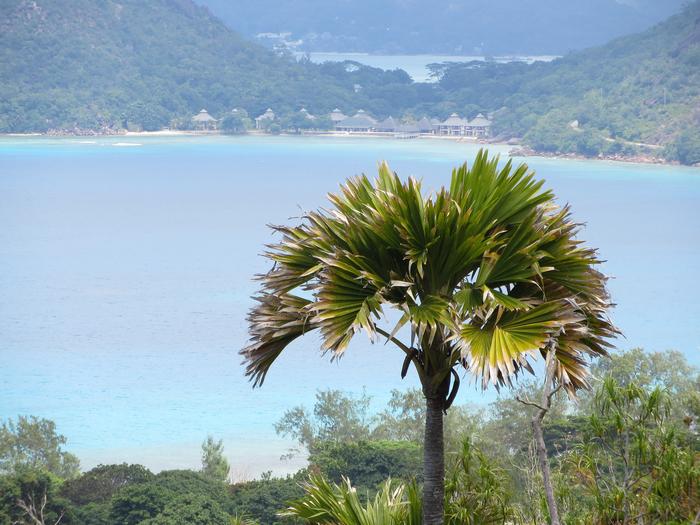
Credit: Chris Kettle/Alliance Bioversity-CIAT
Every tree species has its story. Unraveling all 73,000 of them is a significant undertaking for science, in no small part because a considerable proportion of tree biodiversity is tropical, rare, remote and subject to the ravages of deforestation. And an estimated 9,200 tree species have yet to be discovered.
Even trees well-known to science have mysteries. One is the Seychelles’ endangered coco de mer, or sea coconut palm tree, which is now relegated to parts of two small Indian Ocean islands and in decline. Only some 8,200 individuals remain.
What Lodoicea madivica lacks in range it makes up for in size, which frankly made it very hard for scientists – or anyone – to miss. Its seed can weigh up to 18kg. (Some reports say even heavier.) The seed’s size and “suggestive” shape probably made it popular with collectors and royal courts hundreds of years ago (the species is named after Louis XV of France). To this day, seed poaching for black market demand is a menace to the palm’s continued existence.
It takes a phenomenal tree to make a phenomenal seed, so it is little wonder the biology of the giant palm tree is fascinating. The coco de mer’s latest surprise, published in Scientific Reports, is that inbreeding doesn’t appear to be among its greatest threats, unlike many endangered species across the plant and animal kingdoms.
“Very little is ‘normal’ about the coco de mer, so our findings, though unexpected, perhaps shouldn’t be surprising,” said Chris Kettle, a co-author from the Alliance of Bioversity International and CIAT. “The results aren’t only important for conserving this iconic tree but may also prove important to the conservation and restoration of endangered trees elsewhere.”
Inbreeding euphoria
When tiny populations of a species try to survive, they don’t typically have much choice when mating. This can lead to weaker offspring, a symptom of what scientists call inbreeding depression.
Even though rare, female coco de mer trees don’t have a problem finding plenty of mates (and genetic diversity) to choose from. Several father trees pollinate them. Researchers found that offspring survival of Lodoicea improves when the parent trees are more closely related.
The researchers identified both parents for 139 trees in the study, finding that the robust young trees were more closely related than would be expected by chance. The findings suggest that female trees prefer closely related kin to sire their offspring.
The evidence points to the likelihood that coco de mer may suffer from outbreeding depression, the less common opposite of inbreeding depression, which has the same deleterious consequences for offspring.
“This study highlights the importance of understanding that the reproductive ecology of species as general dogma may not always apply,” said Kettle, who is also a researcher with the CGIAR Initiative on Nature-Positive Solutions.
Lodoicea’s absence of inbreeding depression may be due to several factors related to the species’ evolution in island isolation. The authors detail several in the paper, including “very rare” long-distance pollination events from long-lived trees that may be sufficient to maintain genetic diversity. Short-distance mating between related individuals is the norm.
Co-authors included researchers from ETH Zurich, the University of Exeter and the Seychelles Islands Foundation.
Mother knows best
The research holds several key lessons to preserve and restore populations of Lodoicea. Continued protection of the Vallée de Mai World Heritage Site on the island of Praslin, which is home to the largest stands of the palm, is critical, as is protection of the endemic gecko, which unpublished research by the Seychelles Island Foundation suggests is the tree’s most important pollinator. Similar protections should be extended to smaller sub-populations on the island of Praslin.
Hand pollination efforts should focus on exposing seeds to a broad range of pollen donors, including those near mother trees while planting efforts should emphasize placing fertilized seeds near the mothers.
While inbreeding is a severe threat to many plant species, the authors argue that Lodoicea’s reproductive strategy should not be dismissed as an oddball of island gigantism.
More research is needed, of course. Threatened populations of isolated or remnant tree species around the world could benefit from similar high-resolution genetic analysis of their offspring as it correlates to their fitness to discover the optimal distance between parent trees. For Lodoicea, researchers’ next steps could include figuring out how to successfully reintroduce the palm to areas where it was clear-cut centuries ago.
Journal
Scientific Reports
DOI
10.1038/s41598-023-41419-4
Method of Research
Observational study
Subject of Research
Not applicable
Article Title
Mate-choice for close kin is associated with improved offspring survival in Lodoicea maldivica, the largest-seeded plant in the world
Article Publication Date
18-Sep-2023