Tsukuba, Japan—Plant species are distributed in their preferred climatic zones, and plants growing at the edge of their natural distribution range often exhibit poor growth when relocated to a different environment. This phenomenon has been attributed to two factors: 1) the environment at the edge of the distribution is extreme for the species, causing them to lose their adaptive ability in a different environment, and 2) the small size and isolation of the population make them susceptible to inbreeding and genetic drift. However, the specific mechanisms by which these two factors cause reduced growth have not been well understood.
Credit: University of Tsukuba
Tsukuba, Japan—Plant species are distributed in their preferred climatic zones, and plants growing at the edge of their natural distribution range often exhibit poor growth when relocated to a different environment. This phenomenon has been attributed to two factors: 1) the environment at the edge of the distribution is extreme for the species, causing them to lose their adaptive ability in a different environment, and 2) the small size and isolation of the population make them susceptible to inbreeding and genetic drift. However, the specific mechanisms by which these two factors cause reduced growth have not been well understood.
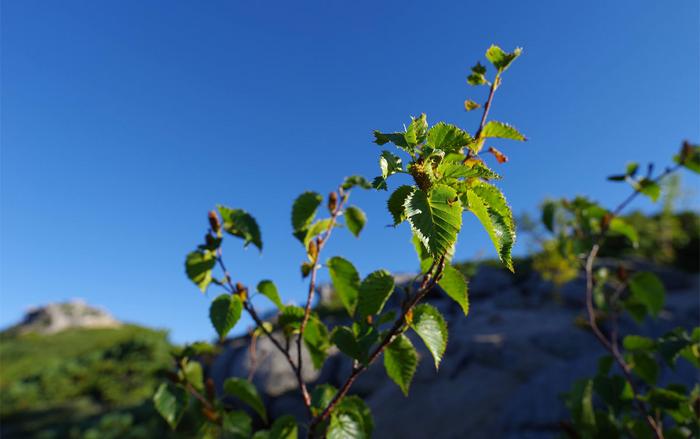
In this research, researchers from the University of Tsukuba collected saplings of Betula ermanii, a tree species found in the alpine areas of Japan, from 11 sites across the country. They conducted site-specific examinations at eight locations throughout Japan to compare the growth of the saplings, and examine the correlation between climatic conditions and genetic characteristics.
The results revealed that saplings originating from the tree line of the Central Alps exhibited lower survival rates and population sizes. Additionally, saplings from the Kii Peninsula, the southern limit of the distribution, were found to be genetically distinct from other populations, with lower growth rates. The population of B. ermanii in the Kii Peninsula also exhibited low genetic diversity, indicating inbreeding.
Seedlings from the Central Alps are assumed to exhibit poor growth in different environments because of their adaptation to the low-temperature environment of the tree line and selection for smaller individual sizes. Conversely, the population from the Kii Peninsula is believed to be impacted by genetic drift and inbreeding, leading to reduced survival and growth rates. Thus, the diminished survival and growth of B. ermanii saplings originating from the edge of the distribution can be attributed to these two different mechanisms.
These findings indicate that populations growing at the edge of their natural distribution range are likely to disappear with the advance of global warming, underscoring the need for immediate conservation measures.
###
This study was supported by the JSPS KAKENHI program (grant no. 21H04732) and the JST Challenging Research Program for Next Generation Researchers (grant no. JPMJSP2124).
Original Paper
Title of original paper:
Divergent mechanisms of reduced growth performance in Betula ermanii saplings from high-altitude and low-latitude range edges
Journal:
Heredity
DOI:
10.1038/s41437-023-00655-0
Correspondence
Professor TSUMURA, Yoshihiko
Institute of Life and Environmental Sciences, University of Tsukuba
AIHARA, Takaki
Graduate School of Life and Environmental Sciences, University of Tsukuba
Associate Professor GOTO, Susumu
Graduate School of Agricultural and Life Sciences, The University of Tokyo
Related Link
Institute of Life and Environmental Sciences
Journal
Heredity
DOI
10.1038/s41437-023-00655-0
Article Title
Divergent mechanisms of reduced growth performance in Betula ermanii saplings from high-altitude and low-latitude range edges
Article Publication Date
9-Nov-2023