When scientists examined pellets from recycled plastic collected in 13 countries they found hundreds of toxic chemicals, including pesticides and pharmaceuticals.
The results are published in a study led by scientists at the University of Gothenburg.
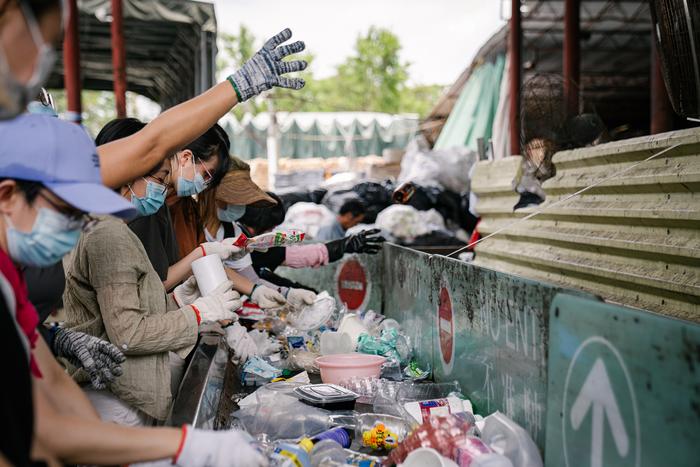
Credit: Greenpeace
When scientists examined pellets from recycled plastic collected in 13 countries they found hundreds of toxic chemicals, including pesticides and pharmaceuticals.
The results are published in a study led by scientists at the University of Gothenburg.
Because of this, the scientists judge recycled plastics unfit for most purposes and a hinder in the attempts to create a circular economy.
Delegates, scientists and health and environmental advocates from around the world are traveling to Nairobi, Kenya for next week’s meeting of the third session of the Plastics Treaty Intergovernmental Negotiating Committee (INC-3).
There scientists will urge delegates to heed the latest science showing that because toxic chemicals are used to make all plastics, and plastics will adsorb other chemicals during use, there are no plastics that can be deemed safe or circular.
“Plastic recycling has been touted as a solution to the plastics pollution crisis, but toxic chemicals in plastics complicate their reuse and disposal and hinder recycling,” says Professor Bethanie Carney Almroth, of the University of Gothenburg.
Over 600 chemical compounds identified
In a recently published study in Data in Brief via ScienceDirect, led by Carney Almroth, plastic pellets from plastic recycle plants in 13 different countries in Africa, South America, Asia and Eastern Europe were found to contain hundreds of chemicals, including numerous highly toxic pesticides.
In total, 491 organic compounds were detected and quantified in the pellets, with an additional 170 compounds tentatively annotated. These compounds span various classes, including pesticides, pharmaceuticals, industrial chemicals, plastic additives.
Present risk for all
There are few regulations on chemicals in plastics, and international trade in plastics waste complicate this issue.
In a correspondence published this month in the prestigious journal Science researchers from the University of Gothenburg, IPEN, Aarhus University, and the University of Exeter noted that: “The hazardous chemicals present risks to recycling workers and consumers, as well as to the wider society and environment. Before recycling can contribute to tackling the plastics pollution crisis, the plastics industry must limit hazardous chemicals.” More than 13 000 chemicals used in plastics with 25% classified as hazardous. Scientists state that “no plastic chemical [can be] classified as safe.”
“Need to phase out harmful chemicals”
Professor Bethanie Carney Almroth brings a clear message to next week’s meeting in Nairobi:
“Numerous studies show that hazardous chemicals can accumulate even in relatively close-loop plastic recycling systems. We need to rapidly phase-out plastic chemicals that can cause harm to human health and the environment.”
Scientific article in ScienceDirect: A dataset of organic pollutants identified and quantified in recycled polyethylene pellets
Correspondence in Science: Chemical simplification and tracking in plastics
Journal
Data in Brief
DOI
10.1016/j.dib.2023.109740
Method of Research
Experimental study
Article Title
A dataset of organic pollutants identified and quantified in recycled polyethylene pellets
Article Publication Date
30-Oct-2023