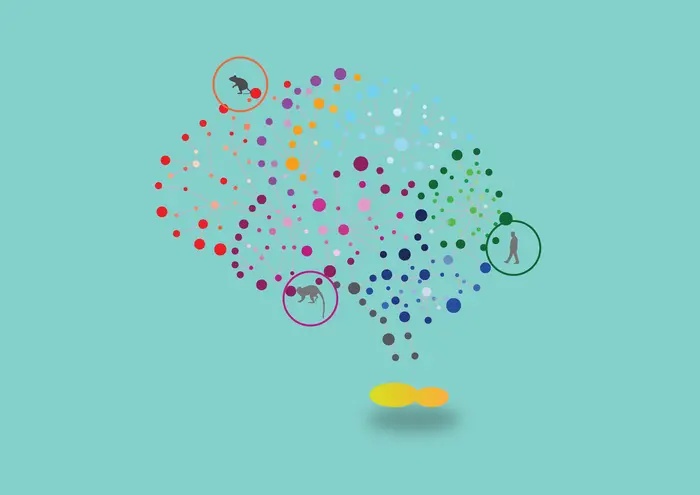
To address these concerns, this study aimed to examine potential ethical issues in the short, medium, and long term from two perspectives, namely, those related to chimeric animals and those related to the transplanted organoids themselves. Potential issues were examined at each step of the human brain organoid transplantation process: cell collection (the collection of human cells to generate pluripotent stem cells), generation (in vitro generation of human brain organoids from pluripotent stem cells), transplantation (transplantation of the organoids into the recipient animal), the pre-integration stage (during which transplanted cells mature as host blood vessels grow into them but are not otherwise functionally integrated in the brain), the integration stage (transplanted cells gradually become functionally integrated into the host brain), and the post-integration stage (transplanted cells become fully integrated with the host brain), as well as the use of chimeric animals during the pre- and post-integration stages.
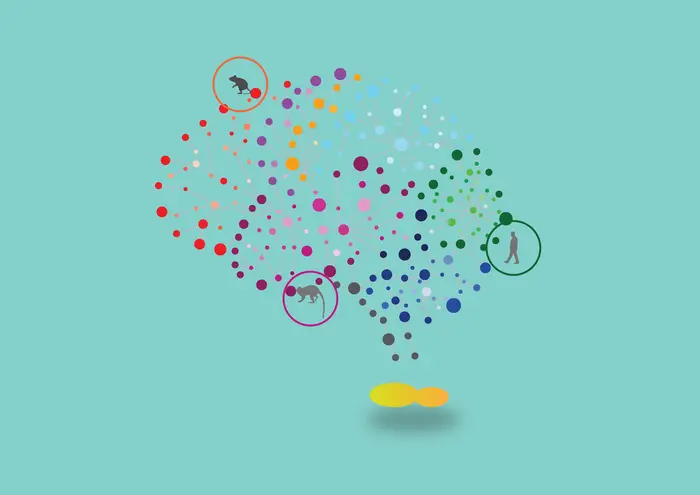
Credit: WPI-ASHBi/Kyoto University
To address these concerns, this study aimed to examine potential ethical issues in the short, medium, and long term from two perspectives, namely, those related to chimeric animals and those related to the transplanted organoids themselves. Potential issues were examined at each step of the human brain organoid transplantation process: cell collection (the collection of human cells to generate pluripotent stem cells), generation (in vitro generation of human brain organoids from pluripotent stem cells), transplantation (transplantation of the organoids into the recipient animal), the pre-integration stage (during which transplanted cells mature as host blood vessels grow into them but are not otherwise functionally integrated in the brain), the integration stage (transplanted cells gradually become functionally integrated into the host brain), and the post-integration stage (transplanted cells become fully integrated with the host brain), as well as the use of chimeric animals during the pre- and post-integration stages.
Ethical issues identified by Dr. Sawai and colleagues vary at each step of the transplantation process. For example, informed consent from donors at the cell collection stage, which is already a key consideration when collecting embryonic or somatic cells, becomes even more important in regards to transplantation of human brain organoids, and a comprehensive explanation of the ethical issues must be communicated to donors. Another major issue relates to the potential for a “dual” moral status of chimeric animals—that of the chimeric animal and that of the human brain organoid—and whether one supersedes the other and at which stage(s) that may change.
“These issues are further compounded by whether transplanted organoids themselves are able to achieve consciousness. But this is unlikely based on our current scientific understanding of consciousness.” Said Sawai. In addition, transplanted organoids would be more likely to be region-specific and unable to recapitulate the brain as a whole by self-patterning. Thus, any issues specifically related to the consciousness of organoids would be highly speculative, and the authors assert that they should be of no imminent concern. However, they also note that this may change as technology and our theories of consciousness develop, so it is important to assume that it will be possible to create conscious brain organoids in the future.
Despite the ethically charged nature of this area of research, a key is to consider its potential impact on society, particularly in terms of understanding human neural development and diseases. This study highlights the importance of collaboration among scientists, philosophers, ethicists, and various stakeholders to comprehensively address the associated issues, and aims to serve as a cornerstone for societal and ethical discussions involving the transplantation of human brain organoids into animals.
This research was supported by the Japan Society for the Promotion of Science under a KAKENHI Grant-in-Aid for Early-Career Scientists (21K12908); the Japan Agency for Medical Research and Development (AMED) under Grant number JP21wm0425021; the Japan Science and Technology Agency (JST) under Grant number JPMJRS22J4; the Uehiro Foundation on Ethics and Education under Grant number UEHIRO2023-0105; Victorian State Government through the Operational Infrastructure Support (OIS) Program; Wellcome Trust (WT203132/Z/16/); and Singapore Ministry of Health’s National Medical Research Council under NMRC Project number MOH-000951-00.
Journal
Neuroethics
DOI
10.1007/s12152-023-09532-3
Method of Research
Content analysis
Article Title
The Ethics of Human Brain Organoid Transplantation in Animals
Article Publication Date
4-Oct-2023