A new study reveals biological mechanisms by which a specific strain of bacteria in the Wolbachia genus might enhance the fertility of the insects it infects—with potentially important implications for mosquito-control strategies. Shelbi Russell of the University of California Santa Cruz, US, and colleagues report these findings in the open access journal PLOS Biology on October 24th.
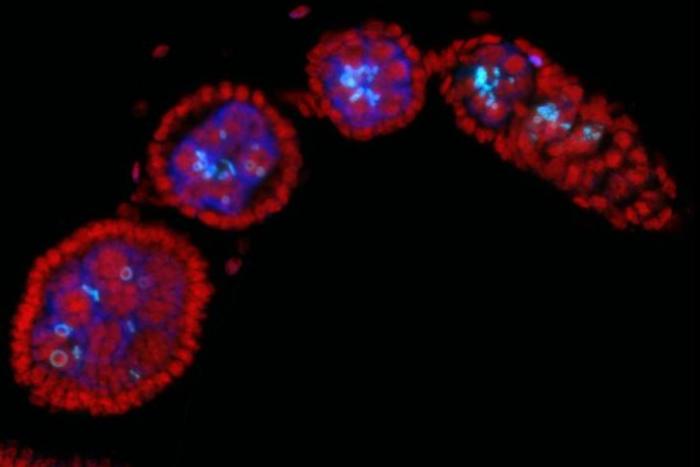
Credit: Shelbi Russell (CC-BY 4.0, https://creativecommons.org/licenses/by/4.0/)
A new study reveals biological mechanisms by which a specific strain of bacteria in the Wolbachia genus might enhance the fertility of the insects it infects—with potentially important implications for mosquito-control strategies. Shelbi Russell of the University of California Santa Cruz, US, and colleagues report these findings in the open access journal PLOS Biology on October 24th.
Different strains of Wolbachia bacteria naturally infect a number of different animals worldwide, such as mosquitos, butterflies, and fruit flies. Wolbachia can manipulate the fertility of their hosts through a specific biological mechanism that aids the spread of Wolbachia within host populations. In recent years, people have harnessed that mechanism in strategies to deliberately infect mosquitos with a specific Wolbachia strain, reducing targeted mosquito populations and thereby potentially reducing the spread of human viruses carried by mosquitos, such as dengue or Zika.
Research in fruit flies suggests that that same strain, which is native to fruit flies, may also enhance insect fertility, with potentially important implications for mosquito control. Evidence suggests that biological processes involving the fruit-fly protein meiotic-P26 (“mei-P26″), which is essential for fruit-fly reproduction, may underlie this enhanced fertility. However, these processes have remained unclear.
To investigate, Russell and colleagues bred fruit flies with various defects affecting mei-P26—resulting in reduced fruit-fly fertility—and examined what happened when they then infected the flies with the fruit-fly-native Wolbachia strain.
They found that Wolbachia infection restored fertility in fruit flies with various mei-P26 defects, enabling them to produce more offspring than uninfected flies. Further experiments revealed how Wolbachia may restore fertility by mitigating certain perturbing effects of mei-P26 defects on specific genes and proteins, thereby resolving problems with the stem cells that produce fruit fly eggs and sperm.
In additional experiments, Wolbachia infection also enhanced the fertility of fruit flies without mei-P26 defects, resulting in higher egg lay and hatch rates.
These findings help to resolve the mystery of how this particular Wolbachia strain enhances fruit-fly fertility. Further research will be needed to better understand these effects and their potential implications for strategies that employ this strain to control mosquito populations.
Russell adds, “Wolbachia endosymbionts exist at high infection frequencies in many host populations, despite exhibiting weak gene drive systems and unobserved impacts on host fitness. Here, we show that the wMel strain of Wolbachia is able to rescue and reinforce host fertility, demonstrating their capacity to function as a beneficial symbiont.”
#####
In your coverage, please use this URL to provide access to the freely available paper in PLOS Biology: http://journals.plos.org/plosbiology/article?id=10.1371/journal.pbio.3002335
Citation: Russell SL, Castillo JR, Sullivan WT (2023) Wolbachia endosymbionts manipulate the self-renewal and differentiation of germline stem cells to reinforce fertility of their fruit fly host. PLoS Biol 21(10): e3002335. https://doi.org/10.1371/journal.pbio.3002335
Author Countries: United States
Funding: This work was supported by the UC Santa Cruz Chancellor’s Postdoctoral Fellowship and the NIH (R00GM135583 to SLR; R35GM139595 to WTS). The funders had no role in study design, data collection and analysis, decision to publish, or preparation of the manuscript.
Journal
PLoS Biology
DOI
10.1371/journal.pbio.3002335
Method of Research
Experimental study
Subject of Research
Animals
COI Statement
Competing interests: The authors have declared that no competing interests exist.