Octopuses are fascinating animals – and serve as important model organisms in neuroscience, cognition research and developmental biology. To gain a deeper understanding of their biology and evolutionary history, validated data on the composition of their genome is needed, which has been lacking until now. Scientists from the University of Vienna together with an international research team have now been able to close this gap and, in a study, determined impressive figures: 2.8 billion base pairs – organized in 30 chromosomes. What sounds so simple is the result of complex, computer-assisted genome analyses and comparisons with the genomes of other cephalopod species. This groundbreaking research has just been published in the renowned journal G3: Genes / Genomes / Genetics.
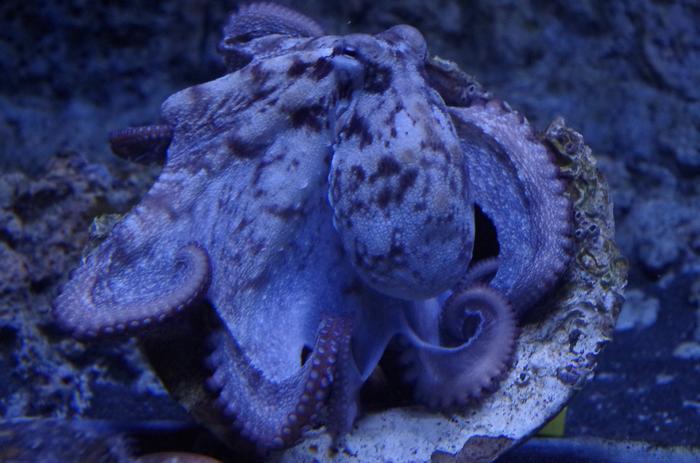
Credit: Antonio, Valerio Cirillo (BEOM SZN), 2023
Octopuses are fascinating animals – and serve as important model organisms in neuroscience, cognition research and developmental biology. To gain a deeper understanding of their biology and evolutionary history, validated data on the composition of their genome is needed, which has been lacking until now. Scientists from the University of Vienna together with an international research team have now been able to close this gap and, in a study, determined impressive figures: 2.8 billion base pairs – organized in 30 chromosomes. What sounds so simple is the result of complex, computer-assisted genome analyses and comparisons with the genomes of other cephalopod species. This groundbreaking research has just been published in the renowned journal G3: Genes / Genomes / Genetics.
Octopuses, together with squid and cuttlefish, belong to a group of coleoid cephalopods consisting of several hundreds of species that are characterized by highly diversified lifestyles, body structure and adaptations to their environment. The study of these animals looks back on a long tradition, especially since the neuronal plasticity of the octopus brain – meaning the brain’s ability to change and adapt as you learn and experience new things – provides evidence for the existence of functionally analogous structures to the brains of mammals. This is making them a comparative model group for neurophysiological studies. Also, their ability to regenerate parts of their bodies as well as the rapid changes of their body patterns, which are important for camouflage and communication, make octopuses a popular research subject for studying how these innovative traits arose – and how they have changed – during evolution.
Closing a gap
In the research community there has been a rising need for detailed knowledge on cephalopod genomes to understand the evolution of their unique traits and their biology. An important contribution to this aim is encoding the common octopus’ genome at chromosome level – an information that has not been available until now. This has now been remedied by a research team from the University of Vienna, which – together with colleagues from the KU Leuven (Belgium), the Centro Nacional de Análisis Genómico (CNAG; Spain) and the Stazione Zoologica Anton Dohrn (Italy) – “supplied” the missing data and carried out extensive, molecular biological and computer-assisted studies of the octopus genome. “With our current technologies used in genomics research, we were able to create a kind of “genome map” for the octopus, showing how genetic information is arranged at the chromosome level,” explains study first author Dalila Destanović, a scientist at the Simakov Laboratory in the Department of Neuroscience and Developmental Biology at the University of Vienna. This reference genome, which is highly resolved at the chromosome level, will allow the scientific community to better understand the characteristics and biology of these fascinating animals on the one hand, and also to trace the evolutionary history of Octopus vulgaris on the other. Research teams can now further investigate or understand the evolutionary trajectory of coleoid cephalopods and more distantly related molluscs such as clams or snails.
2.8 billion base pairs – 30 chromosomes
In fact, the researchers were able to identify 30 chromosomes in the Octopus vulgaris genome, in which 99.34% of 2.8 billion base pairs are arranged. This means that scientists now have a high-quality reference sequence that will serve as a basis for further studies on the function of genes and thus for a better understanding of biological properties of the common octopus. The chromosomal structure of the Octopus vulgaris genome will also provide insight into the dynamic evolutionary history of these organisms by estimating chromosome rearrangement rates. Already, by comparing the Octopus vulgaris genome with the genomes of four other octopus species, the researchers have been able to show that all chromosomes exhibit numerous structural changes that have occurred during evolution by breaking off pieces of chromosomes, rearranging them and reconnecting them at the same chromosome. “Even among closely related species, we observed numerous structural changes of the chromosomes. This finding poses questions on genome dynamics throughout their evolutionary history and opens the door to investigate how this relates to their unique traits”, explains Dalila Destanović. The dynamic evolutionary history of the octopus genome spans a period of 44 million years – and many exciting research questions are still open. The results of the current study will amount to answering some of these questions by bridging traditional Octopus vulgaris research in neurobiology, behavior and development to molecular genetic insights in these areas.
Journal
G3 Genes Genomes Genetics
DOI
10.1093/g3journal/jkad220
Article Title
A chromosome-level reference genome for the common octopus, Octopus vulgaris (Cuvier, 1797).