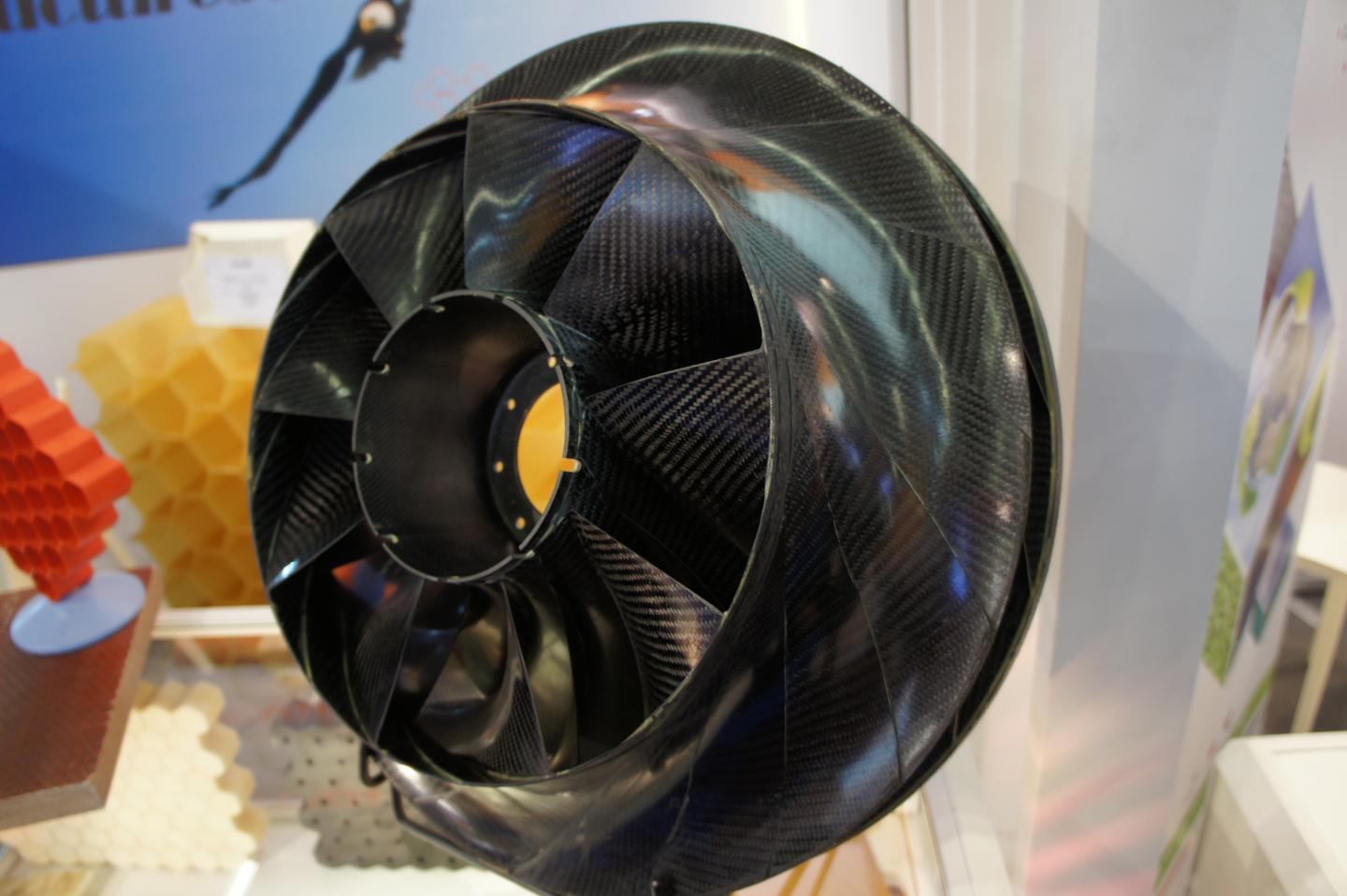
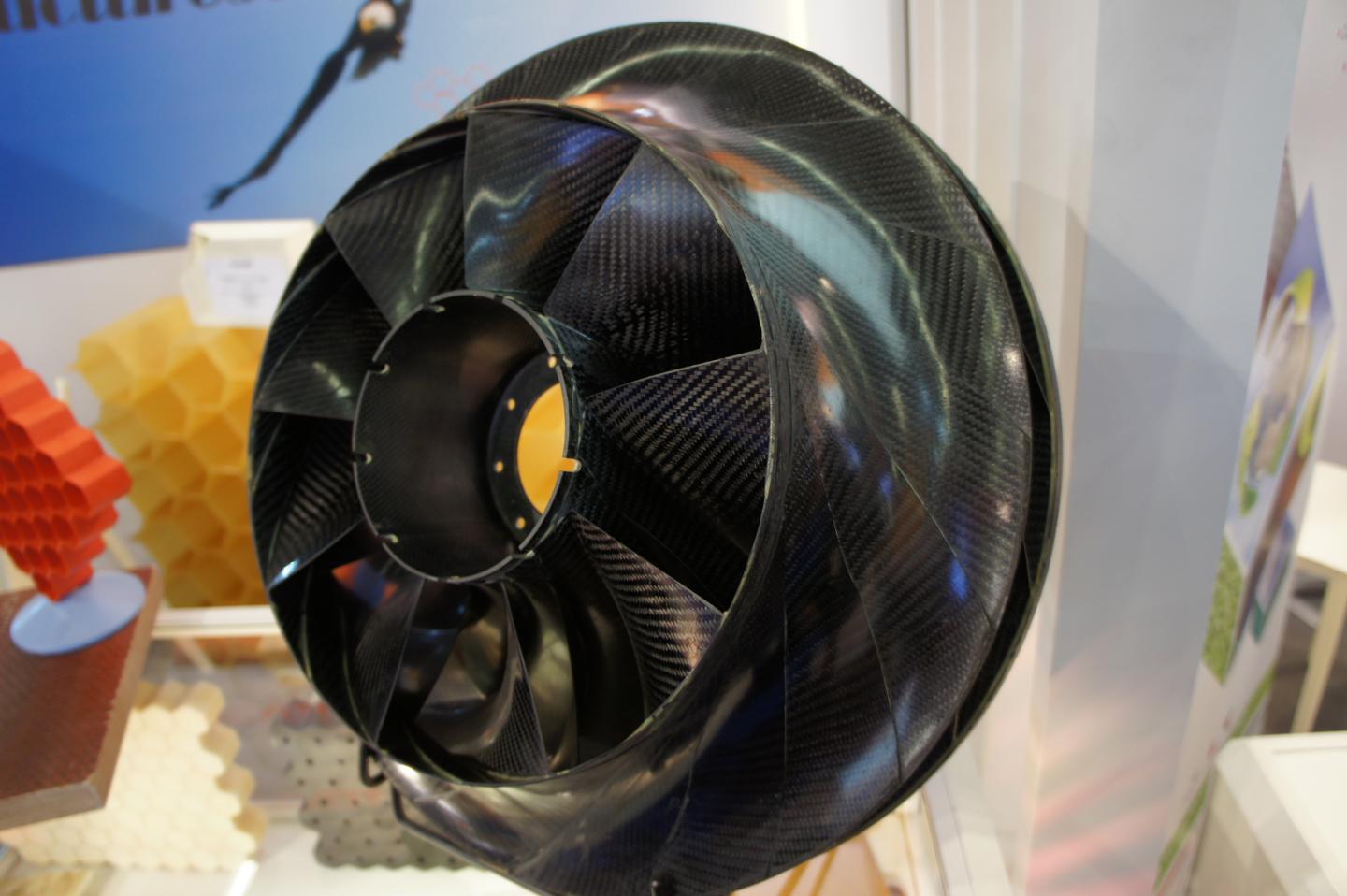
Credit: Aleksander Babkin
Members of the Department of Chemistry of Lomonosov Moscow State University have created unique polymer matrices for polymer composites based on novel phthalonitrile monomers. The developed materials possess higher strength than metals, which helps to sufficiently decrease the mass of aircraft parts that operate at high temperatures. Scientists have published the project results in the Journal of Applied Polymer Science.
A team of scientists from the Chair of Chemical Technology and New Materials at Lomonosov Moscow State University lead by Alexey V. Kepman, a Leading Researcher, is working on developing structural polymer composite materials. They are used for production of various constructions, vehicle components, and structural elements exploited under loading. Aerospace industry, where material requirements are much higher, requires high performance polymer composites. Polymer composites are made of a polymer matrix and a reinforcement material (filling agent) that remain separate and distinct within the finished structure. For example, in carbon fiber reinforces composites (CFRP) carbon fabrics are used as a reinforcing agent while polyester or epoxy resins, bismaleimides, polyimides, and many other polymers — as a matrix.
A modern airplane — e.g. Boeing 787 Dreamliner — consists of polymer composites for 50%, and a fighter aircraft — Eurofighter — of FRP for 70%. Development of high-temperature polymer composites will allow replacing the existing metal engine parts (for instance, low-pressure jet compressor blades) or supersonic aircraft body elements with polymer composite parts.
Chemists have applied a new approach to molecular design of bis-phthalonitrile monomers that are used as starting materials for polymer matrices. They have also developed materials with improved processing requirements suitable for cost-effective injection methods for CFRP manufacturing which is uncommon for most phthalonitriles known to date. Such methods allow to produce high-integrity CFRP parts of complex shape with minimal junction of elements.
The project members — Boris Bulgakov and Alexander Babkin – say: "At the moment the operating temperature of polymer composite applications reaches up to no more than 150 °? for most popular materials and up to 250 °? — for high temperature ones. And we have developed polymer composites with epoxy-like processing, appropriate for operation at elevated temperatures up to 450 °?".
One kilogram of titanium or aluminum alloy nowadays is much cheaper than the same amount of polymer composite (8-10 times less). However, according to Boris Bulgakov, production and maintenance of large complex shape parts made of polymer composites is hugely cheaper. Cost-effectiveness becomes possible due to a significant decrease of labor requirements for the assembly process and a high level of integrity of the resulting structures made of carbon fiber.
Boris Bulgakov explains: "For instance, a wing made of polymer composites is assembled by junction of 10 elements and a wing made of metal – of 100 elements. This means that construction of a metal wing costs more. Moreover, strength of CFRP is 6-8 times higher than that of aluminum and at the same time CFRP density is 1.5 times lower".
Polymer composites are widely used for production of premium automobiles, Formula-1 racing bolides, airplanes, and spaceships. Weight decrease in the case of airplanes results in fuel economy and increased aircraft useful load. Thus, the production cost of polymer composites is compensated by a reduction of fuel consumption and an increase in cargo capacity. Besides that, polymer composites are less expensive to maintain since they are not susceptible to corrosion.
Development of the new matrices for polymer composites has been conducted in the framework of the Federal Target Program "Research and Development in the Priority Areas of Development of the Russian Scientific and Technological Complex for 2014 – 2020." Professor V.V. Avdeev, the head of the Chair of Chemical Technology and New Materials has set a goal to organize pilot production of phthalonitrile resins. The resin samples, synthesized at Lomonosov Moscow State University, are under investigation at P. I. Baranov Central Institute of Aviation Motor Development, A.N. Tupolev Kazan National Research Technical University and other organizations.
###
Media Contact
Vladimir Koryagin
[email protected]
http://www.msu.ru
############
Story Source: Materials provided by Scienmag