“Access to LDLT in a transplant program can optimize the timing of transplant for the increasingly older, frail patient population […]”
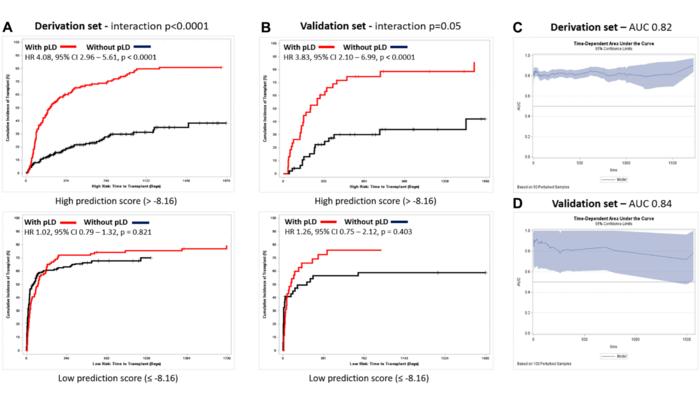
Credit: 2023 Arisar et al.
“Access to LDLT in a transplant program can optimize the timing of transplant for the increasingly older, frail patient population […]”
BUFFALO, NY- September 26, 2023 – A new research paper was published in Aging (listed by MEDLINE/PubMed as “Aging (Albany NY)” and “Aging-US” by Web of Science) Volume 15, Issue 17, entitled, “Availability of living donor optimizes timing of liver transplant in high-risk waitlisted cirrhosis patients.”
Liver transplant (LT) candidates have become older and frailer. Growing non-alcoholic steatohepatitis (NASH) and comorbid disease burden in recent years is also predisposing them for poor waitlist outcomes. In this new study, researchers Fakhar Ali Qazi Arisar, Shiyi Chen, Catherine Chen, Noorulsaba Shaikh, Ravikiran Sindhuvalada Karnam, Wei Xu, Sumeet K. Asrani, Zita Galvin, Gideon Hirschfield, Keyur Patel, Cynthia Tsien, Nazia Selzner, Mark Cattral, Leslie Lilly, and Mamatha Bhat from the University Health Network, University of Toronto, Baylor University Medical Center, and Dow University of Health Sciences aimed to evaluate the impact of access to living donor liver transplantation (LDLT) in waitlisted patients at highest risk of dropout.
“We reviewed all adult patients with decompensated cirrhosis listed for LT from November 2012 to December 2018.”
Patients with a potential living donor (pLD) available were identified. Survival analyses with Cox Proportional Hazards models and time to LT with Competing risk models were performed followed by prediction model development. Out of 860 patients who met inclusion criteria, 360 (41.8%) had a pLD identified and 496 (57.6%) underwent LT, out of which 170 (34.2%) were LDLT. The benefit of pLD was evident for all, but patients with moderate to severe frailty at listing (interaction p = 0.03), height <160 cm (interaction p = 0.03), and Model for end-stage liver disease (MELD)-Na score <20 (interaction p < 0.0001) especially benefited.
“Our study identifies that certain patient subgroups (short stature, MELD <20, and moderate to severe frailty) are at the highest risk for waitlist mortality with prolonged waiting time for a deceased donor organ offer. These patient subgroups, which represent a growing share of the waitlist population in recent years, would be especially protected against death or delisting if they had access to living donation at the time of listing. Certainly, LDLT is beneficial to all, with improved waitlist mortality and post-transplant outcomes.”
Read the full study: DOI: https://doi.org/10.18632/aging.204982
Corresponding Author: Mamatha Bhat
Corresponding Email: [email protected]
Keywords: living donor liver transplant, frailty, old age, short-statured, MELD score, prediction model
Sign up for free Altmetric alerts about this article: https://aging.altmetric.com/details/email_updates?id=10.18632%2Faging.https://doi.org/10.18632/aging.204982
About Aging:
Launched in 2009, Aging publishes papers of general interest and biological significance in all fields of aging research and age-related diseases, including cancer—and now, with a special focus on COVID-19 vulnerability as an age-dependent syndrome. Topics in Aging go beyond traditional gerontology, including, but not limited to, cellular and molecular biology, human age-related diseases, pathology in model organisms, signal transduction pathways (e.g., p53, sirtuins, and PI-3K/AKT/mTOR, among others), and approaches to modulating these signaling pathways.
Please visit our website at www.Aging-US.com and connect with us:
- SoundCloud
- X, formerly known as Twitter
- YouTube
- LabTube
Click here to subscribe to Aging publication updates.
For media inquiries, please contact [email protected].
Aging (Aging-US) Journal Office
6666 E. Quaker Str., Suite 1B
Orchard Park, NY 14127
Phone: 1-800-922-0957, option 1
###
Journal
Aging-US
DOI
10.18632/aging.204982
Method of Research
Observational study
Subject of Research
People
Article Title
Availability of living donor optimizes timing of liver transplant in high-risk waitlisted cirrhosis patients
Article Publication Date
2-Sep-2023