DURHAM, N.C. – Maintaining a water level between 20 and 30 centimeters below the local water table will boost southern peatlands’ carbon storage and reduce the amount of climate-warming carbon dioxide (CO2) and methane they release back into the atmosphere during dry periods by up to 90%, a new Duke University study finds.
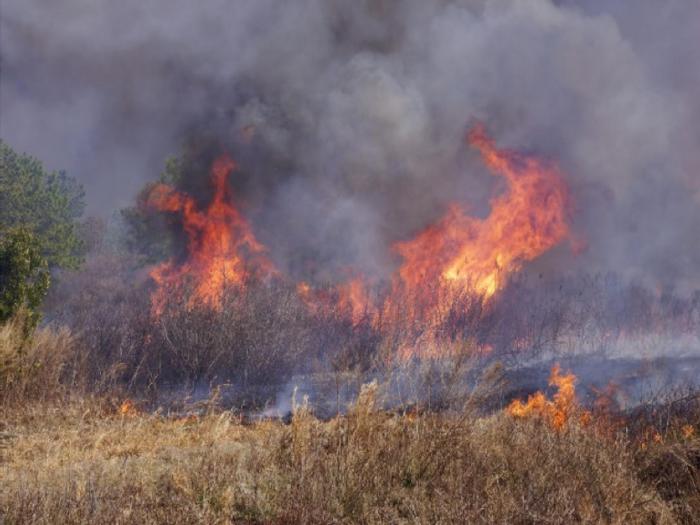
Credit: Duke University Wetland and Coasts Center
DURHAM, N.C. – Maintaining a water level between 20 and 30 centimeters below the local water table will boost southern peatlands’ carbon storage and reduce the amount of climate-warming carbon dioxide (CO2) and methane they release back into the atmosphere during dry periods by up to 90%, a new Duke University study finds.
“We could immediately reduce U.S. carbon losses by 2% to 3% of our total national goal by applying this guideline on about 100,000 acres of restored or partially restored peatlands currently found across coastal regions of North Carolina, South Carolina, Virginia and Georgia,” said Curtis J. Richardson, founding director of the Duke Wetland and Coasts Center, who led the research.
Greater reductions would be possible as more former peatlands are rewetted and restored using the new guideline, said Richardson, who also holds an appointment as research professor of resource ecology at Duke’s Nicholas School of the Environment.
The southeastern U.S. coastal plain was originally home to more than 2.4 million acres of evergreen shrub bogs, locally known as pocosin peatlands, he said, but more than 70% of them have been drained for agriculture and forestry over the years.
Some of these lands — about 250,000 acres — are no longer productive for farming or forestry. Rather than let them sit fallow, they could be rewetted and restored as pocosin peatlands, generating economic benefits for their owners in the form of carbon credits that can be sold on the international carbon market.
“The idea of turning unproductive land into something that can generate income while it helps fight climate change has broad appeal among landowners, investors, policymakers and environmental advocates alike, and this new paper can serve as a guide for doing it,” Richardson said.
He and his team published their peer-reviewed paper in the September issue of the journal Ecological Engineering.
Using data from nearly 20 years of long-term monitoring and research at Pocosin Lakes National Wildlife Refuge and adjacent peatland sites in coastal North Carolina, the paper calculates in comprehensive detail how much CO2 can be stored in a pocosin peatland and how much CO2 and methane might be released back into the atmosphere under different management regimes and with different water levels.
“With all the interest these days in carbon credits and carbon farms, we thought it would be useful to document the scientific basis behind pocosins’ remarkable carbon storage,” Richardson said.
Much of what he and his team have learned over the years is now being put into practice at the privately owned 10,000-acre Carolina Ranch Carbon Farm in Hyde County, N.C., where former peatlands, long ago drained for agriculture, are being rewetted and restored.
Pocosin peatlands are found along the Southeast coast from Virginia to northern Florida. They have deep peat soils and are covered by woody shrubs rather than the low-growing Sphagnum moss found in more northern peatlands. Left undisturbed, stored carbon can remain locked in pocosins’ organic soil for millennia due to natural antimicrobial compounds called phenolics that prevent the waterlogged peat from decaying rapidly, even during times of drought.
By digging thousands of miles of drainage ditches to lower the water table and convert the peatlands into farms, however, humans have undercut pocosins’ storage capability and turned many of the sites from carbon sinks into carbon sources.
“Southern pocosin peatlands punch far above their weight in terms of their capacity for carbon storage,” Richardson said. “Our research shows that, acre for acre, an intact or restored pocosin can store significantly more carbon than forests or grasslands and retain up to 10 or even 15 times more than farm fields. The flip side of that is that a disturbed or drained pocosin can emit vast amounts of greenhouse gases back into the atmosphere, especially during intense wildfires or prolonged droughts.”
“Our hope is that this new paper provides guidelines to prevent such losses and promote greater long-term carbon storage, while also generating income from carbon credits, so that these remarkable ecosystems can benefit both people and the planet,” he said.
Richardson’s co-authors were Neal Flanagan and Mengchi Ho of the Duke University Wetland and Coasts Center and the Nicholas School.
Funding came from the U.S. Fish and Wildlife Service, The Nature Conservancy of North Carolina, the Duke Wetland Center Endowment, the Grantham Foundation, the Winward Foundation, the Schad family, and the Duke University Office of Vice President.
CITATION: “The Effects of Hydrologic Restoration on Carbon Budgets and GHG Fluxes in Southeastern U.S. Coastal Shrub Bogs,” Curtis J. Richardson, Neal E. Flanagan and Mengchi Ho. Ecological Engineering, Sept. 2023. DOI: 10.1016/j.ecoleng.2023.107011
Journal
Ecological Engineering
DOI
10.1016/j.ecoleng.2023.107011
Method of Research
Observational study
Subject of Research
Not applicable
Article Title
The Effects of Hydrologic Restoration on Carbon Budgets and GHG Fluxes in Southeastern U.S. Coastal Shrub Bogs
Article Publication Date
22-Sep-2023