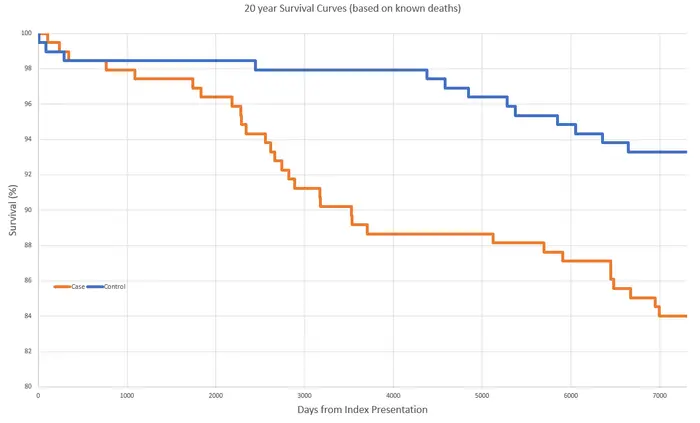
Barcelona, Spain: People who come to emergency departments with alcohol-related diseases or conditions are more likely to make return visits and to die in the following 20 years, than people who come to emergency departments for other reasons, according to new research. For many, this means they may die in their 40s or 50s.
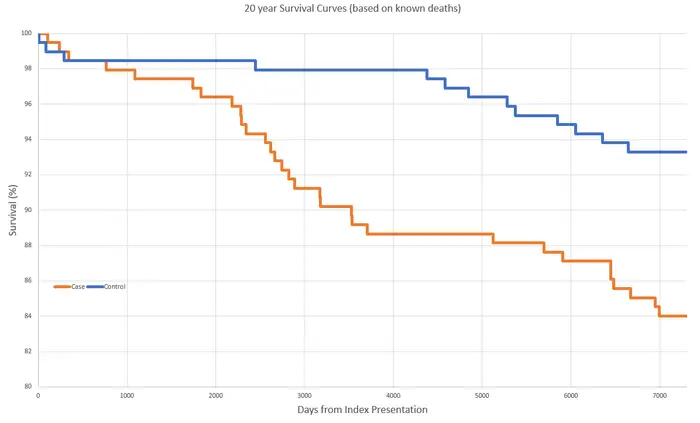
Credit: Please credit Professor Drew Richardson
Barcelona, Spain: People who come to emergency departments with alcohol-related diseases or conditions are more likely to make return visits and to die in the following 20 years, than people who come to emergency departments for other reasons, according to new research. For many, this means they may die in their 40s or 50s.
Professor Drew Richardson told the European Emergency Medicine Congress that he and his colleagues had followed 194 patients who had alcohol-related diagnoses when they arrived in the emergency department of The Canberra Hospital in 2002. They compared them with a control group of 194 patients who had diagnoses unrelated to alcohol, and they followed both groups until 2022.
“The group of patients with alcohol-related diagnoses made 44% more visits over the next decade and had a 138% higher death rate over the following 20 years, than the control group,” said Prof. Richardson, who is Professor of Emergency Medicine at Australian National University, Canberra, Australia. “The true death rate may be higher because we lost some patients during the follow-up period. After nearly 14 years, the percentage of patients lost to follow-up was similar for both groups: 40.2% for the alcohol-related cases and 39.2% for the controls.
“There was a wide variety of reasons these patients came to our emergency department, including alcohol withdrawal symptoms, trauma-related injuries, and acute alcohol intoxication.
“If these patients could be targeted by trained professionals while they are in the emergency department to educate them about the consequences of alcohol use, and to offer them assistance in moderating their alcohol consumption, it might be possible to reduce this significant health burden. Presentations related to alcohol consumption are a major burden in emergency departments.”
The study was initiated by one of Prof. Richardson’s medical students, Ms Regan Lim, who had personal family experience of the effects of alcohol and wanted to investigate further.
“Chronic and excessive consumption of alcohol has been a long-standing problem in our society. Emergency departments are the first point of contact for the many consequences of alcohol-related harm. Alcohol-related cases make up 9.5%-15.2% of presentations to emergency departments, and 8.3%-17.9% of emergency department occupancy in Australasia,” said Prof. Richardson.
The researchers analysed the number of patients who came to the emergency department between 1998-2002 (the period before the study started), 2003-2012 (the decade after) and 2013-2022 (the second decade after). The patients with alcohol-related diagnoses had made 522 presentations to the emergency department before the start of the study, compared to 389 for the patients in the control group. In 2002, the numbers were 437 compared to 399, respectively. In the first decade after, they were 1226 compared to 846 respectively. In the second decade, there was a smaller difference due to the numbers lost to follow-up: 820 compared to 673 presentations respectively.
Just over half (56%) of the patients in the alcohol group were male, the median (average) age was 28, and they were usually put into Triage Category 3, which meant they had potentially life-threatening conditions and needed treatment within 30 minutes. The majority (64%) presented in the emergency department in the late evening and over night, between 20:00 hours and 06:00 hours.
During the follow-up period, 44 patients died, of which 31 were patients with alcohol-related diagnoses who died a median of eight years after 2002, and 13 were from the control group, who died a median of 13 years after 2002.
Prof. Richardson said: “Society and policy-makers should recognise the major role that alcohol plays in illnesses and death in our community, and the need for preventative measures. Alcohol consumption is a significant part of Australasian society, but this study shows that consumption that leads to a visit to a hospital’s emergency department is extremely risky in the long term.
“We have been studying the effects of alcohol presentations in emergency departments for over a decade. The next logical step is a long-term trial of an alcohol intervention programme in the emergency department to see if this really does reduce burden of drink-related effects on patients and hard-pressed emergency staff.”
Professor Youri Yordanov from the St Antoine Hospital emergency department (APHP Paris), France, is Chair of the EUSEM 2023 abstract committee and was not involved in the research. He said: “This study shows a pattern that is familiar to many of us working in emergency departments around the world: alcohol abuse is responsible for a large proportion of patients vising emergency departments. Not only does this place significant burdens on emergency departments that are already over-stretched for a variety of reasons, including ageing populations and under-funding, but it shortens people’s lives too. Initiatives to intervene at an early stage to help prevent repeat visits to emergency departments and the problems associated with alcohol abuse would be very welcome and we look forward to seeing the results of further studies into this.”
(ends)
[1] Abstract no: OA110, “Long term outcomes after alcohol-related presentation to ED” by Drew Richardson, in the “Education, training and toxicology” oral session, Tuesday 19 September at 11.05-12.30 hrs CEST, Room 131. https://cm.eusem.org/cmPortal/Searchable/EXA/config/normal/redirectconfig/normal/redirectconference/EUSEM23#!sessiondetails/0000014290_0
Method of Research
Observational study
Subject of Research
People
Article Title
Long term outcomes after alcohol-related presentation to ED” by Drew Richardson, in the “Education, training and toxicology
Article Publication Date
19-Sep-2023