Researchers and businesses are increasingly drawn to alternative protein sources as they grapple with the challenge of meeting the growing global demand for protein. Among the unconventional sources, microorganisms stand out for their remarkable protein content.
Credit: Danai Ioanna Koukoumaki
Researchers and businesses are increasingly drawn to alternative protein sources as they grapple with the challenge of meeting the growing global demand for protein. Among the unconventional sources, microorganisms stand out for their remarkable protein content.
Dry microorganism cells have been described as “single cell protein” (SCP) or “microbial protein”. SCP is primarily sourced from microorganisms such as yeasts, fungi, bacteria and algae. They serve as an environmentally friendly alternative to animal-derived proteins. Furthermore, microorganisms exhibit the capacity to thrive on a diverse range of substrates for their growth, including waste materials. Leveraging renewable resources derived from different waste streams within the food and agricultural sector, such as dairy waste, crop residues, sugar industry byproducts, and fruit waste, has the potential to greatly enhance SCP production from a standpoint of socio-economic and environmental sustainability.
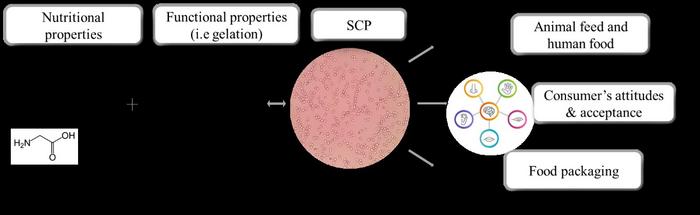
“Particularly when SCP production is integrated into biorefinery frameworks, it can significantly advance circular bio-economy concepts, fostering the continued growth of the SCP market for applications in animal feed, innovative food formulations, and bioactive food packaging,” explains Danai Ioanna Koukoumaki, first author of a recent review on the topic published in Carbon Resources Conversion.
“It’s true that the use of microorganisms for protein production holds promise, but it is nonetheless crucial to study consumer perceptions of this alternative protein source,” adds Koukoumaki, who is a PhD candidate at the Department of Food Science and Nutrition, University of the Aegean.
For instance, in a research study examining the attitudes of older adults towards alternative protein sources such as single-cell protein and plant-based protein, it was observed that gender and country of residence had a notable impact on acceptance levels.
Overall, the review provides a clear insight of the micro-organisms, agro-industrial wastes, functional properties, as well as current applications of single-cell protein.
“Utilizing renewable feedstock in SCP production has the potential to address both modern society’s challenges of food waste management and protein shortages. However, to effectively commercialize this alternative, efforts must be made to enhance consumer acceptance,” concludes corresponding author Dimitris Sarris.
###
Contact the author: Danai Ioanna Koukoumaki, Laboratory of Physico-Chemical and Biotechnological Valorization of Food By-Products, Department of Food Science & Nutrition, School of Environment, University of the Aegean, Leoforos Dimokratias 66, Myrina 81400, Lemnos, Greece [email protected]
The publisher KeAi was established by Elsevier and China Science Publishing & Media Ltd to unfold quality research globally. In 2013, our focus shifted to open access publishing. We now proudly publish more than 100 world-class, open access, English language journals, spanning all scientific disciplines. Many of these are titles we publish in partnership with prestigious societies and academic institutions, such as the National Natural Science Foundation of China (NSFC).
Journal
Carbon Resources Conversion
DOI
10.1016/j.crcon.2023.07.004
Method of Research
Literature review
Subject of Research
Not applicable
Article Title
Recent advances in the production of single cell protein from renewable resources and applications
COI Statement
The authors declare that they have no known competing financial interests or personal relationships that could have appeared to influence the work reported in this paper.