• HOME
  • NEWS
  • EXPLORE
    • CAREER
      • Companies
      • Jobs
    • EVENTS
    • iGEM
      • News
      • Team
    • PHOTOS
    • VIDEO
    • WIKI
  • BLOG
  • COMMUNITY
    • FACEBOOK
    • INSTAGRAM
    • TWITTER
Monday, August 31, 2026
BIOENGINEER.ORG
No Result
View All Result
  • Login
  • HOME
  • NEWS
  • EXPLORE
    • CAREER
      • Companies
      • Jobs
        • Lecturer
        • PhD Studentship
        • Postdoc
        • Research Assistant
    • EVENTS
    • iGEM
      • News
      • Team
    • PHOTOS
    • VIDEO
    • WIKI
  • BLOG
  • COMMUNITY
    • FACEBOOK
    • INSTAGRAM
    • TWITTER
  • HOME
  • NEWS
  • EXPLORE
    • CAREER
      • Companies
      • Jobs
        • Lecturer
        • PhD Studentship
        • Postdoc
        • Research Assistant
    • EVENTS
    • iGEM
      • News
      • Team
    • PHOTOS
    • VIDEO
    • WIKI
  • BLOG
  • COMMUNITY
    • FACEBOOK
    • INSTAGRAM
    • TWITTER
No Result
View All Result
Bioengineer.org
No Result
View All Result
Home NEWS Science News

New scientific approach assesses land recovery following oil and gas drilling

Bioengineer by Bioengineer
February 7, 2017
in Science News
Reading Time: 3 mins read
0
Share on FacebookShare on TwitterShare on LinkedinShare on RedditShare on Telegram
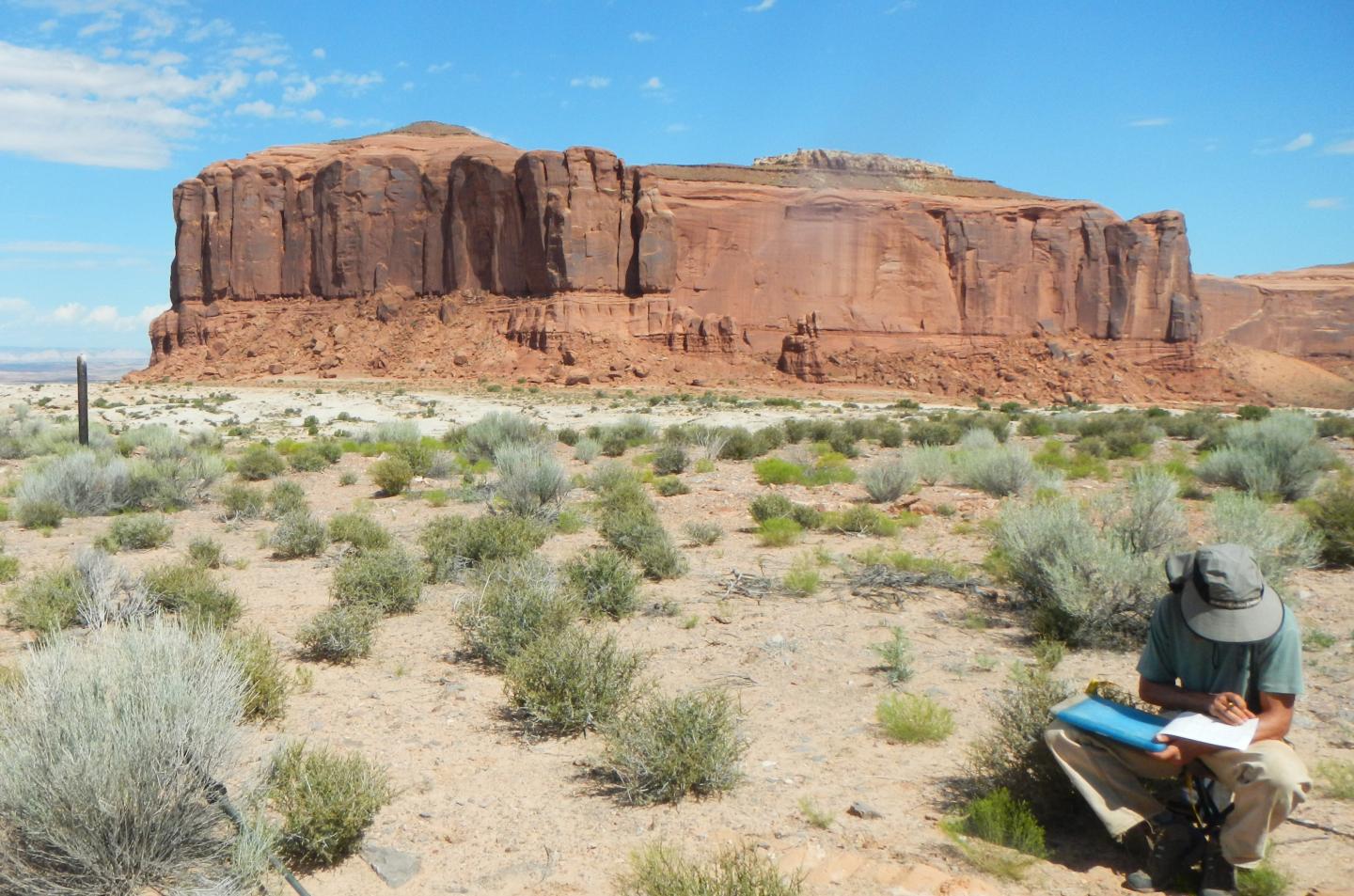
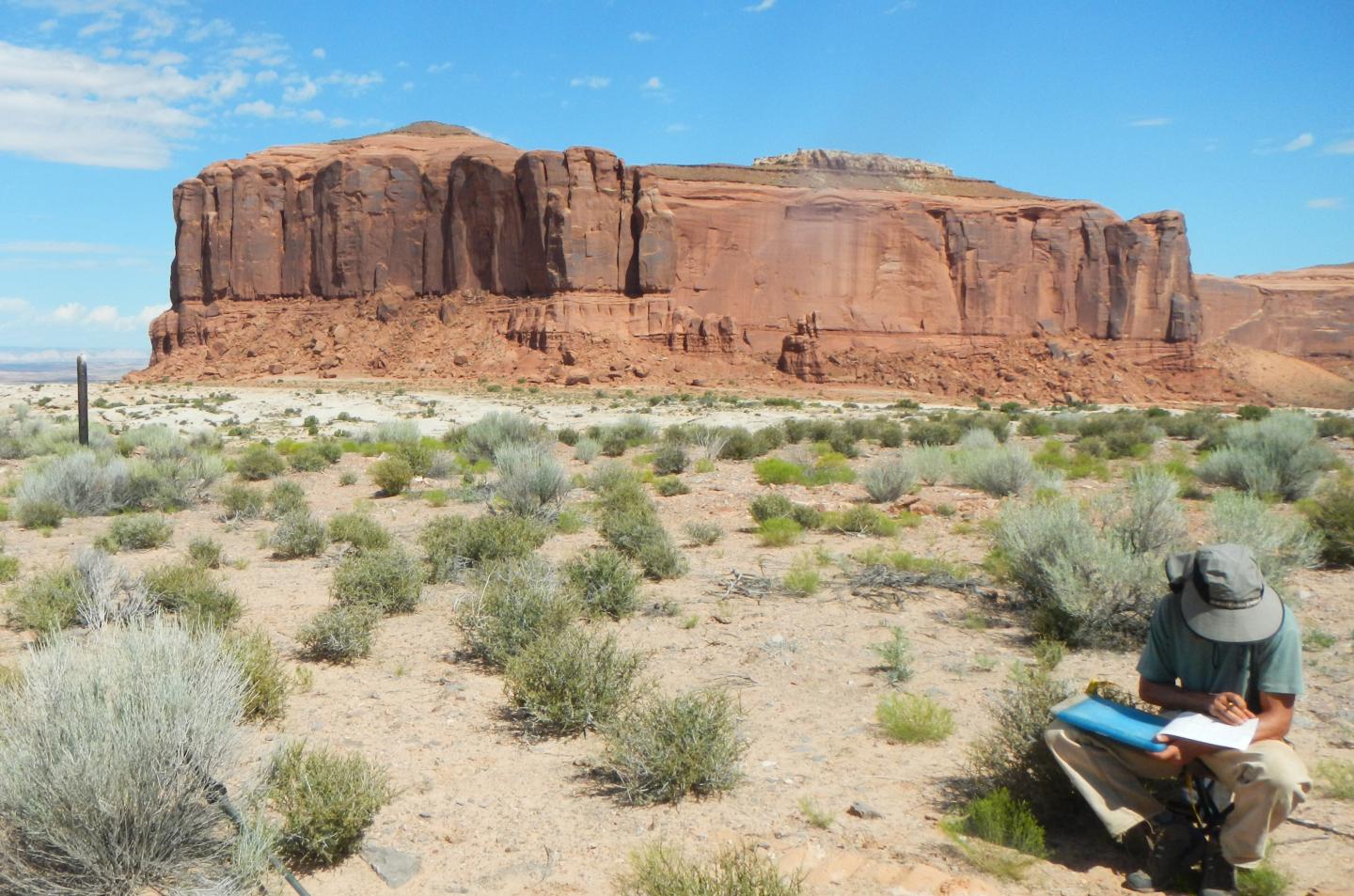
IMAGE

Credit: USGS

A new scientific approach can now provide regional assessments of land recovery following oil and gas drilling activities, according to a new U.S. Geological Survey study published in the journal Science of the Total Environment.

When developing oil and gas well pads, the vegetation and soil are removed to level the areas for drilling and operations. The new assessment approach, called the disturbance automated reference toolset, or DART, is used to examine recovery patterns after well pads are plugged and abandoned to help resource managers make informed decisions for future well pad development.

"These results may assist land managers in deciding what areas might be best utilized for energy development while also minimizing the long-term environmental impacts," said Travis Nauman, a USGS scientist and the lead author of the study.

The recovery of well pads following oil and gas development is an area of growing importance because recent technological advances such as hydraulic fracturing and horizontal drilling have initiated rapid increases in development and production. Previous studies estimate that about 11,583 square miles of land in central North America were cleared for oil and gas related purposes between 2000 and 2012.

USGS scientists examined oil and gas well pad recovery on the Colorado Plateau using a new approach that incorporates satellite imagery, digital soil mapping, predictive ecological modeling and field assessments to evaluate vegetation recovery following well pad abandonment. Scientists used DART to study 1,800 well pads in Utah, Colorado and New Mexico. Satellite imagery was used to compare vegetation cover of the abandoned sites to surrounding undisturbed areas with roughly equivalent climate, soil, topography and management histories.

Findings show that most abandoned oil and gas pads in the study are characterized by more bare ground and less vegetation than surrounding undisturbed areas, even after more than 9 years since abandonment. The majority of pads had 15-45 percent increases in bare ground exposure relative to comparable nearby areas. More exposed bare ground makes areas much more susceptible to soil erosion and dust emission.

Differing recovery across environmental gradients and land stewardship suggests that these can be useful for identifying conditions that may promote or hamper pad recovery. Well pads in grasslands, canyon complexes, blackbrush shrublands and shale badlands are not recovering as well as other ecotypes on the Colorado Plateau. Warmer areas with more summer-dominated precipitation were also associated with reduced well pad recovery. Well pads on federally and privately managed lands had the highest recovery index while state-administered lands had the lowest recovery of the ownership entities evaluated. These findings can help managers identify policies or procedures that may lead to improved well pad recovery.

It is still unclear exactly how long well pad disturbances persist on the landscape once well pads are abandoned, particularly in more arid regions like the Southwest, but it may take many years. Active management intervention, or rehabilitation, of vegetation and soils at abandoned well pads has become more common in recent years, but additional work could increase the success of these efforts. New technological advances like DART can help land managers better understand these disturbances by providing timely assessments to help inform management decisions.

###

Media Contact

Catherine Puckett
[email protected]
352-377-2469
@USGS

http://www.usgs.gov

############

Story Source: Materials provided by Scienmag

Share12Tweet8Share2ShareShareShare2

Related Posts

β-Sitosterol from Ipomoea carnea Jacq. As a promising anti-inflammatory agent: Evidence from in silico modeling and in vitro validation

β-Sitosterol from Ipomoea carnea Jacq. As a promising anti-inflammatory agent: Evidence from in silico modeling and in vitro validation

August 31, 2026
Design, fabrication and characterization of a wearable Fiber Bragg grating sensor for cardiorespiratory monitoring using finger plethysmography

Design, fabrication and characterization of a wearable Fiber Bragg grating sensor for cardiorespiratory monitoring using finger plethysmography

August 31, 2026

KAIST opens the era of industrial-scale microbial foods, proposing growth strategies for the next-generation protein market

August 31, 2026

Virologist awarded $2 million NIH grant to investigate how virus-infected cells live and die

August 31, 2026
Please login to join discussion

POPULAR NEWS

  • β-Sitosterol from Ipomoea carnea Jacq. As a promising anti-inflammatory agent: Evidence from in silico modeling and in vitro validation

    29 shares
    Share 12 Tweet 7
  • Design, fabrication and characterization of a wearable Fiber Bragg grating sensor for cardiorespiratory monitoring using finger plethysmography

    29 shares
    Share 12 Tweet 7
  • KAIST opens the era of industrial-scale microbial foods, proposing growth strategies for the next-generation protein market

    29 shares
    Share 12 Tweet 7
  • Virologist awarded $2 million NIH grant to investigate how virus-infected cells live and die

    29 shares
    Share 12 Tweet 7

About

We bring you the latest biotechnology news from best research centers and universities around the world. Check our website.

Follow us

Recent News

β-Sitosterol from Ipomoea carnea Jacq. As a promising anti-inflammatory agent: Evidence from in silico modeling and in vitro validation

Design, fabrication and characterization of a wearable Fiber Bragg grating sensor for cardiorespiratory monitoring using finger plethysmography

KAIST opens the era of industrial-scale microbial foods, proposing growth strategies for the next-generation protein market

Subscribe to Blog via Email

Enter your email address to subscribe to this blog and receive notifications of new posts by email.

Join 85 other subscribers
  • Contact Us

Bioengineer.org © Copyright 2023 All Rights Reserved.

Welcome Back!

Login to your account below

Forgotten Password?

Retrieve your password

Please enter your username or email address to reset your password.

Log In
No Result
View All Result
  • Homepages
    • Home Page 1
    • Home Page 2
  • News
  • National
  • Business
  • Health
  • Lifestyle
  • Science

Bioengineer.org © Copyright 2023 All Rights Reserved.