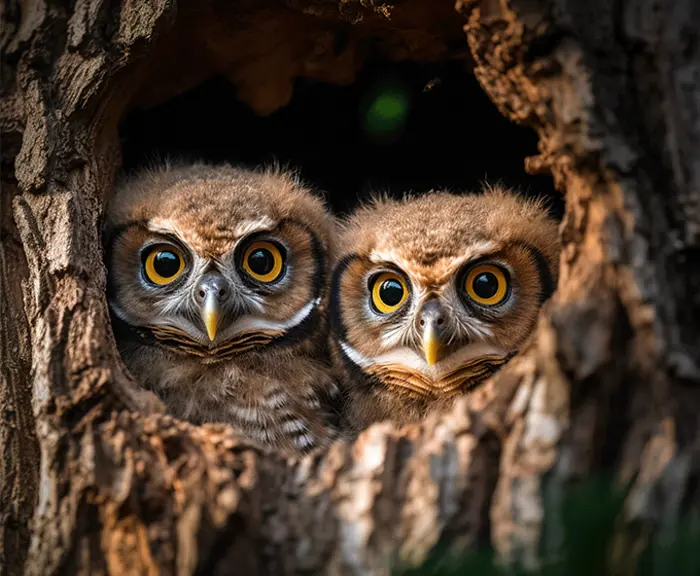
New research suggests that owls in Texas have high rates of anticoagulant rodenticides (AR)—blood thinning rat poisons—in their systems. Jennifer Smith, a professor of integrative biology in the UTSA College of Sciences, co-authored a research article published recently in PLOS ONE, the world’s first multidisciplinary open access journal.
Credit: The University of Texas at San Antonio
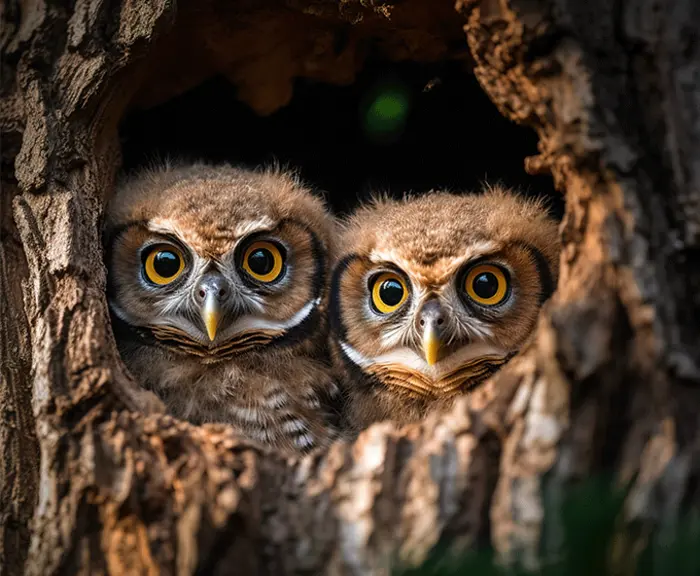
New research suggests that owls in Texas have high rates of anticoagulant rodenticides (AR)—blood thinning rat poisons—in their systems. Jennifer Smith, a professor of integrative biology in the UTSA College of Sciences, co-authored a research article published recently in PLOS ONE, the world’s first multidisciplinary open access journal.
Eres Gomez, M.S. ’22, a UTSA graduate who had conducted research in the Smith Wildlife Lab as a student, was the article’s lead author. Heather Prestridge, a curator in the Texas A&M University Department of Ecology and Conservation Biology at the Biodiversity Research and Teaching Collections (BRTC) also co-authored the article.
Entitled, “Anthropogenic threats to owls: Insights from rehabilitation admittance data and rodenticide screening in Texas,” the article assesses the anthropogenic risks faced by owls in Texas, an important region for migratory and non-migratory owls. Anthropogenic risks are hazards that are human made. They range from electric fence and vehicle collisions to exposure to ARs, including those that are heavily regulated by the Environmental Protection Agency (EPA) due to their toxicity and poisoning hazards to wildlife.
“Owls are incredible predators who help control rodent populations, and thus may be important for minimizing damage to crops and human structures caused by rodent pests and for providing control of diseases associated with rodents,” Smith said. “Because of the vital role they play in the ecosystem, it is important we support conservation efforts to ensure their survival. This study can facilitate this goal by informing strategies that mitigate the effects of anthropogenic threats faced by owls.
Smith and her collaborators utilized rehabilitation center data and liver screening data to measure AR levels in liver samples collected from deceased owls who were admitted into the Last Chance Forever the Bird of Prey Conservancy (LCF) and Wildlife Rescue & Rehabilitation, Inc. (WRR), two wildlife rehabilitation facilities that primarily receive owls from South and Central Texas. Additional liver samples were collected from deceased owls found in the wild and from owl specimens housed in the BRTC at the A&M campus at College Station.
Smith’s team discovered a high occurrence of AR exposure, with 51% of the owls in their study testing positive.
In 2011, the EPA banned the sale of brodifacoum and bromadiolone—the ARs that were detected the most by Smith’s research team—for the general public and residential consumers. However, they are still permitted for purchase and use by by pest control operators and the agricultural sector for rodent removal.
“To reduce AR exposure, we recommend using alternative measures to control rodents,” Smith said. “For example, natural methods can be used as part of an integrated pest management strategy that considers a mix of nontoxic lethal or nonlethal methods such as habitat modification, trapping and nontoxic repellants.”
Additionally, the research team encourages the development of educational programs to increase awareness of the effects of ARs on non-target wildlife such as owls.
The research program was funded by donations to the Smith Wildlife Lab from local community members following outreach efforts made by Smith and Gomez. The team conducts research that informs policy and promotes sustainable land uses that consider the conservation of wildlife and human well-being. It is currently expanding its research by investigating how urbanization increases risks to owls.
In 2018, Smith joined UTSA as an assistant professor of wildlife biology. Prior to her UTSA appointment, she was a research scientist at Virginia Tech where she led numerous projects focused on anthropogenic effects on wildlife. Smith is originally from the United Kingdom, where she completed a B.Sc. in Zoology at Cardiff University, Wales, and then earned her Ph.D. at the University of Birmingham.
Journal
PLoS ONE
Article Title
Anthropogenic threats to owls: Insights from rehabilitation admittance data and rodenticide screening in Texas
Article Publication Date
4-Aug-2023