• HOME
  • NEWS
  • EXPLORE
    • CAREER
      • Companies
      • Jobs
    • EVENTS
    • iGEM
      • News
      • Team
    • PHOTOS
    • VIDEO
    • WIKI
  • BLOG
  • COMMUNITY
    • FACEBOOK
    • INSTAGRAM
    • TWITTER
Monday, August 31, 2026
BIOENGINEER.ORG
No Result
View All Result
  • Login
  • HOME
  • NEWS
  • EXPLORE
    • CAREER
      • Companies
      • Jobs
        • Lecturer
        • PhD Studentship
        • Postdoc
        • Research Assistant
    • EVENTS
    • iGEM
      • News
      • Team
    • PHOTOS
    • VIDEO
    • WIKI
  • BLOG
  • COMMUNITY
    • FACEBOOK
    • INSTAGRAM
    • TWITTER
  • HOME
  • NEWS
  • EXPLORE
    • CAREER
      • Companies
      • Jobs
        • Lecturer
        • PhD Studentship
        • Postdoc
        • Research Assistant
    • EVENTS
    • iGEM
      • News
      • Team
    • PHOTOS
    • VIDEO
    • WIKI
  • BLOG
  • COMMUNITY
    • FACEBOOK
    • INSTAGRAM
    • TWITTER
No Result
View All Result
Bioengineer.org
No Result
View All Result
Home NEWS Science News Health

Setting the gold standard in diagnosis of lupus nephritis

Bioengineer by Bioengineer
September 12, 2023
in Health
Reading Time: 2 mins read
0
University of Houston professors Chandra Mohan and Hien Van Nguyen
Share on FacebookShare on TwitterShare on LinkedinShare on RedditShare on Telegram

In the ever-perilous autoimmune disease world of systemic lupus erythematosus (SLE or lupus), up to 60% of adult patients and 80% of children will develop lupus nephritis (LN), and up to half of those will move on to end-stage renal disease. LN occurs when the immune system wrongly attacks the kidneys, preventing them from doing their job, i.e., cleaning blood, balancing body fluids and controlling hormones that impact blood pressure. 
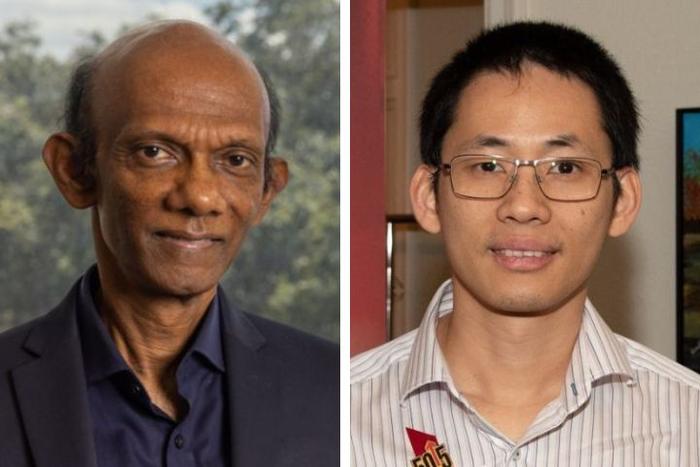
University of Houston professors Chandra Mohan and Hien Van Nguyen

Credit: University of Houston

In the ever-perilous autoimmune disease world of systemic lupus erythematosus (SLE or lupus), up to 60% of adult patients and 80% of children will develop lupus nephritis (LN), and up to half of those will move on to end-stage renal disease. LN occurs when the immune system wrongly attacks the kidneys, preventing them from doing their job, i.e., cleaning blood, balancing body fluids and controlling hormones that impact blood pressure. 

Unfortunately, the most precise way to diagnose LN hasn’t been all that precise. The kidney biopsy, which in itself is a painful ordeal, reaches a tipping point at the time doctors must read the biopsy report. Historically those interpretations have been imprecise and marked by significant disagreement among pathologists reading the same thing. 

Enter artificial intelligence, which combines computer science and robust datasets to enable problem-solving, and two University of Houston Cullen College of Engineering faculty. Chandra Mohan, Hugh Roy and Lillie Cranz Cullen Endowed Professor of Biomedical Engineering and Hien Van Nguyen, associate professor of Electrical and Computer Engineering, have received a $3 million grant from the National Institute of Diabetes and Digestive and Kidney Diseases to bring AI into the diagnostic picture.  


“Given that this critical diagnostic step – which is important for planning treatment – is highly variable and imprecise, we sought out alternative approaches,” said Mohan. “This funding allows us to use artificial intelligence approaches to train a ‘neural network’ to learn how to read and classify lupus nephritis biopsy slides.” 

The goal of using AI to classify lupus nephritis in an automated fashion with high accuracy will translate to better treatment for lupus nephritis, according to researchers. 

Whereas Mohan is known internationally for his work on lupus nephritis, Nguyen already leads several projects to fully realize the benefits of AI in improving medical diagnosis. The UH team will work closely with renal pathologists including Jan Becker, Cologne, Germany; Luan Truong and Sadhna Dhingra, Houston Methodist; Qi Cai, UT Southwestern, Dallas, Texas; and Surya Seshan, Cornell University, Ithaca, New York. 

“By leveraging the power of computer vision and deep learning, a branch of machine learning, we will build classifiers that rival the best renal pathologists in making a diagnosis using current criteria. This could dramatically improve patient management and long-term renal and patient outcome,” said Mohan. 

“This collaborative effort exemplifies how AI and medical expertise can intersect to drive innovation, and I want to extend my gratitude to the hard-working team members who are committed to pushing the boundaries of what AI can do in the field of lupus nephritis,” said Nguyen. 



Share12Tweet8Share2ShareShareShare2

Related Posts

Wearable monitor improves diagnosis of heart rhythm disorders after fainting

August 31, 2026

Visualisation of magnetic field-induced nanoparticle clusters and mechanical property changes in a breast phantom for inductive moderate hyperthermia

August 31, 2026

Multidisciplinary intervention in frail elderly patients with cardiovascular diseases: a multicentre, single-blinded, randomised controlled trial

August 31, 2026

Machine Learning Model Development and Evaluation for Non-contact Lower Limb Injury Risk Prediction in Elite Male Rugby Union: A Multi-team, Multi-season Analysis

August 31, 2026

POPULAR NEWS

  • β-Sitosterol from Ipomoea carnea Jacq. As a promising anti-inflammatory agent: Evidence from in silico modeling and in vitro validation

    29 shares
    Share 12 Tweet 7
  • Design, fabrication and characterization of a wearable Fiber Bragg grating sensor for cardiorespiratory monitoring using finger plethysmography

    29 shares
    Share 12 Tweet 7
  • KAIST opens the era of industrial-scale microbial foods, proposing growth strategies for the next-generation protein market

    29 shares
    Share 12 Tweet 7
  • Virologist awarded $2 million NIH grant to investigate how virus-infected cells live and die

    29 shares
    Share 12 Tweet 7

About

We bring you the latest biotechnology news from best research centers and universities around the world. Check our website.

Follow us

Recent News

β-Sitosterol from Ipomoea carnea Jacq. As a promising anti-inflammatory agent: Evidence from in silico modeling and in vitro validation

Design, fabrication and characterization of a wearable Fiber Bragg grating sensor for cardiorespiratory monitoring using finger plethysmography

KAIST opens the era of industrial-scale microbial foods, proposing growth strategies for the next-generation protein market

Subscribe to Blog via Email

Enter your email address to subscribe to this blog and receive notifications of new posts by email.

Join 85 other subscribers
  • Contact Us

Bioengineer.org © Copyright 2023 All Rights Reserved.

Welcome Back!

Login to your account below

Forgotten Password?

Retrieve your password

Please enter your username or email address to reset your password.

Log In
No Result
View All Result
  • Homepages
    • Home Page 1
    • Home Page 2
  • News
  • National
  • Business
  • Health
  • Lifestyle
  • Science

Bioengineer.org © Copyright 2023 All Rights Reserved.