• HOME
  • NEWS
  • EXPLORE
    • CAREER
      • Companies
      • Jobs
    • EVENTS
    • iGEM
      • News
      • Team
    • PHOTOS
    • VIDEO
    • WIKI
  • BLOG
  • COMMUNITY
    • FACEBOOK
    • INSTAGRAM
    • TWITTER
Saturday, February 7, 2026
BIOENGINEER.ORG
No Result
View All Result
  • Login
  • HOME
  • NEWS
  • EXPLORE
    • CAREER
      • Companies
      • Jobs
        • Lecturer
        • PhD Studentship
        • Postdoc
        • Research Assistant
    • EVENTS
    • iGEM
      • News
      • Team
    • PHOTOS
    • VIDEO
    • WIKI
  • BLOG
  • COMMUNITY
    • FACEBOOK
    • INSTAGRAM
    • TWITTER
  • HOME
  • NEWS
  • EXPLORE
    • CAREER
      • Companies
      • Jobs
        • Lecturer
        • PhD Studentship
        • Postdoc
        • Research Assistant
    • EVENTS
    • iGEM
      • News
      • Team
    • PHOTOS
    • VIDEO
    • WIKI
  • BLOG
  • COMMUNITY
    • FACEBOOK
    • INSTAGRAM
    • TWITTER
No Result
View All Result
Bioengineer.org
No Result
View All Result
Home NEWS Science News Biology

Gotcha! New technology speeds up bacterial testing in food

Bioengineer by Bioengineer
September 12, 2023
in Biology
Reading Time: 3 mins read
0
New technology that significantly reduces the time it takes to measure viable bacteria in food
Share on FacebookShare on TwitterShare on LinkedinShare on RedditShare on Telegram

It is said that there is waste in haste, but researchers from Osaka Metropolitan University have proven that doing things rapidly does not necessarily mean working ineffectively. A research group led by Professor Hiroshi Shiigi at the Graduate School of Engineering, Osaka Metropolitan University has developed a technology that can rapidly and accurately determine the number of viable bacteria in food products electrochemically, using tetrazolium salt (MTT), a water-soluble molecule.
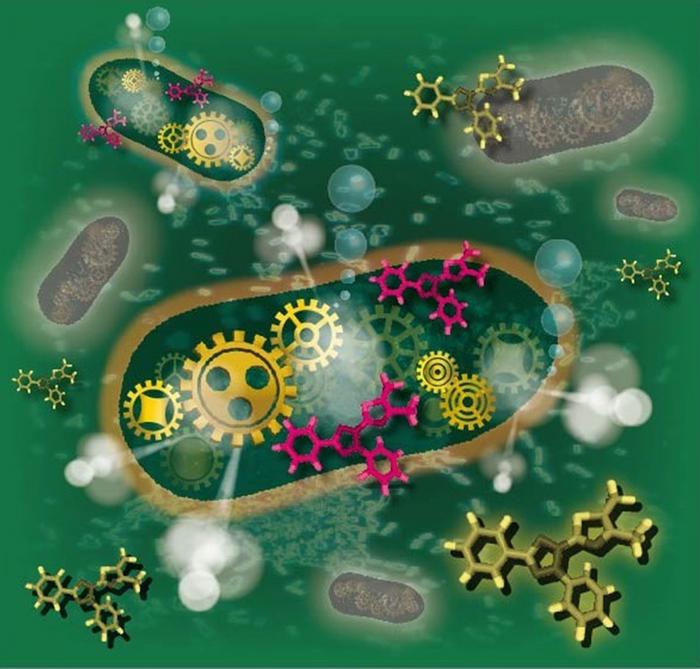
New technology that significantly reduces the time it takes to measure viable bacteria in food

Credit: Hiroshi Shiigi, Osaka Metropolitan University

It is said that there is waste in haste, but researchers from Osaka Metropolitan University have proven that doing things rapidly does not necessarily mean working ineffectively. A research group led by Professor Hiroshi Shiigi at the Graduate School of Engineering, Osaka Metropolitan University has developed a technology that can rapidly and accurately determine the number of viable bacteria in food products electrochemically, using tetrazolium salt (MTT), a water-soluble molecule.

One of the most important assessment indicators for ensuring that food is free from contamination is the number of viable bacteria. However, conventional measurement methods take up to 2 days to yield results, and these results are only available after the food has been shipped from the factory—leading to potentially fatal consequences. Therefore, it is imperative to have a testing method that speeds up the process of identifying bacterial contamination before shipment.

The researchers have succeeded in drastically reducing the inspection time from 2 days to about 1 hour, regardless of the bacterial species. “With this method, we can quickly measure the number of viable bacteria, allowing us to confirm the safety of food products before they leave the factory and to prevent food poisoning,” Professor Shiigi explained. “This method does not require complicated operations or expensive equipment. Therefore, we will continue to optimize the measurement conditions and expect to see the development of a portable sensor in line with the development of research aimed at practical applications.”

Their results were published in Analytical Chemistry.


###

About OMU 

Osaka Metropolitan University is a new public university established in April 2022, formed by merger between Osaka City University and Osaka Prefecture University. For more research news visit https://www.omu.ac.jp/en/ or follow @OsakaMetUniv_en and #OMUScience.


Journal

Analytical Chemistry

DOI

10.1021/acs.analchem.3c01871

Method of Research

Experimental study

Subject of Research

Cells

Article Title

Evaluation of Bacterial Activity Based on the Electrochemical Properties of Tetrazolium Salts

Article Publication Date

10-Aug-2023

Share12Tweet8Share2ShareShareShare2

Related Posts

Florida Cane Toad: Complex Spread and Selective Evolution

Florida Cane Toad: Complex Spread and Selective Evolution

February 7, 2026
New Study Uncovers Mechanism Behind Burn Pit Particulate Matter–Induced Lung Inflammation

New Study Uncovers Mechanism Behind Burn Pit Particulate Matter–Induced Lung Inflammation

February 6, 2026

DeepBlastoid: Advancing Automated and Efficient Evaluation of Human Blastoids with Deep Learning

February 6, 2026

Navigating the Gut: The Role of Formic Acid in the Microbiome

February 6, 2026

POPULAR NEWS

  • Robotic Ureteral Reconstruction: A Novel Approach

    Robotic Ureteral Reconstruction: A Novel Approach

    82 shares
    Share 33 Tweet 21
  • Digital Privacy: Health Data Control in Incarceration

    63 shares
    Share 25 Tweet 16
  • Study Reveals Lipid Accumulation in ME/CFS Cells

    57 shares
    Share 23 Tweet 14
  • Breakthrough in RNA Research Accelerates Medical Innovations Timeline

    53 shares
    Share 21 Tweet 13

About

We bring you the latest biotechnology news from best research centers and universities around the world. Check our website.

Follow us

Recent News

Evaluating Pediatric Emergency Care Quality in Ethiopia

TPMT Expression Predictions Linked to Azathioprine Side Effects

Improving Dementia Care with Enhanced Activity Kits

Subscribe to Blog via Email

Success! An email was just sent to confirm your subscription. Please find the email now and click 'Confirm' to start subscribing.

Join 73 other subscribers
  • Contact Us

Bioengineer.org © Copyright 2023 All Rights Reserved.

Welcome Back!

Login to your account below

Forgotten Password?

Retrieve your password

Please enter your username or email address to reset your password.

Log In
No Result
View All Result
  • Homepages
    • Home Page 1
    • Home Page 2
  • News
  • National
  • Business
  • Health
  • Lifestyle
  • Science

Bioengineer.org © Copyright 2023 All Rights Reserved.