• HOME
  • NEWS
  • EXPLORE
    • CAREER
      • Companies
      • Jobs
    • EVENTS
    • iGEM
      • News
      • Team
    • PHOTOS
    • VIDEO
    • WIKI
  • BLOG
  • COMMUNITY
    • FACEBOOK
    • INSTAGRAM
    • TWITTER
Monday, August 31, 2026
BIOENGINEER.ORG
No Result
View All Result
  • Login
  • HOME
  • NEWS
  • EXPLORE
    • CAREER
      • Companies
      • Jobs
        • Lecturer
        • PhD Studentship
        • Postdoc
        • Research Assistant
    • EVENTS
    • iGEM
      • News
      • Team
    • PHOTOS
    • VIDEO
    • WIKI
  • BLOG
  • COMMUNITY
    • FACEBOOK
    • INSTAGRAM
    • TWITTER
  • HOME
  • NEWS
  • EXPLORE
    • CAREER
      • Companies
      • Jobs
        • Lecturer
        • PhD Studentship
        • Postdoc
        • Research Assistant
    • EVENTS
    • iGEM
      • News
      • Team
    • PHOTOS
    • VIDEO
    • WIKI
  • BLOG
  • COMMUNITY
    • FACEBOOK
    • INSTAGRAM
    • TWITTER
No Result
View All Result
Bioengineer.org
No Result
View All Result
Home NEWS Science News Health

McWilliams School of Biomedical Informatics researchers awarded $3.4M NIH grant to understand link between chronic health conditions and Alzheimer’s disease

Bioengineer by Bioengineer
September 8, 2023
in Health
Reading Time: 2 mins read
0
Xiaoqian Jiang, PhD
Share on FacebookShare on TwitterShare on LinkedinShare on RedditShare on Telegram

A three-year, $3.4 million grant to investigate how Alzheimer’s disease is connected to multiple chronic diseases has been awarded to UTHealth Houston researchers by the National Institute on Aging, part of the National Institutes of Health.
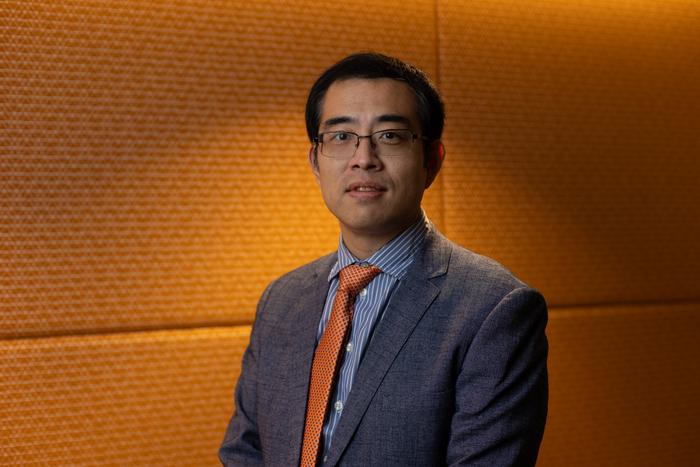
Xiaoqian Jiang, PhD

Credit: Rogelio Castro/UTHealth Houston

A three-year, $3.4 million grant to investigate how Alzheimer’s disease is connected to multiple chronic diseases has been awarded to UTHealth Houston researchers by the National Institute on Aging, part of the National Institutes of Health.

To study this, a team led by Xiaoqian Jiang, PhD, principal investigator and professor and chair in the Department of Health Data Science and Artificial Intelligence with McWilliams School of Biomedical Informatics at UTHealth Houston, will build risk trajectory maps for patients using clinical data and electronic health records. Specifically, they will develop electronic health records with an application interface pathway that allows different data systems to communicate the exchange of health data across hospitals and clinics.

“Our focus is on prevention. If we have a better grasp of the patients’ conditions, then we can map their risk to visualize if they are following a certain cognitive degradation pathway. Intervention and prevention efforts can start earlier for the patient,” said Jiang, the Christopher Sarofim Family Professor in Biomedical Informatics and Bioengineering. When a patient’s medical history is stored in electronic health records, it is oftentimes scattered across different systems and platforms, making it difficult for doctors to piece together a full picture of the patient’s health. This results in missed opportunities to further understand how Alzheimer’s disease is connected to other ongoing health problems such as hypertension and diabetes, two chronic conditions that typically speed up the onset of Alzheimer’s disease.

As part of the study, researchers will pull real-time patient information located in electronic health records from nearly 1,000 participants in a University of South Florida-led interventional trial called ACTIVE MIND, which is studying how cognitive training can help prevent dementia.

Most electronic health record systems in the United States follow the broadly-used Fast Healthcare Interoperability Resources (FHIR) standardization health data framework, which defines a set of standards for the exchange, integration, and sharing of health care information electronically to make it easier for different health care systems and applications to communicate and share data effectively.

Utilizing FHIR, Jiang’s research team will build patient profiles and attach previous medical and treatment histories to map patients’ risk trajectory of developing Alzheimer’s disease through machine learning. The team plans to follow patients for seven years.

“I am hoping we will build a digital patient profile over the trajectory of more than a decade. Alzheimer’s disease is gradual, and there are multiple evident sources that we can use to profile the degree of cognitive function changes influenced by multiple chronic conditions in different subpopulations,” Jiang said.

Media Inquiries: 713-500-3030



Share12Tweet8Share2ShareShareShare2

Related Posts

Wearable monitor improves diagnosis of heart rhythm disorders after fainting

August 31, 2026

Visualisation of magnetic field-induced nanoparticle clusters and mechanical property changes in a breast phantom for inductive moderate hyperthermia

August 31, 2026

Multidisciplinary intervention in frail elderly patients with cardiovascular diseases: a multicentre, single-blinded, randomised controlled trial

August 31, 2026

Machine Learning Model Development and Evaluation for Non-contact Lower Limb Injury Risk Prediction in Elite Male Rugby Union: A Multi-team, Multi-season Analysis

August 31, 2026

POPULAR NEWS

  • β-Sitosterol from Ipomoea carnea Jacq. As a promising anti-inflammatory agent: Evidence from in silico modeling and in vitro validation

    29 shares
    Share 12 Tweet 7
  • Design, fabrication and characterization of a wearable Fiber Bragg grating sensor for cardiorespiratory monitoring using finger plethysmography

    29 shares
    Share 12 Tweet 7
  • KAIST opens the era of industrial-scale microbial foods, proposing growth strategies for the next-generation protein market

    29 shares
    Share 12 Tweet 7
  • Virologist awarded $2 million NIH grant to investigate how virus-infected cells live and die

    29 shares
    Share 12 Tweet 7

About

We bring you the latest biotechnology news from best research centers and universities around the world. Check our website.

Follow us

Recent News

β-Sitosterol from Ipomoea carnea Jacq. As a promising anti-inflammatory agent: Evidence from in silico modeling and in vitro validation

Design, fabrication and characterization of a wearable Fiber Bragg grating sensor for cardiorespiratory monitoring using finger plethysmography

KAIST opens the era of industrial-scale microbial foods, proposing growth strategies for the next-generation protein market

Subscribe to Blog via Email

Enter your email address to subscribe to this blog and receive notifications of new posts by email.

Join 85 other subscribers
  • Contact Us

Bioengineer.org © Copyright 2023 All Rights Reserved.

Welcome Back!

Login to your account below

Forgotten Password?

Retrieve your password

Please enter your username or email address to reset your password.

Log In
No Result
View All Result
  • Homepages
    • Home Page 1
    • Home Page 2
  • News
  • National
  • Business
  • Health
  • Lifestyle
  • Science

Bioengineer.org © Copyright 2023 All Rights Reserved.