• HOME
  • NEWS
  • EXPLORE
    • CAREER
      • Companies
      • Jobs
    • EVENTS
    • iGEM
      • News
      • Team
    • PHOTOS
    • VIDEO
    • WIKI
  • BLOG
  • COMMUNITY
    • FACEBOOK
    • INSTAGRAM
    • TWITTER
Monday, August 31, 2026
BIOENGINEER.ORG
No Result
View All Result
  • Login
  • HOME
  • NEWS
  • EXPLORE
    • CAREER
      • Companies
      • Jobs
        • Lecturer
        • PhD Studentship
        • Postdoc
        • Research Assistant
    • EVENTS
    • iGEM
      • News
      • Team
    • PHOTOS
    • VIDEO
    • WIKI
  • BLOG
  • COMMUNITY
    • FACEBOOK
    • INSTAGRAM
    • TWITTER
  • HOME
  • NEWS
  • EXPLORE
    • CAREER
      • Companies
      • Jobs
        • Lecturer
        • PhD Studentship
        • Postdoc
        • Research Assistant
    • EVENTS
    • iGEM
      • News
      • Team
    • PHOTOS
    • VIDEO
    • WIKI
  • BLOG
  • COMMUNITY
    • FACEBOOK
    • INSTAGRAM
    • TWITTER
No Result
View All Result
Bioengineer.org
No Result
View All Result
Home NEWS Science News Chemistry

Aging alters pancreatic circadian rhythm

Bioengineer by Bioengineer
September 5, 2023
in Chemistry
Reading Time: 3 mins read
0
Figure 3
Share on FacebookShare on TwitterShare on LinkedinShare on RedditShare on Telegram

“Overall, our study identified previously unknown circadian transcriptome reorganization of pancreas by aging […]”
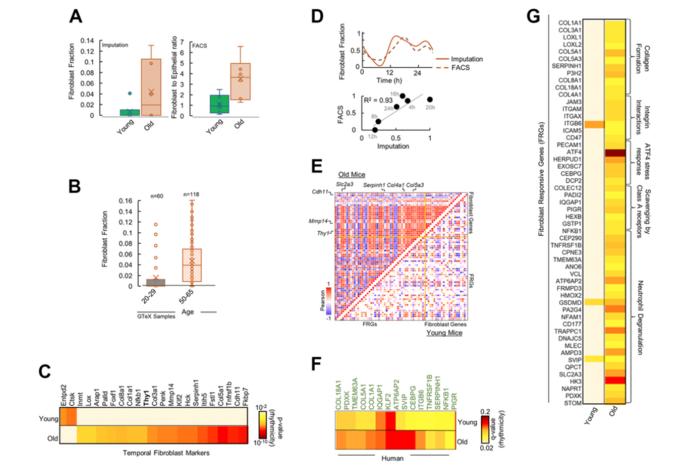
Figure 3

Credit: 2023 Sharma et al.

“Overall, our study identified previously unknown circadian transcriptome reorganization of pancreas by aging […]”

BUFFALO, NY- September 5, 2023 – A new research paper was published in Aging (listed by MEDLINE/PubMed as “Aging (Albany NY)” and “Aging-US” by Web of Science) Volume 15, Issue 16, entitled, “Reorganization of pancreas circadian transcriptome with aging.”

The evolutionarily conserved circadian system allows organisms to synchronize internal processes with 24-h cycling environmental timing cues, ensuring optimal adaptation. Like other organs, the pancreas function is under circadian control. Recent evidence suggests that aging by itself is associated with altered circadian homeostasis in different tissues which could affect the organ’s resiliency to aging-related pathologies. 

Pancreas pathologies of either endocrine or exocrine components are age-related. Whether pancreas circadian transcriptome output is affected by age is still unknown. In their new study, researchers Deepak Sharma, Caitlin R. Wessel, Mahboobeh Mahdavinia, Fabian Preuss, and Faraz Bishehsari from Rush University and University of Wisconsin-Parkside profiled the impact of age on the pancreatic transcriptome over a full circadian cycle and elucidated a circadian transcriptome reorganization of pancreas by aging. 

“Here we carried out a 24-h circadian transcriptomic analysis of pancreas from male mice at young and old ages.”

The researchers defined a comprehensive circadian transcriptome landscape and identified biological pathways that are reflective of aging pancreas. Additionally, analysis of the pancreatic microenvironment revealed novel mechanistic insights into the fibroblast-mediated regulation of rhythmicity in aged pancreas. The team suggests that the circadian transcriptome in aging pancreas re-organizes in response to age-specific signals from the cellular microenvironment, primarily modulated by fibroblasts.

“Our study highlights gain of rhythms in the extrinsic cellular pathways in the aged pancreas and extends a potential role to fibroblast-associated mechanisms.”


Read the full study: DOI: https://doi.org/10.18632/aging.204929 

Corresponding Author: Faraz Bishehsari

Corresponding Email: [email protected] 

Keywords: circadian rhythms, aging, RNA transcriptomics, pancreas

Sign up for free Altmetric alerts about this article: https://aging.altmetric.com/details/email_updates?id=10.18632%2Faging.https://doi.org/10.18632/aging.204929


About Aging:

Launched in 2009, Aging publishes papers of general interest and biological significance in all fields of aging research and age-related diseases, including cancer—and now, with a special focus on COVID-19 vulnerability as an age-dependent syndrome. Topics in Aging go beyond traditional gerontology, including, but not limited to, cellular and molecular biology, human age-related diseases, pathology in model organisms, signal transduction pathways (e.g., p53, sirtuins, and PI-3K/AKT/mTOR, among others), and approaches to modulating these signaling pathways.

Please visit our website at www.Aging-US.com​​ and connect with us:

  • SoundCloud
  • Facebook
  • Twitter
  • Instagram
  • YouTube
  • LabTube
  • LinkedIn
  • Reddit
  • Pinterest


Click here to subscribe to Aging publication updates.

For media inquiries, please contact [email protected].


Aging (Aging-US) Journal Office

6666 E. Quaker Str., Suite 1B

Orchard Park, NY 14127

Phone: 1-800-922-0957, option 1

###


Journal

Aging-US

DOI

10.18632/aging.204929

Method of Research

Observational study

Subject of Research

Animals

Article Title

Reorganization of pancreas circadian transcriptome with aging

Article Publication Date

29-Aug-2023

Share12Tweet8Share2ShareShareShare2

Related Posts

β-Sitosterol from Ipomoea carnea Jacq. As a promising anti-inflammatory agent: Evidence from in silico modeling and in vitro validation

β-Sitosterol from Ipomoea carnea Jacq. As a promising anti-inflammatory agent: Evidence from in silico modeling and in vitro validation

August 31, 2026
Graded membranes point to a sustainable route for refining complex petroleum

Graded membranes point to a sustainable route for refining complex petroleum

August 31, 2026

Round-robin tests quantify catalyst activity and deactivation in CO2 hydrogenation modelling

August 30, 2026

Researchers reveal guiding principles for electrochemical synthesis of multimetallic nanocrystals

August 30, 2026

POPULAR NEWS

  • β-Sitosterol from Ipomoea carnea Jacq. As a promising anti-inflammatory agent: Evidence from in silico modeling and in vitro validation

    29 shares
    Share 12 Tweet 7
  • Design, fabrication and characterization of a wearable Fiber Bragg grating sensor for cardiorespiratory monitoring using finger plethysmography

    29 shares
    Share 12 Tweet 7
  • KAIST opens the era of industrial-scale microbial foods, proposing growth strategies for the next-generation protein market

    29 shares
    Share 12 Tweet 7
  • Virologist awarded $2 million NIH grant to investigate how virus-infected cells live and die

    29 shares
    Share 12 Tweet 7

About

We bring you the latest biotechnology news from best research centers and universities around the world. Check our website.

Follow us

Recent News

β-Sitosterol from Ipomoea carnea Jacq. As a promising anti-inflammatory agent: Evidence from in silico modeling and in vitro validation

Design, fabrication and characterization of a wearable Fiber Bragg grating sensor for cardiorespiratory monitoring using finger plethysmography

KAIST opens the era of industrial-scale microbial foods, proposing growth strategies for the next-generation protein market

Subscribe to Blog via Email

Enter your email address to subscribe to this blog and receive notifications of new posts by email.

Join 85 other subscribers
  • Contact Us

Bioengineer.org © Copyright 2023 All Rights Reserved.

Welcome Back!

Login to your account below

Forgotten Password?

Retrieve your password

Please enter your username or email address to reset your password.

Log In
No Result
View All Result
  • Homepages
    • Home Page 1
    • Home Page 2
  • News
  • National
  • Business
  • Health
  • Lifestyle
  • Science

Bioengineer.org © Copyright 2023 All Rights Reserved.