• HOME
  • NEWS
  • EXPLORE
    • CAREER
      • Companies
      • Jobs
    • EVENTS
    • iGEM
      • News
      • Team
    • PHOTOS
    • VIDEO
    • WIKI
  • BLOG
  • COMMUNITY
    • FACEBOOK
    • INSTAGRAM
    • TWITTER
Saturday, February 7, 2026
BIOENGINEER.ORG
No Result
View All Result
  • Login
  • HOME
  • NEWS
  • EXPLORE
    • CAREER
      • Companies
      • Jobs
        • Lecturer
        • PhD Studentship
        • Postdoc
        • Research Assistant
    • EVENTS
    • iGEM
      • News
      • Team
    • PHOTOS
    • VIDEO
    • WIKI
  • BLOG
  • COMMUNITY
    • FACEBOOK
    • INSTAGRAM
    • TWITTER
  • HOME
  • NEWS
  • EXPLORE
    • CAREER
      • Companies
      • Jobs
        • Lecturer
        • PhD Studentship
        • Postdoc
        • Research Assistant
    • EVENTS
    • iGEM
      • News
      • Team
    • PHOTOS
    • VIDEO
    • WIKI
  • BLOG
  • COMMUNITY
    • FACEBOOK
    • INSTAGRAM
    • TWITTER
No Result
View All Result
Bioengineer.org
No Result
View All Result
Home NEWS Science News Biology

Yeast studies show that diet in early life matters for lifelong health

Bioengineer by Bioengineer
August 29, 2023
in Biology
Reading Time: 2 mins read
0
Picking yeast from a plate
Share on FacebookShare on TwitterShare on LinkedinShare on RedditShare on Telegram

Researchers at the Babraham Institute are proposing an alternative link between diet and ageing based on studies in yeast. Dr Jon Houseley and his team have published their experiments, showing that healthy ageing is achievable through dietary change without restriction by potentially optimising diet, and that ill-health is not an inevitable part of the ageing process.
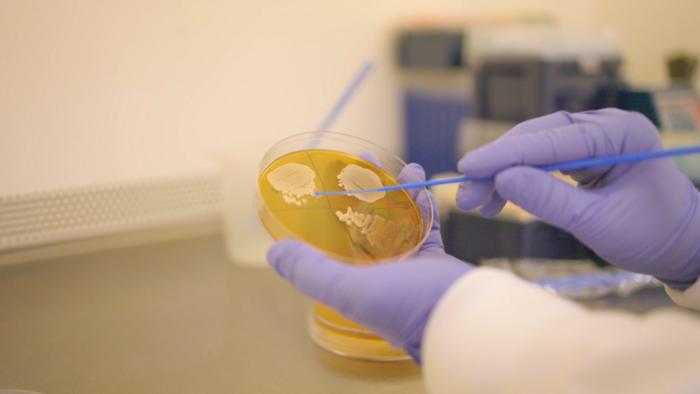
Picking yeast from a plate

Credit: Babraham Institute

Researchers at the Babraham Institute are proposing an alternative link between diet and ageing based on studies in yeast. Dr Jon Houseley and his team have published their experiments, showing that healthy ageing is achievable through dietary change without restriction by potentially optimising diet, and that ill-health is not an inevitable part of the ageing process.

Scientists have long known that caloric restriction – intentionally consuming far less calories than normal without becoming malnourished – improves health in later life and may even extend life. However, studies in mice show that caloric restriction really needs to be maintained throughout life to achieve this impact, and the health benefits disappear when a normal diet is resumed. Dr Houseley’s new research conducted in yeast suggests an alternative to calorie restriction can lead to improved health through the lifecycle.

“We show that diet in early life can switch yeast onto a healthier trajectory. By giving yeast a different diet without restricting calories we were able to suppress senescence, when cells no longer divide, and loss of fitness in aged cells.” Said Dr Dorottya Horkai, lead researcher on the study.

Rather than growing yeast on their usual glucose-rich diet, the researchers swapped their diet to galactose and observed that many molecular changes which normally accompany ageing did not occur. The cells grown on galactose remained just as fit as young cells even late in life, despite not living any longer, showing that the period of ill-health towards the end of life was dramatically reduced.

“Crucially, the dietary change only works when cells are young, and actually diet makes little difference in old yeast. It is hard to translate what youth means between yeast and humans, but all these studies point to the same trend – to live a long and healthy life, a healthy diet from an early age makes a difference.” explains Dr Houseley.

Yeast are good model organisms for studying ageing as they share many of the same cellular machinery as animals and humans. This avenue of research in yeast helps us to seek a more achievable way to improve healthy ageing though diet compared to sustained and severe calorie restriction, although more research is needed.


Journal

PLoS Biology

Share12Tweet8Share2ShareShareShare2

Related Posts

Florida Cane Toad: Complex Spread and Selective Evolution

Florida Cane Toad: Complex Spread and Selective Evolution

February 7, 2026
New Study Uncovers Mechanism Behind Burn Pit Particulate Matter–Induced Lung Inflammation

New Study Uncovers Mechanism Behind Burn Pit Particulate Matter–Induced Lung Inflammation

February 6, 2026

DeepBlastoid: Advancing Automated and Efficient Evaluation of Human Blastoids with Deep Learning

February 6, 2026

Navigating the Gut: The Role of Formic Acid in the Microbiome

February 6, 2026

POPULAR NEWS

  • Robotic Ureteral Reconstruction: A Novel Approach

    Robotic Ureteral Reconstruction: A Novel Approach

    82 shares
    Share 33 Tweet 21
  • Digital Privacy: Health Data Control in Incarceration

    63 shares
    Share 25 Tweet 16
  • Study Reveals Lipid Accumulation in ME/CFS Cells

    57 shares
    Share 23 Tweet 14
  • Breakthrough in RNA Research Accelerates Medical Innovations Timeline

    53 shares
    Share 21 Tweet 13

About

We bring you the latest biotechnology news from best research centers and universities around the world. Check our website.

Follow us

Recent News

Decoding Prostate Cancer Origins via snFLARE-seq, mxFRIZNGRND

Digital Health Perspectives from Baltic Sea Experts

Florida Cane Toad: Complex Spread and Selective Evolution

Subscribe to Blog via Email

Enter your email address to subscribe to this blog and receive notifications of new posts by email.

Join 73 other subscribers
  • Contact Us

Bioengineer.org © Copyright 2023 All Rights Reserved.

Welcome Back!

Login to your account below

Forgotten Password?

Retrieve your password

Please enter your username or email address to reset your password.

Log In
No Result
View All Result
  • Homepages
    • Home Page 1
    • Home Page 2
  • News
  • National
  • Business
  • Health
  • Lifestyle
  • Science

Bioengineer.org © Copyright 2023 All Rights Reserved.