• HOME
  • NEWS
  • EXPLORE
    • CAREER
      • Companies
      • Jobs
    • EVENTS
    • iGEM
      • News
      • Team
    • PHOTOS
    • VIDEO
    • WIKI
  • BLOG
  • COMMUNITY
    • FACEBOOK
    • INSTAGRAM
    • TWITTER
Saturday, February 7, 2026
BIOENGINEER.ORG
No Result
View All Result
  • Login
  • HOME
  • NEWS
  • EXPLORE
    • CAREER
      • Companies
      • Jobs
        • Lecturer
        • PhD Studentship
        • Postdoc
        • Research Assistant
    • EVENTS
    • iGEM
      • News
      • Team
    • PHOTOS
    • VIDEO
    • WIKI
  • BLOG
  • COMMUNITY
    • FACEBOOK
    • INSTAGRAM
    • TWITTER
  • HOME
  • NEWS
  • EXPLORE
    • CAREER
      • Companies
      • Jobs
        • Lecturer
        • PhD Studentship
        • Postdoc
        • Research Assistant
    • EVENTS
    • iGEM
      • News
      • Team
    • PHOTOS
    • VIDEO
    • WIKI
  • BLOG
  • COMMUNITY
    • FACEBOOK
    • INSTAGRAM
    • TWITTER
No Result
View All Result
Bioengineer.org
No Result
View All Result
Home NEWS Science News

What happened to the sun over 7,000 years ago?

Bioengineer by Bioengineer
February 7, 2017
in Science News
Reading Time: 2 mins read
0
Share on FacebookShare on TwitterShare on LinkedinShare on RedditShare on Telegram
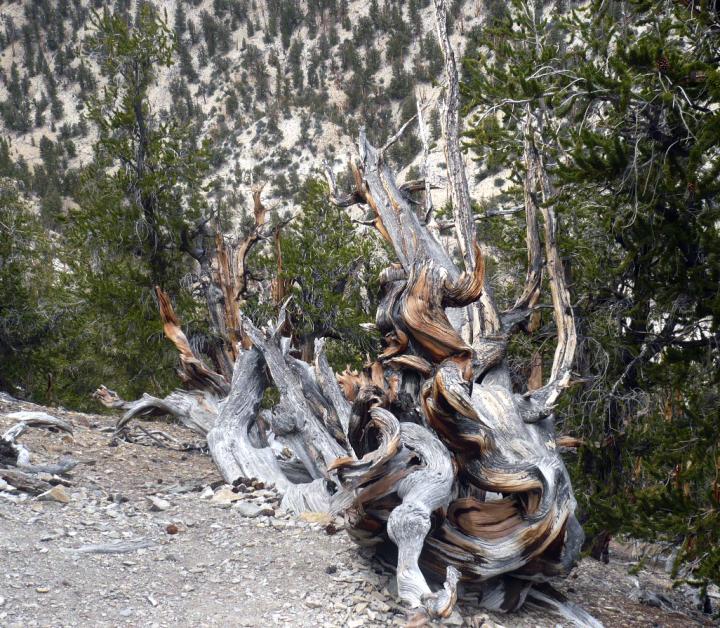
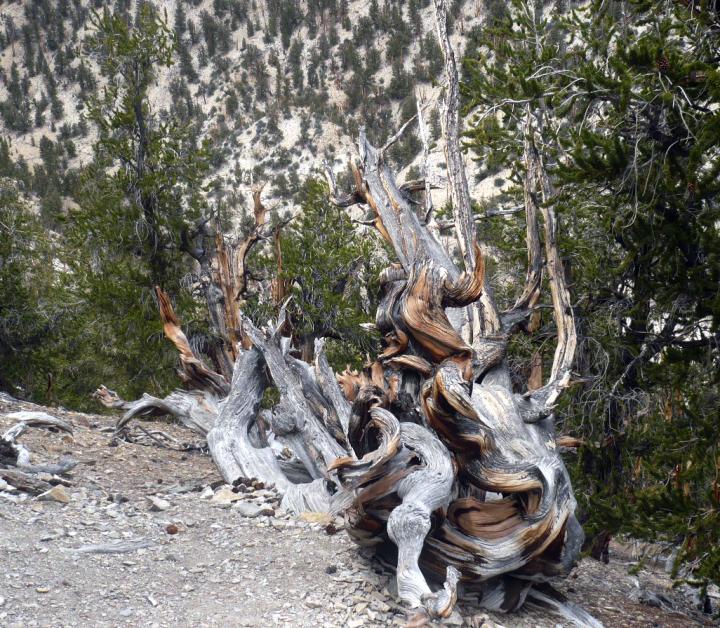
IMAGE

Credit: A.J.T.Jull

Nagoya, Japan – An international team led by researchers at Nagoya University, along with US and Swiss colleagues, has identified a new type of solar event and dated it to the year 5480 BC; they did this by measuring carbon-14 levels in tree rings, which reflect the effects of cosmic radiation on the atmosphere at the time. They have also proposed causes of this event, thereby extending knowledge of how the sun behaves.

When the activity of the sun changes, it has direct effects on the earth. For example, when the sun is relatively inactive, the amount of a type of carbon called carbon-14 increases in the earth's atmosphere. Because carbon in the air is absorbed by trees, carbon-14 levels in tree rings actually reflect solar activity and unusual solar events in the past. The team took advantage of such a phenomenon by analyzing a specimen from a bristlecone pine tree, a species that can live for thousands of years, to look back deep into the history of the sun.

"We measured the 14C levels in the pine sample at three different laboratories in Japan, the US, and Switzerland, to ensure the reliability of our results," A. J. Timothy Jull of the University of Arizona says. "We found a change in 14C that was more abrupt than any found previously, except for cosmic ray events in AD 775 and AD 994, and our use of annual data rather than data for each decade allowed us to pinpoint exactly when this occurred."

The team attempted to develop an explanation for the anomalous solar activity data by comparing the features of the 14C change with those of other solar events known to have occurred over the last couple of millennia.

"Although this newly discovered event is more dramatic than others found to date, comparisons of the 14C data among them can help us to work out what happened to the sun at this time," Fusa Miyake of Nagoya University says. She adds, "We think that a change in the magnetic activity of the sun along with a series of strong solar bursts, or a very weak sun, may have caused the unusual tree ring data."

Although the poor understanding of the mechanisms behind unusual solar activity has hampered efforts to definitively explain the team's findings, they hope that additional studies, such as telescopic findings of flares given off by other sun-like stars, could lead to an accurate explanation.

###

The article "Large 14C excursion in 5480 BC indicates an abnormal sun in the mid-Holocene" was published in PNAS at: http://www.pnas.org/cgi/doi/10.1073/pnas.1613144114

Media Contact

Koomi Sung
[email protected]

http://www.nagoya-u.ac.jp/en/

############

Story Source: Materials provided by Scienmag

Share12Tweet8Share2ShareShareShare2

Related Posts

Boosting Remote Healthcare: Stepped-Wedge Trial Insights

February 7, 2026

Barriers and Boosters of Seniors’ Physical Activity in Karachi

February 7, 2026

Evaluating Pediatric Emergency Care Quality in Ethiopia

February 7, 2026

TPMT Expression Predictions Linked to Azathioprine Side Effects

February 7, 2026
Please login to join discussion

POPULAR NEWS

  • Robotic Ureteral Reconstruction: A Novel Approach

    Robotic Ureteral Reconstruction: A Novel Approach

    82 shares
    Share 33 Tweet 21
  • Digital Privacy: Health Data Control in Incarceration

    63 shares
    Share 25 Tweet 16
  • Study Reveals Lipid Accumulation in ME/CFS Cells

    57 shares
    Share 23 Tweet 14
  • Breakthrough in RNA Research Accelerates Medical Innovations Timeline

    53 shares
    Share 21 Tweet 13

About

We bring you the latest biotechnology news from best research centers and universities around the world. Check our website.

Follow us

Recent News

Boosting Remote Healthcare: Stepped-Wedge Trial Insights

Barriers and Boosters of Seniors’ Physical Activity in Karachi

Evaluating Pediatric Emergency Care Quality in Ethiopia

Subscribe to Blog via Email

Enter your email address to subscribe to this blog and receive notifications of new posts by email.

Join 73 other subscribers
  • Contact Us

Bioengineer.org © Copyright 2023 All Rights Reserved.

Welcome Back!

Login to your account below

Forgotten Password?

Retrieve your password

Please enter your username or email address to reset your password.

Log In
No Result
View All Result
  • Homepages
    • Home Page 1
    • Home Page 2
  • News
  • National
  • Business
  • Health
  • Lifestyle
  • Science

Bioengineer.org © Copyright 2023 All Rights Reserved.