Whether they’re made from soybeans, almonds, oats, or just sourced straight from the cow, milk products must go through heat treatment to prevent harmful bacterial growth and keep them safe. But understanding how these processes affect new, plant-based milk formulations could make the beverages more pleasant to drink as well. Researchers reporting in ACS Omega have discovered how pasteurization and sterilization affects the look and feel of one such drink made from coconut and rice.
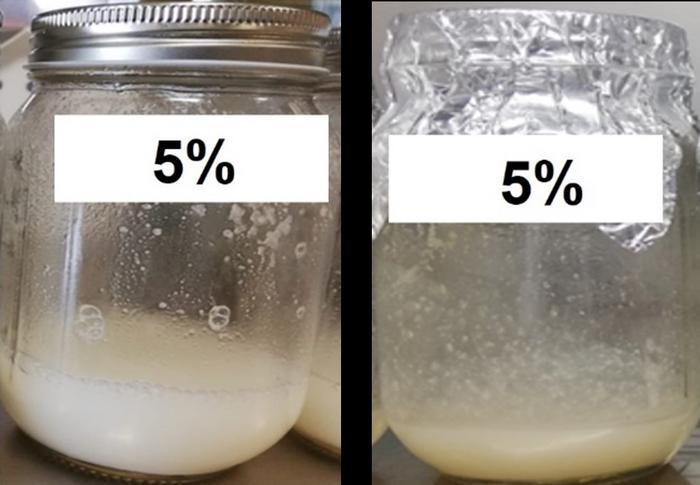
Credit: Diana C. Castro-Rodríguez
Whether they’re made from soybeans, almonds, oats, or just sourced straight from the cow, milk products must go through heat treatment to prevent harmful bacterial growth and keep them safe. But understanding how these processes affect new, plant-based milk formulations could make the beverages more pleasant to drink as well. Researchers reporting in ACS Omega have discovered how pasteurization and sterilization affects the look and feel of one such drink made from coconut and rice.
Despite the ubiquity of dairy-based foods, many people have some form of lactose intolerance — up to 36% of Americans, according to the National Institutes of Health. As a result, many turn to lactose-free, plant-based alternatives, some of which have added health benefits. For example, one drink under development combines rice flour and coconut water: Rice is hypoallergenic and high in fiber, and coconut water is hydrating and low in calories. To understand how heat treatment might alter this beverage, Jorge Yáñez-Fernández, Diana Castro-Rodríguez and colleagues wanted to test the formulation against two different high-temperature processing steps.
The team used three versions of the beverage, containing either 2%, 5% or 8% rice flour, with coconut water comprising the rest. These were heated either by pasteurization in a water bath at 140 degrees Fahrenheit or by sterilization in an autoclave at almost 250 degrees Fahrenheit. After these treatments, the team found that the starches in the rice flour gelatinized and underwent the Maillard reaction, producing a slightly darkened color and stickier fluid for all three versions. Additionally, the drinks’ acidities increased, and there were fewer sugars, which may alter the way they taste. The team plans to use these results to inform future research into similar, dairy-free, “functional beverages,” including those that could one day contain probiotic, lactic-acid bacteria.
The authors acknowledge funding from the Instituto Politecnico Nacional of Mexico.
The American Chemical Society (ACS) is a nonprofit organization chartered by the U.S. Congress. ACS’ mission is to advance the broader chemistry enterprise and its practitioners for the benefit of Earth and all its people. The Society is a global leader in promoting excellence in science education and providing access to chemistry-related information and research through its multiple research solutions, peer-reviewed journals, scientific conferences, eBooks and weekly news periodical Chemical & Engineering News. ACS journals are among the most cited, most trusted and most read within the scientific literature; however, ACS itself does not conduct chemical research. As a leader in scientific information solutions, its CAS division partners with global innovators to accelerate breakthroughs by curating, connecting and analyzing the world’s scientific knowledge. ACS’ main offices are in Washington, D.C., and Columbus, Ohio.
To automatically receive news releases from the American Chemical Society, contact newsroom@acs.org.
Follow us: Twitter | Facebook | LinkedIn | Instagram
Journal
ACS Omega
DOI
10.1021/acsomega.3c01761
Article Title
“Role of Thermal Process on the Physicochemical and Rheological Properties and Antioxidant Capacity of a New Functional Beverage Based on Coconut Water and Rice Flour”
Article Publication Date
18-Jul-2023