“We created datasets for predicting whether or not a compound extends the lifespan of C. elegans […]”
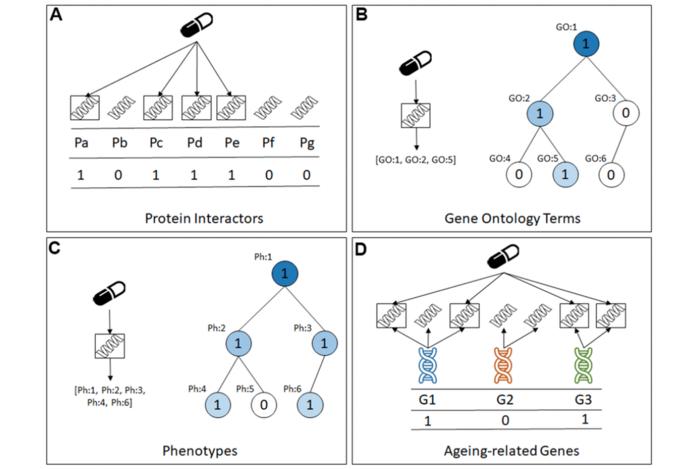
Credit: 2023 Ribeiro et al.
“We created datasets for predicting whether or not a compound extends the lifespan of C. elegans […]”
BUFFALO, NY- July 26, 2023 – A new research paper was published in Aging (listed by MEDLINE/PubMed as “Aging (Albany NY)” and “Aging-US” by Web of Science) Volume 15, Issue 13, entitled, “Predicting lifespan-extending chemical compounds for C. elegans with machine learning and biologically interpretable features.”
Recently, there has been a growing interest in the development of pharmacological interventions targeting aging, as well as in the use of machine learning for analyzing aging-related data. In this new study, researchers Caio Ribeiro, Christopher K. Farmer, João Pedro de Magalhães, and Alex A. Freitas from the University of Kent and University of Birmingham use machine learning methods to analyze data from DrugAge, a database of chemical compounds (including drugs) modulating lifespan in model organisms.
“To this end, we created four types of datasets for predicting whether or not a compound extends the lifespan of C. elegans (the most frequent model organism in DrugAge), using four different types of predictive biological features, based on: compound-protein interactions, interactions between compounds and proteins encoded by aging-related genes, and two types of terms annotated for proteins targeted by the compounds, namely Gene Ontology (GO) terms and physiology terms from the WormBase’s Phenotype Ontology.”
To analyze these datasets, the researchers used a combination of feature selection methods in a data pre-processing phase and the well-established random forest algorithm for learning predictive models from the selected features. In addition, they interpreted the most important features in the two best models in light of the biology of aging. One noteworthy feature was the GO term “Glutathione metabolic process”, which plays an important role in cellular redox homeostasis and detoxification. The team also predicted the most promising novel compounds for extending lifespan from a list of previously unlabelled compounds. These include nitroprusside, which is used as an antihypertensive medication.
“Overall, our work opens avenues for future work in employing machine learning to predict novel life-extending compounds.”
Read the full paper: DOI: https://doi.org/10.18632/aging.204866
Corresponding Authors: Caio Ribeiro, Alex A. Freitas
Corresponding Emails: [email protected], [email protected]
Keywords: lifespan-extension compounds, longevity drugs, machine learning, feature selection
Sign up for free Altmetric alerts about this article: https://aging.altmetric.com/details/email_updates?id=10.18632%2Faging.https://doi.org/10.18632/aging.204866
About Aging-US:
Launched in 2009, Aging publishes papers of general interest and biological significance in all fields of aging research and age-related diseases, including cancer—and now, with a special focus on COVID-19 vulnerability as an age-dependent syndrome. Topics in Aging go beyond traditional gerontology, including, but not limited to, cellular and molecular biology, human age-related diseases, pathology in model organisms, signal transduction pathways (e.g., p53, sirtuins, and PI-3K/AKT/mTOR, among others), and approaches to modulating these signaling pathways.
Please visit our website at www.Aging-US.com and connect with us:
- SoundCloud
- YouTube
- LabTube
Click here to subscribe to Aging publication updates.
For media inquiries, please contact [email protected].
Aging (Aging-US) Journal Office
6666 E. Quaker Str., Suite 1B
Orchard Park, NY 14127
Phone: 1-800-922-0957, option 1
###
Journal
Aging-US
DOI
10.18632/aging.204866
Method of Research
Computational simulation/modeling
Subject of Research
Animals
Article Title
Predicting lifespan-extending chemical compounds for C. elegans with machine learning and biologically interpretable features
Article Publication Date
13-Jul-2023