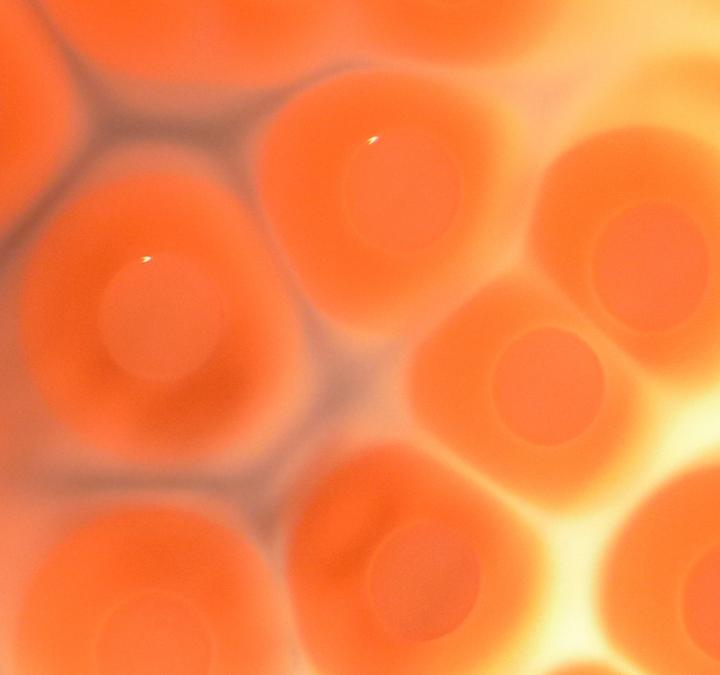
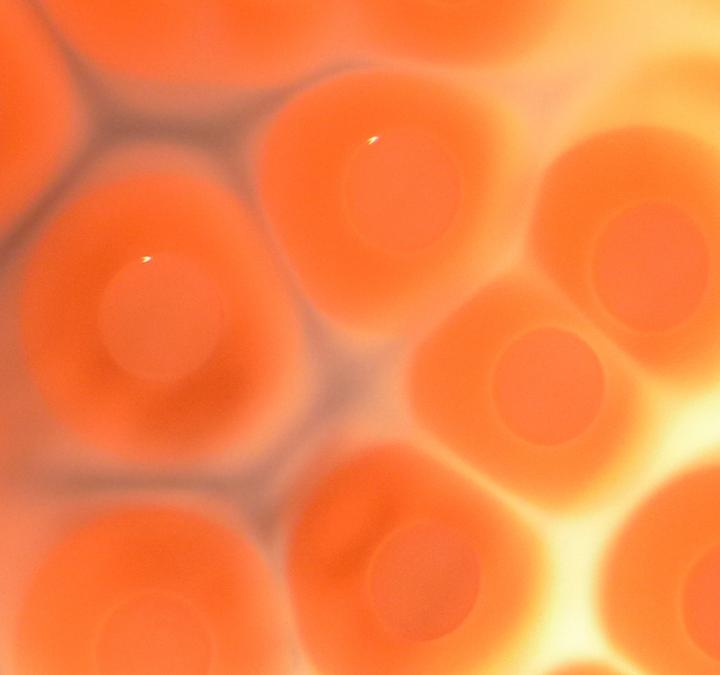
Credit: Tom Grunert/Vetmeduni Vienna
Staphylococcus aureus (S. aureus ) can colonize the upper respiratory tract of around one quarter of the human population. As an opportunistic bacteria S. aureus usually does not harm its host. If the host is healthy and the bacteria obtain sufficient nutrients, the bacteria remain quiet and are kept under control by the immune system. They may, however, become active in response to infections by another pathogen or illness weakening the host immune system.
The regular consumption of salicylic acid, or its consumption in higher doses, could unexpectedly promote and prolong bacterial colonization, as shown by a joint study conducted by Monika Ehling-Schulz's group from the Institute of Microbiology, Vetmeduni Vienna, together with the research group of Fernanda Buzzola from the University of Buenos Aires. The research stays were in part funded by the Mobility Programme for Scientific and Technological Cooperation between Austria and Argentina.
Salicylic acid deprives the body of iron and triggers a defence mechanism in the bacteria
Iron is an important trace element for the human body and plays an essential role in blood formation. The metabolism of many bacteria, including S. aureus, also depends on the availability of iron molecules. Salicylic acid forms complexes with iron ions in the blood and so deprives not only us but also the staphylococcal bacteria of this element. S. aureus modifies its metabolism if it obtains no or only insufficient iron. The microorganism reacts to the changed – from its perspective, negative – conditions through the intensified formation of a biofilm, a sort of layer of slime formed by the aggregation of individual bacteria, as Tom Grunert of the Institute for Microbiology at Vetmeduni Vienna explains. The accelerated biofilm production allows the bacteria to survive for an even longer period under unfavourable living conditions.
This increased biofilm formation is promoted by the regular or increased consumption of salicylic acid. As pain relief medication, this compound is usually not taken regularly. However, it also is a component of anti-acne preparations and certain exfoliate products, which are often used for a longer period of time. Since salicylic acid is found in fruits and vegetables, people who follow a mostly vegetarian diet might also affected. "These people consume a small dose of the substance virtually every day," says Grunert. The use of certain medications further increases the iron limitation. Taken orally, salicylic acid enters the blood circulation and forms there complexes with the iron ions.
Enhanced biofilm formation after consumption of salicylic acid in experimental settings
The research team demonstrated this effect in a laboratory experiment. "We first confirmed that salicylic acid, which is known for its capacity to form iron complexes, really does 'capture' the iron that is important for the staphylococcal bacteria," says Grunert. The formation of the bacterial biofilm was then demonstrated through different doses of salicylic acid. "We grew a staphylococcal culture in a special, iron-rich medium – a nutrient solution – in a laboratory dish." The addition of salicylic acid resulted in a further increase of biofilm. Moreover, the treatment of mice with salicylic acid demonstrably resulted in prolonged colonization of the nasal mucosa by S. aureus.
"We were able to show that the frequent consumption of salicylic acid as well as a vegetarian diet can promote the colonization of the upper respiratory tract by S. aureus, which may contribute to staphylococcal infections that are long lasting and more difficult to treat" explains Grunert.
###
Service:
The article "The Active Component of Aspirin, Salicylic Acid, Promotes Staphylococcus aureus Biofilm Formation in a PIA-dependent Manner" by Cristian Dotto, Andrea Lombarte Serrat, Natalia Cattelan, María S. Barbagelata, Osvaldo M. Yantorno, Daniel O. Sordelli, Monika Ehling-Schulz, Tom Grunert and Fernanda R. Buzzola was published in Frontiers in Microbiology. http://journal.frontiersin.org/article/10.3389/fmicb.2017.00004/full
About the University of Veterinary Medicine, Vienna
The University of Veterinary Medicine, Vienna in Austria is one of the leading academic and research institutions in the field of Veterinary Sciences in Europe. About 1,300 employees and 2,300 students work on the campus in the north of Vienna which also houses five university clinics and various research sites. Outside of Vienna the university operates Teaching and Research Farms. http://www.vetmeduni.ac.at
Scientific Contact:
Tom Grunert
Institute of Microbiology
University of Veterinary Medicine Vienna (Vetmeduni Vienna)
T +43 1 25077-2469
[email protected]
Released by:
Georg Mair
Science Communication / Corporate Communications
University of Veterinary Medicine Vienna (Vetmeduni Vienna)
T +43 1 25077-1165
[email protected]
Media Contact
Tom Grunert
[email protected]
43-125-077-2469
http://www.vetmeduni.ac.at
############
Story Source: Materials provided by Scienmag