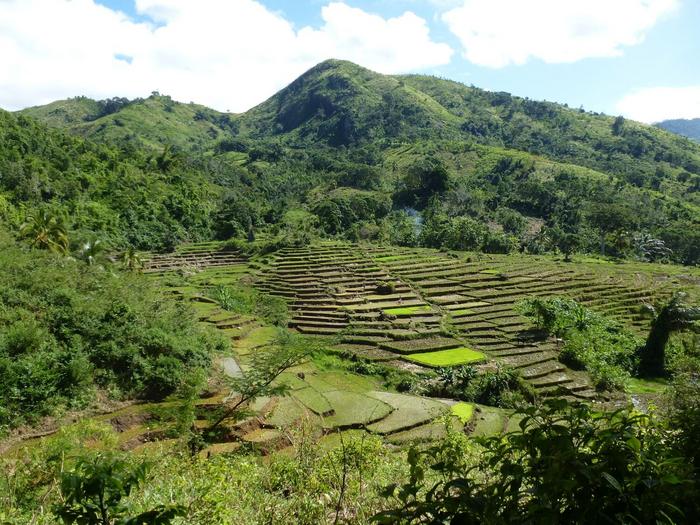
Many landscapes in the tropics consist of a mosaic of different types of land use. How people make use of these different ecosystems, with their particular plant communities, was unclear until now. Researchers, many of them from Madagascar, have now investigated this in an interdisciplinary Malagasy research project at the University of Göttingen. When considering biodiversity, forests often get the most attention. But this research shows that rural households use a wide range of plant species and services provided by many nearby ecosystem types. 285 plant species, almost half of which are found only in Madagascar, are used for food, fodder for livestock, medicine, construction and weaving. Of all the diverse types of land, surprisingly, fallow land is especially important for people. The researchers conclude that there must be a balance between the needs of society and the conservation of species-rich landscapes. The results were published in the journal Ambio.
Credit: Annemarie Wurz
Many landscapes in the tropics consist of a mosaic of different types of land use. How people make use of these different ecosystems, with their particular plant communities, was unclear until now. Researchers, many of them from Madagascar, have now investigated this in an interdisciplinary Malagasy research project at the University of Göttingen. When considering biodiversity, forests often get the most attention. But this research shows that rural households use a wide range of plant species and services provided by many nearby ecosystem types. 285 plant species, almost half of which are found only in Madagascar, are used for food, fodder for livestock, medicine, construction and weaving. Of all the diverse types of land, surprisingly, fallow land is especially important for people. The researchers conclude that there must be a balance between the needs of society and the conservation of species-rich landscapes. The results were published in the journal Ambio.
The research team interviewed 320 households about their use and the benefits of the main types of land. These include virgin forests, fragments of forest, vanilla agroforestry systems, woody fallow land, herbaceous fallow land and rice fields. The interviews show that virgin forests and forest fragments are important for water regulation, for example. Fallow land and vanilla agroforestry systems provide food, medicine and fodder. People collect the most plants from woody fallow areas, which are then used for firewood and charcoal, for instance. In contrast, they use plants from forest fragments for building and weaving. Fallow land – contrary to the widespread belief that it is of little value – makes a major contribution to rural households in Madagascar in terms of health, food and energy supply, as well as animal feed and as a source of building materials.
The results have important findings for nature conservation: “It is important not just to consider the conservation of the impressive diversity of species on Madagascar, but also the benefits of this species richness for the local population,” says first author Dr Estelle Raveloaritiana, whose PhD research was part of this project. Dr Annemarie Wurz, now a postdoctoral researcher at the University of Marburg, and Professor Teja Tscharntke, at Göttingen University’s Agroecology Group, add: “Nature conservation should take into account the interests of the local population, at the same time as biodiversity-friendly, diverse land management, when designing conservation and development strategies.”
Original publication: Estelle Raveloaritiana et al. Complementary ecosystem services from multiple land uses highlight the importance of tropical mosaic landscapes. Ambio (2023). DOI: s13280-023-01888-3
Contact:
Professor Teja Tscharntke
University of Göttingen
Agroecology Group
Grisebachstraße 6, 37077 Göttingen, Germany
Tel: +49 (0)551 39 9209
Email: [email protected]
www.uni-goettingen.de/en/92552.html
Dr Estelle Raveloaritiana
Westlake University
School of Engineering
Hangzhou, China
Email: [email protected]
https://linktr.ee/Estelle_Ravel
Dr Annemarie Wurz
Philipps Universität Marburg (Germany)
Nature Conservation
Email: [email protected]
www.uni-marburg.de/de/fb17/fachgebiete/naturschutz/ag-farwig/team/annemarie-wurz
Journal
AMBIO
DOI
10.1007/s13280-023-01888-3
Subject of Research
Not applicable
Article Title
Complementary ecosystem services from multiple land uses highlight the importance of tropical mosaic landscapes
Article Publication Date
7-Jun-2023