

• HOME
  • NEWS
  • EXPLORE
    • CAREER
      • Companies
      • Jobs
    • EVENTS
    • iGEM
      • News
      • Team
    • PHOTOS
    • VIDEO
    • WIKI
  • BLOG
  • COMMUNITY
    • FACEBOOK
    • INSTAGRAM
    • TWITTER
Wednesday, September 2, 2026
BIOENGINEER.ORG
No Result
View All Result
  • Login
  • HOME
  • NEWS
  • EXPLORE
    • CAREER
      • Companies
      • Jobs
        • Lecturer
        • PhD Studentship
        • Postdoc
        • Research Assistant
    • EVENTS
    • iGEM
      • News
      • Team
    • PHOTOS
    • VIDEO
    • WIKI
  • BLOG
  • COMMUNITY
    • FACEBOOK
    • INSTAGRAM
    • TWITTER
  • HOME
  • NEWS
  • EXPLORE
    • CAREER
      • Companies
      • Jobs
        • Lecturer
        • PhD Studentship
        • Postdoc
        • Research Assistant
    • EVENTS
    • iGEM
      • News
      • Team
    • PHOTOS
    • VIDEO
    • WIKI
  • BLOG
  • COMMUNITY
    • FACEBOOK
    • INSTAGRAM
    • TWITTER
No Result
View All Result
Bioengineer.org
No Result
View All Result
Home NEWS Science News Health

App helps identify autistic children in India – study

Bioengineer by Bioengineer
July 14, 2023
in Health
Reading Time: 3 mins read
0
Autism app India
Share on FacebookShare on TwitterShare on LinkedinShare on RedditShare on Telegram

Children with autism and related neurodevelopmental disorders in India can be successfully identified by community healthcare workers using a low-cost app, a study has found.
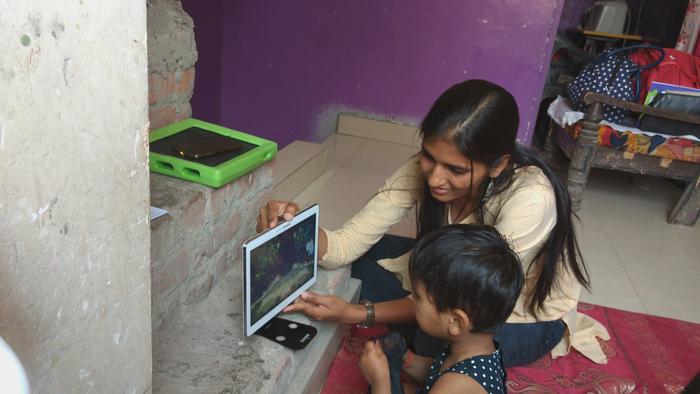
Autism app India

Credit: University of Reading

Children with autism and related neurodevelopmental disorders in India can be successfully identified by community healthcare workers using a low-cost app, a study has found.

The results, published today (Friday 14 July) in Autism, could open the door to help millions of children with autism spectrum conditions to get earlier screening quickly and inexpensively, leading to life-changing support.

Researchers from India, the UK and US tested the app with 131 two- to seven-year-olds living in low-resource neighbourhoods of Delhi, India.

The tests were carried out at the homes of the children, by non-specialist healthcare workers, educated to high school level, using the research team’s app, called START (Screening Tools for Autism Risk using Technology).

Through a series of simple games, questions, images and activities on a tablet computer – such as popping bubbles and looking at patterns and images – the app measured the social preference, sensory interests and motor skills of the children.

Screen screening

The app was 86% accurate in identifying children with any neurodevelopmental disorders, and 78% accurate in specifically identifying autism. This performance is significantly higher than standard screening assessments for neurodevelopmental disorders used by non-specialists.

Professor Bhismadev Chakrabarti, director of the Centre for Autism at the University of Reading’s School of Psychology and Clinical Language Sciences, led the study. He said the results could help faster identification of children with autism and other neurodevelopmental disorders, in all parts of the world.

 “Autism is diagnosed by highly trained professionals, but most autistic people live in parts of the world that harbour few or no such autism specialists, and with little autism awareness,” he said.

“So many autistic people go undiagnosed, misdiagnosed or misunderstood, so we designed the START app to identify autism and related conditions anywhere.

“The START app puts a successful screening tool for autism and related conditions into the hands of the people already working in communities for children’s health.”

Games and questions

The app makes use of a series of tests that measure different domains of behaviour associated with atypicalities in autism. Children with neurodevelopmental conditions preferred looking at geometric patterns rather than social scenes, were fascinated by predictable, repetitive sensory stimuli, and had more trouble completing precise tasks with their hands.

The app also included questions for parents, combining all the scores to help distinguish autistic from non-autistic children.

The families and healthcare workers using the app said START was easy to use, fun for children to take part in, and could be used in family homes even with background noise and distractions.

Dr Teodora Gliga, associate professor at the School of Psychology, University of East Anglia, a co-author of the study, said: “This work gives us hope that we could one day provide timely objective diagnosis of autism, wherever this is needed, regardless of financial or cultural barriers.”


Journal

Autism

DOI

10.1177/13623613231182801

Method of Research

Experimental study

Subject of Research

People

Article Title

Using mobile health technology to assess childhood autism in low-resource community settings in India: An innovation to address the detection gap

Article Publication Date

14-Jul-2023

COI Statement

The author(s) declared no potential conflicts of interest with respect to the research, authorship and/or publication of this article.
Share12Tweet8Share2ShareShareShare2

Related Posts

Wearable monitor improves diagnosis of heart rhythm disorders after fainting

August 31, 2026

Visualisation of magnetic field-induced nanoparticle clusters and mechanical property changes in a breast phantom for inductive moderate hyperthermia

August 31, 2026

Multidisciplinary intervention in frail elderly patients with cardiovascular diseases: a multicentre, single-blinded, randomised controlled trial

August 31, 2026

Machine Learning Model Development and Evaluation for Non-contact Lower Limb Injury Risk Prediction in Elite Male Rugby Union: A Multi-team, Multi-season Analysis

August 31, 2026

POPULAR NEWS

  • β-Sitosterol from Ipomoea carnea Jacq. As a promising anti-inflammatory agent: Evidence from in silico modeling and in vitro validation

    29 shares
    Share 12 Tweet 7
  • Design, fabrication and characterization of a wearable Fiber Bragg grating sensor for cardiorespiratory monitoring using finger plethysmography

    29 shares
    Share 12 Tweet 7
  • KAIST opens the era of industrial-scale microbial foods, proposing growth strategies for the next-generation protein market

    29 shares
    Share 12 Tweet 7
  • Virologist awarded $2 million NIH grant to investigate how virus-infected cells live and die

    29 shares
    Share 12 Tweet 7

About

We bring you the latest biotechnology news from best research centers and universities around the world. Check our website.

Follow us

Recent News

β-Sitosterol from Ipomoea carnea Jacq. As a promising anti-inflammatory agent: Evidence from in silico modeling and in vitro validation

Design, fabrication and characterization of a wearable Fiber Bragg grating sensor for cardiorespiratory monitoring using finger plethysmography

KAIST opens the era of industrial-scale microbial foods, proposing growth strategies for the next-generation protein market

Subscribe to Blog via Email

Success! An email was just sent to confirm your subscription. Please find the email now and click 'Confirm' to start subscribing.

Join 85 other subscribers
  • Contact Us

Bioengineer.org © Copyright 2023 All Rights Reserved.

Welcome Back!

Login to your account below

Forgotten Password?

Retrieve your password

Please enter your username or email address to reset your password.

Log In
No Result
View All Result
  • Homepages
    • Home Page 1
    • Home Page 2
  • News
  • National
  • Business
  • Health
  • Lifestyle
  • Science

Bioengineer.org © Copyright 2023 All Rights Reserved.