URBANA, Ill. — Food waste is a major problem around the world. In the United States, an estimated 30 to 40% of edible food is lost or wasted, costing billions of dollars each year. One potential solution is to divert food waste from landfills to renewable energy production, but this isn’t done on a large scale anywhere. A new study from the University of Illinois Urbana-Champaign investigates the feasibility of implementing energy production from food waste in the state of Illinois.
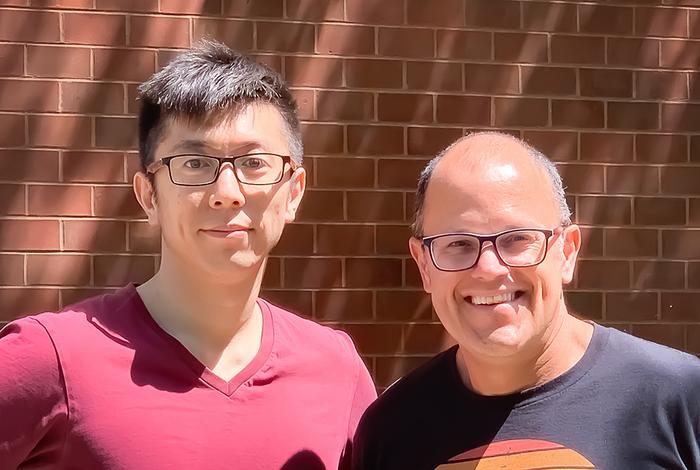
Credit: Marianne Stein.
URBANA, Ill. — Food waste is a major problem around the world. In the United States, an estimated 30 to 40% of edible food is lost or wasted, costing billions of dollars each year. One potential solution is to divert food waste from landfills to renewable energy production, but this isn’t done on a large scale anywhere. A new study from the University of Illinois Urbana-Champaign investigates the feasibility of implementing energy production from food waste in the state of Illinois.
“We have a large amount of organic waste in the U.S., which eventually enters landfills and emits greenhouse gasses. However, this material can be converted into a renewable energy resource using anaerobic digestion. This solution simultaneously deals with excess food and contributes to sustainable energy production,” said Jason Uen, a doctoral student in the Department of Agricultural and Biological Engineering (ABE), part of the College of Agricultural, Consumer and Environmental Sciences and The Grainger College of Engineering at Illinois. Uen is lead author on the paper, published in the Journal of Cleaner Production.
The researchers conducted a comprehensive analysis of supply chain logistics to determine if a system of converting food waste into energy and other bioproducts would be profitable in Illinois. First, they used geospatial data to identify potential sites. Next, they analyzed technological and economic factors, including transportation, production, and facility costs, as well as revenue and return on investments.
“Anaerobic digestion is not a new technology, but if it were profitable, I would expect it to be more widely implemented. That’s why it was quite surprising that our study showed promising results despite the very conservative assumptions we put into the analysis. There are some sectors that really ought to consider this as a potentially viable technology with an attractive return on investment,” said Luis F. Rodriguez, associate professor in ABE and co-author on the paper.
Anaerobic digestion is a biological process that decomposes organic feedstock using rich organic materials such as wastewater sludge, animal manure, or yard waste. This can be accomplished at stand-alone facilities or at wastewater treatment plants for a co-digestion process. The resulting biogas can be used to produce electricity, which can be transported to consumers via regional power grids. The process also yields additional bioproducts, including biofertilizer and animal bedding materials that can be sold to agricultural producers.
“This is an opportunity for wastewater treatment plants, but we’ve also shown that there’s potential for new stand-alone facilities to provide a service that can generate revenue while dealing with an environmental concern that is currently unaddressed. A new industry could form around this,” Rodriguez said.
The study showed that installing anaerobic co-digesters at wastewater treatment plants with a total annual capacity of 9.3 million metric tons could generate an 8.3% return on investment while reducing carbon dioxide by approximately one million metric tons annually. The most significant factors influencing the results were capital investment, operational cost, and tipping price, which is a service charge for waste disposal.
Food waste availability is also an important factor, including the challenge of sorting and transporting food waste from households. In the study, Uen and Rodriguez assume food waste amount is directly related to population density distribution. This means facilities would be collecting waste within a ten-mile radius from residential areas. To estimate revenues, the researchers included wholesale electricity price and current fertilizer prices.
“There is still a big gap between the market demands for bioproducts and the amount of food waste we have,” Uen said. “If we can expand the marketability of those products, then the profitability for converting food waste into sustainable resources will further increase.”
Government policies such as higher incentives for carbon reduction efforts could also make it more attractive to implement these technologies, he added.
The study focused on Illinois, and the next step would be expanding to a nationwide analysis. Estimating food waste availability on a larger scale and determining bioprocessing techniques will be essential for improving food waste utilization and the circular bioeconomy in agriculture, Uen and Rodriguez concluded.
Editor’s Notes:
The paper, “An integrated approach for sustainable food waste management towards renewable resource production and GHG reduction,” is published in the Journal of Cleaner Production [doi.org/10.1016/j.jclepro.2023.137251].
Funding was provided by the National Science Foundation (grant numbers 1833225, 1639340), the USDA National Institute of Food and Agriculture (grant number ILLU-741-624), and the Taiwan-UIUC Fellowship.
The College of Agricultural, Consumer and Environmental Sciences (ACES) at the University of Illinois has top-ranked programs, dedicated students, and world-renowned faculty and alumni who are developing solutions to the world’s most critical challenges to provide abundant food and energy, a healthy environment, and successful families and communities.
Journal
Journal of Cleaner Production
DOI
10.1016/j.jclepro.2023.137251
Method of Research
Data/statistical analysis
Subject of Research
Not applicable
Article Title
An integrated approach for sustainable food waste management towards renewable resource production and GHG reduction,
Article Publication Date
26-Apr-2023