

• HOME
  • NEWS
  • EXPLORE
    • CAREER
      • Companies
      • Jobs
    • EVENTS
    • iGEM
      • News
      • Team
    • PHOTOS
    • VIDEO
    • WIKI
  • BLOG
  • COMMUNITY
    • FACEBOOK
    • INSTAGRAM
    • TWITTER
Saturday, February 7, 2026
BIOENGINEER.ORG
No Result
View All Result
  • Login
  • HOME
  • NEWS
  • EXPLORE
    • CAREER
      • Companies
      • Jobs
        • Lecturer
        • PhD Studentship
        • Postdoc
        • Research Assistant
    • EVENTS
    • iGEM
      • News
      • Team
    • PHOTOS
    • VIDEO
    • WIKI
  • BLOG
  • COMMUNITY
    • FACEBOOK
    • INSTAGRAM
    • TWITTER
  • HOME
  • NEWS
  • EXPLORE
    • CAREER
      • Companies
      • Jobs
        • Lecturer
        • PhD Studentship
        • Postdoc
        • Research Assistant
    • EVENTS
    • iGEM
      • News
      • Team
    • PHOTOS
    • VIDEO
    • WIKI
  • BLOG
  • COMMUNITY
    • FACEBOOK
    • INSTAGRAM
    • TWITTER
No Result
View All Result
Bioengineer.org
No Result
View All Result
Home NEWS Science News Biology

New saddle-mapping tech can reduce back pain for horses

Bioengineer by Bioengineer
July 6, 2023
in Biology
Reading Time: 2 mins read
0
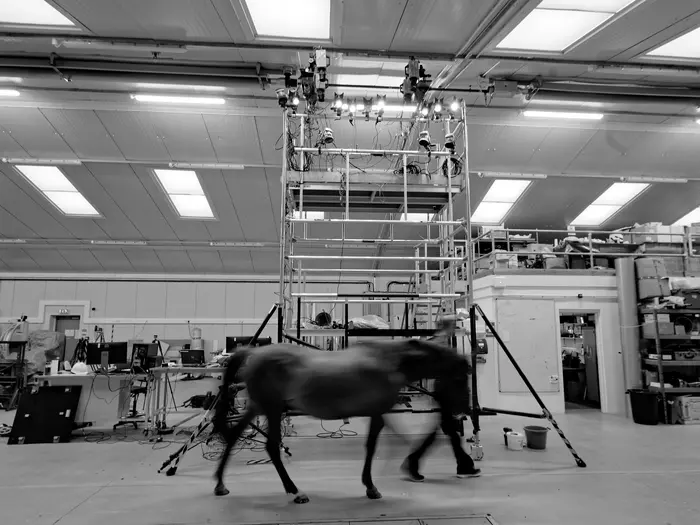
Horse moving through the camera setup
Share on FacebookShare on TwitterShare on LinkedinShare on RedditShare on Telegram

Equine back pain is prevalent in at least 35% of ridden horses and often attributed to poor saddle fit. A new method for scanning moving horses has enabled Dr Jorn Cheney, a researcher of animal locomotion at the University of Southampton, UK, to produce an enhanced saddle-map that can reduce back pain for horses.
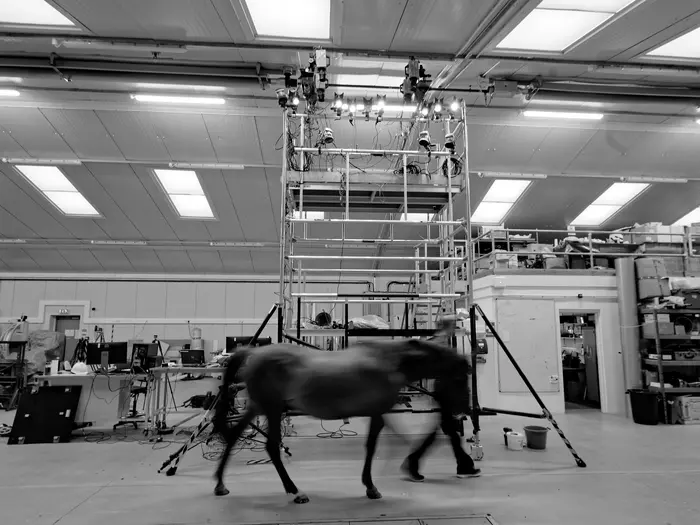
Horse moving through the camera setup

Credit: Jorn Cheney

Equine back pain is prevalent in at least 35% of ridden horses and often attributed to poor saddle fit. A new method for scanning moving horses has enabled Dr Jorn Cheney, a researcher of animal locomotion at the University of Southampton, UK, to produce an enhanced saddle-map that can reduce back pain for horses.

Current practice for fitting saddles to horses is done on standing animals, but that doesn’t account for how the saddle will change position as the horse moves. “We were surprised to see that the shape of the standing animal was substantially different from the stride-averaged shape of the moving animal,” says Dr Jorn Cheney, a researcher of animal locomotion at the University of Southampton, UK. “We expected a difference, just not to the extent that we saw.”

Dr Cheney and his team measured the change in the shape of horse’s backs by filming them walking and trotting with an array of cameras. They then reconstructed the saddle region as it morphed throughout the stride and tracked the movement of the limbs using a technique known as videogrammetry.

The product of these measurements is a “saddle-map” that highlights ideal areas for saddle placement to reduce the chances of pain or injury for the horse. One area of the horse’s back, known as the withers, is located just above and behind the shoulder blades and was found to move up and down a few centimetres during movement compared to standing still.

This map identifies the most and least mobile areas of horse’s backs while walking and trotting, which may help to improve saddle design and fitting methods. “My research measures the shape of saddle region, as the horse walks and trots, to understand how the muscles bulge and the spine bends so that we can integrate that knowledge into better saddle design,” says Dr Cheney, “A poor interface between a saddle and a horse’s back can lead to severe tissue damage in horses, even the wastage and loss of whole muscles in the back.”

This research also finds that the least mobile areas of the horse’s back are the most appropriate for distributing pressure, while repeated application of high pressure and soft tissue movement in the most mobile areas can lead to pain and tissue damage.

“Among the outcomes of this research will be new design and fitting guidance for saddlers,” says Dr Cheney, who is working with master saddlers to ensure that the new fitting guidance is in line with professional approaches to saddling and industry philosophy.



Share12Tweet8Share2ShareShareShare2

Related Posts

Florida Cane Toad: Complex Spread and Selective Evolution

Florida Cane Toad: Complex Spread and Selective Evolution

February 7, 2026
New Study Uncovers Mechanism Behind Burn Pit Particulate Matter–Induced Lung Inflammation

New Study Uncovers Mechanism Behind Burn Pit Particulate Matter–Induced Lung Inflammation

February 6, 2026

DeepBlastoid: Advancing Automated and Efficient Evaluation of Human Blastoids with Deep Learning

February 6, 2026

Navigating the Gut: The Role of Formic Acid in the Microbiome

February 6, 2026

POPULAR NEWS

  • Robotic Ureteral Reconstruction: A Novel Approach

    Robotic Ureteral Reconstruction: A Novel Approach

    82 shares
    Share 33 Tweet 21
  • Digital Privacy: Health Data Control in Incarceration

    63 shares
    Share 25 Tweet 16
  • Study Reveals Lipid Accumulation in ME/CFS Cells

    57 shares
    Share 23 Tweet 14
  • Breakthrough in RNA Research Accelerates Medical Innovations Timeline

    53 shares
    Share 21 Tweet 13

About

We bring you the latest biotechnology news from best research centers and universities around the world. Check our website.

Follow us

Recent News

Inflammasome Protein ASC Drives Pancreatic Cancer Metabolism

Phage-Antibiotic Combo Beats Resistant Peritoneal Infection

Boosting Remote Healthcare: Stepped-Wedge Trial Insights

Subscribe to Blog via Email

Enter your email address to subscribe to this blog and receive notifications of new posts by email.

Join 73 other subscribers
  • Contact Us

Bioengineer.org © Copyright 2023 All Rights Reserved.

Welcome Back!

Login to your account below

Forgotten Password?

Retrieve your password

Please enter your username or email address to reset your password.

Log In
No Result
View All Result
  • Homepages
    • Home Page 1
    • Home Page 2
  • News
  • National
  • Business
  • Health
  • Lifestyle
  • Science

Bioengineer.org © Copyright 2023 All Rights Reserved.