New study reveals the areas most at risk of plastic exposure by the already endangered seabirds.
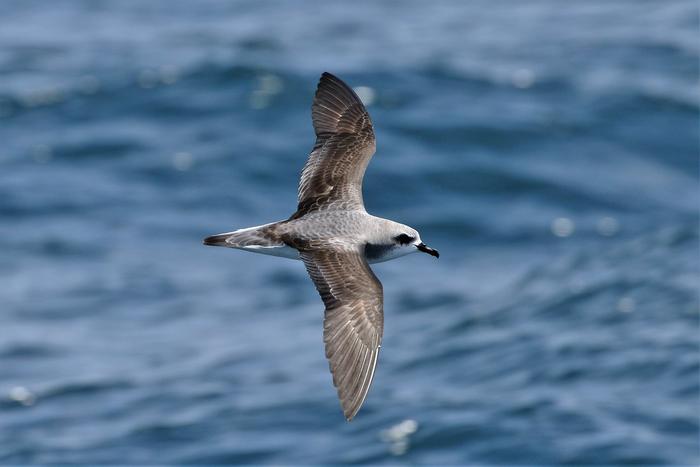
Credit: Paul Donald.
New study reveals the areas most at risk of plastic exposure by the already endangered seabirds.
The study, now published in Nature Communications, brings together more than 200 researchers worldwide around a pressing challenge, widely recognized as a growing threat to marine life: the pollution of oceans by plastic. Coordinated by Dr. Maria Dias, researcher at the Centre for Ecology, Evolution and Environmental Changes (cE3c) at the Faculty of Sciences of the University of Lisbon (Ciências ULisboa), the study identifies the Mediterranean as the region at greatest risk globally. The Exclusive Economic Zone of Portugal, especially off Azores and Madeira, is also mentioned as a region of moderate risk for bird species that live and feed there.
Seabirds are one of the most endangered groups globally, with around a third of species classified as “vulnerable”, “endangered” or “critically endangered” on the International Union for Conservation of Nature’s red list.
The research team analyzed data from 77 species of seabirds, more than 7000 individuals and 1.7 million positions recorded through remote tracking devices, together with maps of plastic concentration at a global level. Researchers were thus able to identify the areas where birds are most exposed to plastic waste, and which species and populations are most affected.
“The data allows us to conclude that the risk is not uniformly distributed, as a result of the accumulation of plastic in areas where ocean current and tides favor it”, says Dr. Maria Dias. Seabirds are also distributed in an uneven and highly variable way throughout their annual cycle, as most of them are migratory species capable of flying over thousands of kilometers of sea. “When both regions overlap [high concentration of birds and plastic], the risk is much greater”, adds Dr. Maria Dias.
Among the most dangerous areas for birds are the Mediterranean, the Black Sea, the Northwest and Northeast Pacific, the South Atlantic and the Southwest Indian Ocean. Data also shows that species already at risk of extinction (due to the introduction of alien invasive species on the islands where they breed, to bycatch or due to climate change), are also most exposed to plastic. So, “if the plastic problem continues to worsen, the already fragile state of these species could get even worse”, warns Dr. Maria Dias.
The results can now be interpreted and used as a tool for the management and conservation of the marine environment by countries worldwide. But this does not make the task any easier. “Most species are at a higher risk of finding plastic in waters away from their breeding jurisdiction, and in international waters. This means that international cooperation is essential to solve this problem, imposing dialogue between various actors and increasing the complexity of responses”, highlights Dr. Maria Dias.
The Portuguese seas are no exception to the problem. The national Exclusive Economic Zone, especially the areas around the Azores and Madeira archipelagos, present a considerable risk of exposure to marine plastic for birds. The Balearic Shearwater, a critically endangered species whose population migrates almost entirely to the Portuguese Exclusive Economic Zone, is one of the most worrying cases, as it is also a victim of bycatch in fishing gear in Portuguese waters. The Desertas Petrel, a species endemic to Portugal, also stands out for the threats it faces, having been identified as a priority for consequent studies.
The article released today had the participation of 18 Portuguese scientists, from various regions of the country. Among them are Dr. Mónica Correia Silva (cE3c), Dr. José Pedro Granadeiro, and Dr. Teresa Catry (Centre for Environmental and Marine Studies – CESAM), also from Ciências ULisboa.
Journal
Nature Communications
DOI
10.1038/s41467-023-38900-z
Article Title
Global assessment of marine plastic exposure risk for oceanic birds
Article Publication Date
4-Jul-2023