• HOME
  • NEWS
  • EXPLORE
    • CAREER
      • Companies
      • Jobs
    • EVENTS
    • iGEM
      • News
      • Team
    • PHOTOS
    • VIDEO
    • WIKI
  • BLOG
  • COMMUNITY
    • FACEBOOK
    • INSTAGRAM
    • TWITTER
Saturday, February 7, 2026
BIOENGINEER.ORG
No Result
View All Result
  • Login
  • HOME
  • NEWS
  • EXPLORE
    • CAREER
      • Companies
      • Jobs
        • Lecturer
        • PhD Studentship
        • Postdoc
        • Research Assistant
    • EVENTS
    • iGEM
      • News
      • Team
    • PHOTOS
    • VIDEO
    • WIKI
  • BLOG
  • COMMUNITY
    • FACEBOOK
    • INSTAGRAM
    • TWITTER
  • HOME
  • NEWS
  • EXPLORE
    • CAREER
      • Companies
      • Jobs
        • Lecturer
        • PhD Studentship
        • Postdoc
        • Research Assistant
    • EVENTS
    • iGEM
      • News
      • Team
    • PHOTOS
    • VIDEO
    • WIKI
  • BLOG
  • COMMUNITY
    • FACEBOOK
    • INSTAGRAM
    • TWITTER
No Result
View All Result
Bioengineer.org
No Result
View All Result
Home NEWS Science News Chemistry

UQ researchers tackle viruses with pandemic potential

Bioengineer by Bioengineer
June 22, 2023
in Chemistry
Reading Time: 2 mins read
0
Langya virus
Share on FacebookShare on TwitterShare on LinkedinShare on RedditShare on Telegram

Researchers have shed light on how a highly infectious virus, that has recently transferred from animals to people, is able to enter human cells.
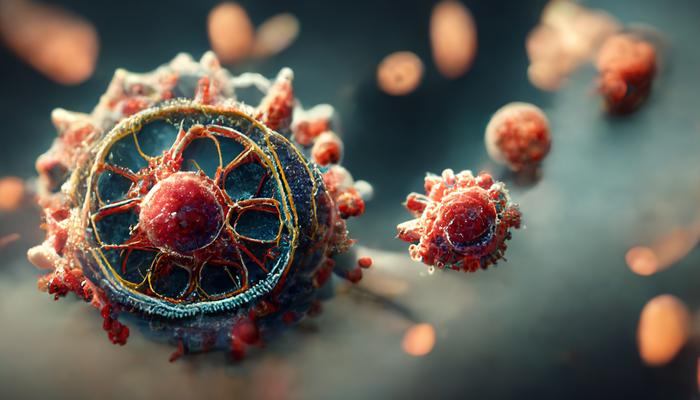
Langya virus

Credit: Catalin

Researchers have shed light on how a highly infectious virus, that has recently transferred from animals to people, is able to enter human cells.

The University of Queensland’s Dr Ariel Isaacs and Dr Yu Shang Low have uncovered the structure of the fusion protein of Langya virus, which was discovered in people in eastern China in August 2022.

Dr Isaacs said the virus caused fever and severe respiratory symptoms and was from the same class of viruses as the deadly Nipah and Hendra viruses.

“We’re at an important juncture with viruses from the Henipavirus genus, as we can expect more spill over events from animals to people,” Dr Isaacs said.

“It’s important we understand the inner workings of these emerging viruses, which is where our work comes in.”

The team used UQ’s molecular clamp technology to hold the fusion protein of the Langya virus in place to uncover the atomic structure using cryogenic electron microscopy at UQ’s Centre for Microscopy & Microanalysis.

“Understanding the structure and how it enters cells is a critical step towards developing vaccines and treatments to combat Henipavirus infections,” Dr Isaacs said.

“There are currently no treatments or vaccines for them, and they have the potential to cause a widespread outbreak.”

Associate Professor Daniel Watterson, a senior researcher on the project, said they also saw that the Langya virus fusion protein structure is similar to the deadly Hendra virus, which first emerged in southeast Queensland in 1994.  

“These are viruses that can cause severe disease and have the potential to get out of control if we’re not properly prepared,” Dr Watterson said.

“We saw with COVID-19 how unprepared the world was for a widespread viral outbreak and we want to be better equipped for the next outbreak.”

The researchers will now work to develop broad-spectrum human vaccines and treatments for Henipaviruses, such as Langya, Nipah and Hendra.

The research is published in Nature Communications.

UQ acknowledges the support of the Coalition for Epidemic Preparedness Innovations, the Queensland and Australian governments and philanthropic partners.


Journal

Nature Communications

DOI

10.1038/s41467-023-39278-8

Article Title

Structure and antigenicity of divergent Henipavirus fusion glycoproteins

Article Publication Date

16-Jun-2023

Share12Tweet8Share2ShareShareShare2

Related Posts

blank

Breakthrough in Environmental Cleanup: Scientists Develop Solar-Activated Biochar for Faster Remediation

February 7, 2026
blank

Cutting Costs: Making Hydrogen Fuel Cells More Affordable

February 6, 2026

Scientists Develop Hand-Held “Levitating” Time Crystals

February 6, 2026

Observing a Key Green-Energy Catalyst Dissolve Atom by Atom

February 6, 2026

POPULAR NEWS

  • Robotic Ureteral Reconstruction: A Novel Approach

    Robotic Ureteral Reconstruction: A Novel Approach

    82 shares
    Share 33 Tweet 21
  • Digital Privacy: Health Data Control in Incarceration

    63 shares
    Share 25 Tweet 16
  • Study Reveals Lipid Accumulation in ME/CFS Cells

    57 shares
    Share 23 Tweet 14
  • Breakthrough in RNA Research Accelerates Medical Innovations Timeline

    53 shares
    Share 21 Tweet 13

About

We bring you the latest biotechnology news from best research centers and universities around the world. Check our website.

Follow us

Recent News

Decoding Prostate Cancer Origins via snFLARE-seq, mxFRIZNGRND

Digital Health Perspectives from Baltic Sea Experts

Florida Cane Toad: Complex Spread and Selective Evolution

Subscribe to Blog via Email

Enter your email address to subscribe to this blog and receive notifications of new posts by email.

Join 73 other subscribers
  • Contact Us

Bioengineer.org © Copyright 2023 All Rights Reserved.

Welcome Back!

Login to your account below

Forgotten Password?

Retrieve your password

Please enter your username or email address to reset your password.

Log In
No Result
View All Result
  • Homepages
    • Home Page 1
    • Home Page 2
  • News
  • National
  • Business
  • Health
  • Lifestyle
  • Science

Bioengineer.org © Copyright 2023 All Rights Reserved.