Increased carbon sequestration in soil to help mitigate climate change can only be achieved by a more holistic management. This is the conclusion from an opinion paper conceptualized by a team led by researchers from the German Centre for Integrative Biodiversity Research (iDiv), Leipzig University, the Czech Academy of Sciences, and the University of Copenhagen. The authors developed a novel framework that can guide informed and effective management of soils as carbon sinks. The study has recently been published in Nature Communications.
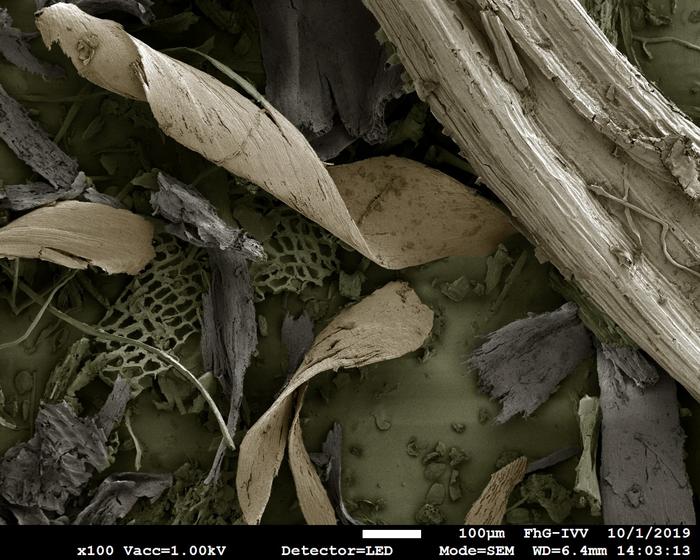
Credit: Carsten W. Müeller
Increased carbon sequestration in soil to help mitigate climate change can only be achieved by a more holistic management. This is the conclusion from an opinion paper conceptualized by a team led by researchers from the German Centre for Integrative Biodiversity Research (iDiv), Leipzig University, the Czech Academy of Sciences, and the University of Copenhagen. The authors developed a novel framework that can guide informed and effective management of soils as carbon sinks. The study has recently been published in Nature Communications.
A key question for land management is how to sustain and increase the vast amounts of carbon stored in soil to help mitigate climate change. In this respect, carbon associated with minerals that can persist for centuries to millennia has received specific attention as a potential management target.
Undifferentiated focus on this “mineral-associated” carbon, however, falls short of establishing soils as carbon sinks because various environmental factors, such as related to land use or specific soil types, render management of this carbon inefficient.
“We were puzzled by the overwhelming emphasis on mineral-associated carbon in the literature, whose context-independent valuation certainly hampers informed and targeted management of soils as carbon sinks,” says Dr Gerrit Angst, lead author of the article from iDiv, Leipzig University, and the Czech Academy of Sciences.
The international author team, comprised of researchers from Germany, the Czech Republic, the United States, and Denmark thus developed a framework for the contextualization of management strategies that considers the diversity and complexity of soils.
Synergies with soil health and biodiversity
The framework specifically highlights the relevance of “labile” carbon, which typically remains in the soil for days to a few years, as a management target in various environmental contexts. For example, the capacity of some soils to accumulate rather stable, mineral-associated carbon is very low; some soils also feature conditions that hamper the formation of stabilized carbon but favor the accumulation of labile carbon.
Management that is aimed at increasing and perpetuating labile carbon in such soils will be more effective in increasing carbon sequestration than that focused on stabilized carbon.
“We cannot overemphasize the need to consider context-dependent environmental conditions for an effective management of soils as carbon sinks, which constrain whether management should target labile or stabilized carbon, or both,” explains Angst.
Contextualization of management strategies within the novel framework can be expected to maximize carbon sequestration in soil and generate synergies with related management targets, such as related to soil health, biodiversity, or crop performance. Senior author of the study, Prof Carsten W. Mueller from the University of Copenhagen concludes:
“Only if we see soils as a complex, holistic system with its specific chemical, physical, and biological features, will we be able to successfully manage them in a rapidly changing environment.”
Original publication:
(Scientists with iDiv affiliation in bold)
Angst, G., Mueller, K.E., Castellano, M.J., Vogel, C., Wiesmeier, M., Mueller, C.W. (2023): Unlocking complex soil systems as carbon sinks: multi-pool management as the key. Nature Communications. DOI: https://doi.org/10.1038/s41467-023-38700-5
Contact:
Dr Gerrit Angst
Experimental Interaction Ecology
German Centre for Integrative Biodiversity Research (iDiv) Halle-Jena-Leipzig
Leipzig University
Institute of Soil Biology and Biogeochemistry
Biology Centre of the Czech Academy of Sciences
Phone: +49 341 9739179
Email: [email protected]
Web: www.idiv.de/en/profile/1575.html
Journal
Nature Communications
DOI
10.1038/s41467-023-38700-5
Article Title
Unlocking complex soil systems as carbon sinks: multi-pool management as the key
Article Publication Date
15-Jun-2023