• HOME
  • NEWS
  • EXPLORE
    • CAREER
      • Companies
      • Jobs
    • EVENTS
    • iGEM
      • News
      • Team
    • PHOTOS
    • VIDEO
    • WIKI
  • BLOG
  • COMMUNITY
    • FACEBOOK
    • INSTAGRAM
    • TWITTER
Saturday, February 7, 2026
BIOENGINEER.ORG
No Result
View All Result
  • Login
  • HOME
  • NEWS
  • EXPLORE
    • CAREER
      • Companies
      • Jobs
        • Lecturer
        • PhD Studentship
        • Postdoc
        • Research Assistant
    • EVENTS
    • iGEM
      • News
      • Team
    • PHOTOS
    • VIDEO
    • WIKI
  • BLOG
  • COMMUNITY
    • FACEBOOK
    • INSTAGRAM
    • TWITTER
  • HOME
  • NEWS
  • EXPLORE
    • CAREER
      • Companies
      • Jobs
        • Lecturer
        • PhD Studentship
        • Postdoc
        • Research Assistant
    • EVENTS
    • iGEM
      • News
      • Team
    • PHOTOS
    • VIDEO
    • WIKI
  • BLOG
  • COMMUNITY
    • FACEBOOK
    • INSTAGRAM
    • TWITTER
No Result
View All Result
Bioengineer.org
No Result
View All Result
Home NEWS Science News

Dolphins following shrimp trawlers cluster in social groups

Bioengineer by Bioengineer
February 1, 2017
in Science News
Reading Time: 2 mins read
0
Share on FacebookShare on TwitterShare on LinkedinShare on RedditShare on Telegram
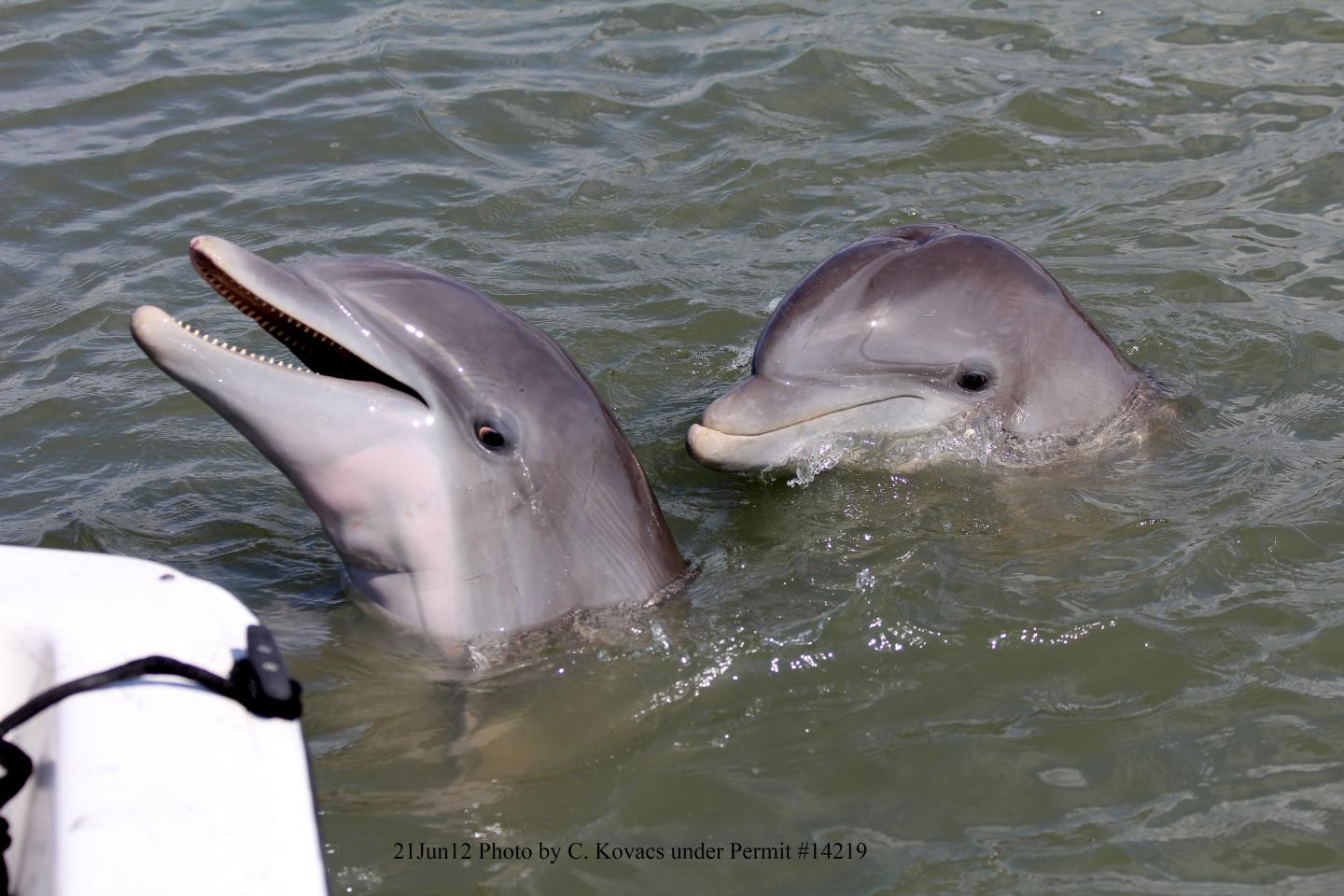
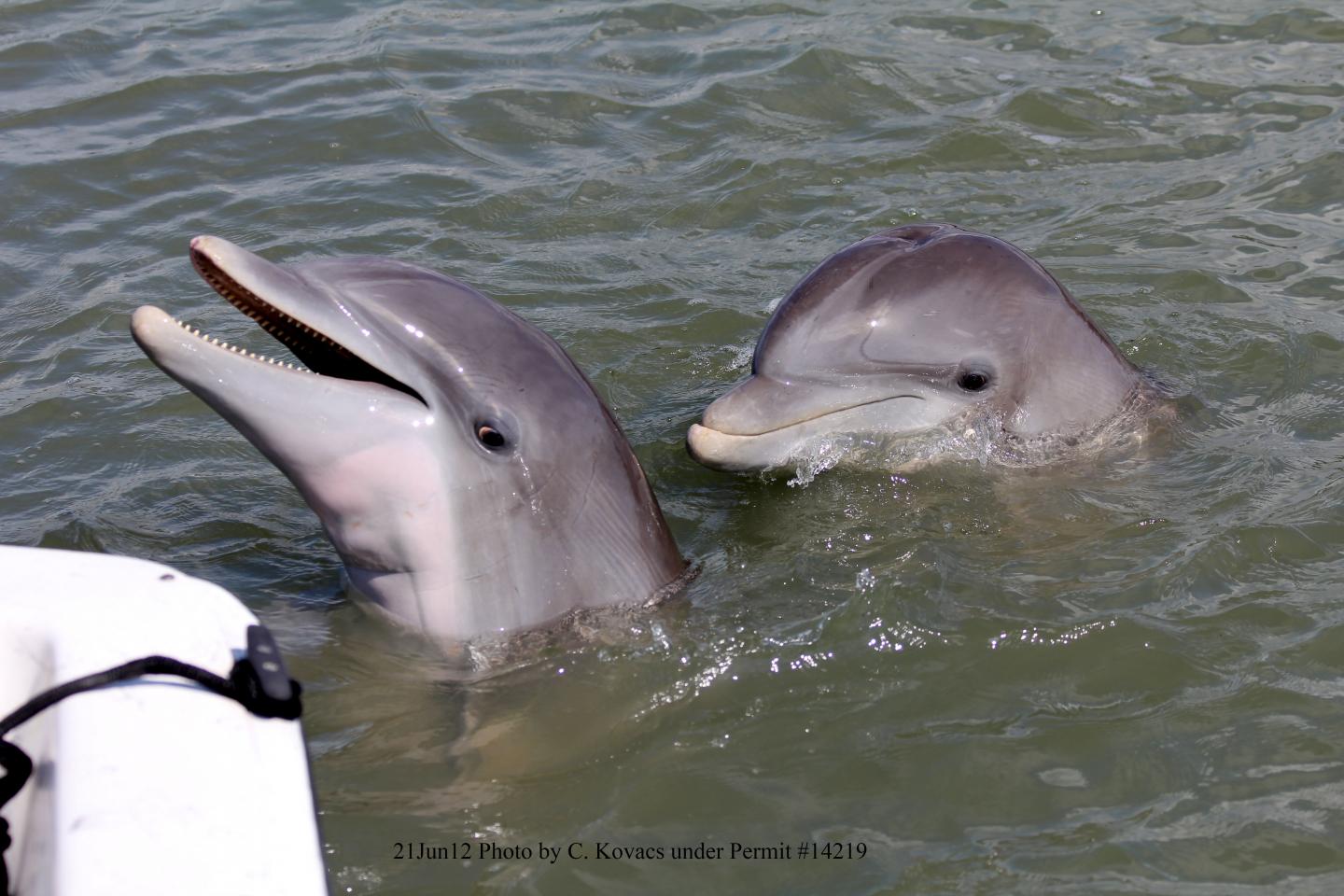
IMAGE

Credit: Carolyn Kovacs

Bottlenose dolphins near Savannah, Georgia are split into social groups according to whether or not they forage behind commercial shrimp trawlers, according to a study published February 1, 2017 in the open-access journal PLOS ONE by Tara Cox from Savannah State University, USA, and colleagues.

Dolphins often interact with humans in the waterways around Savannah, Georgia, including begging, provisioning or scavenging for food. Dolphins that follow shrimp trawlers eat fish caught in or stirred up by the nets, as well as bycatch discarded from the trawler. To investigate any social ramifications of this human-related foraging behavior, the researchers did photo-identification surveys of non-calf dolphins in the estuarine waterways near Savannah during the summers of three consecutive years. Focusing on 137 dolphins identified on at least six field days, the researchers determined if they begged or followed trawlers, and estimated how often individual dolphins were together based on statistical analysis of groups observed.

The researchers found that the dolphins were divided into six social clusters, half of which followed shrimp trawlers and half of which did not. In contrast, begging and non-begging dolphins were spread across the clusters. This suggests that shrimp trawler foraging may be a socially-learned behavior but how the solitary activity of begging is learnt is less clear.

"Bottlenose dolphins interact with humans, which puts them at risk of injury or death," says co-author Robin Perrtree. "Risky behaviors, such as begging at recreational boats and interacting with shrimp trawls, are not the same and should not be treated as comparable by researchers and managers."

###

In your coverage please use this URL to provide access to the freely available paper: http://dx.plos.org/10.1371/journal.pone.0170151

Citation: Kovacs CJ, Perrtree RM, Cox TM (2017) Social Differentiation in Common Bottlenose Dolphins (Tursiops truncatus) that Engage in Human-Related Foraging Behaviors. PLoS ONE 12(2): e0170151. doi:10.1371/journal.pone.0170151

Funding: Boat time was provided by the Marine Sciences Program at Savannah State University CJK RMP TMC. Support was provided by (NSF GK12; award 0841372) CJK; (NSF EDGE; award GEO-0194680) TMC RMP; the (NOAA Office of Education's Educational Partnership Program; award NA05OAR4811017) RMP; (Department of Education, Title VII award P382G090003) CJK RMP TMC; and the Oak Foundation TMC RMP.

Competing Interests: The authors have declared that no competing interests exist.

Media Contact

Beth Jones
[email protected]

Home

############

Story Source: Materials provided by Scienmag

Share12Tweet8Share2ShareShareShare2

Related Posts

Menopause Care: Insights from Workforce Review and Consultation

February 7, 2026

LRRK2R1627P Mutation Boosts Gut Inflammation, α-Synuclein

February 7, 2026

3D Gut-Brain-Vascular Model Reveals Disease Links

February 7, 2026

Low-Inflammation in Elderly UTIs: Risks and Resistance

February 7, 2026
Please login to join discussion

POPULAR NEWS

  • Robotic Ureteral Reconstruction: A Novel Approach

    Robotic Ureteral Reconstruction: A Novel Approach

    82 shares
    Share 33 Tweet 21
  • Digital Privacy: Health Data Control in Incarceration

    63 shares
    Share 25 Tweet 16
  • Study Reveals Lipid Accumulation in ME/CFS Cells

    57 shares
    Share 23 Tweet 14
  • Breakthrough in RNA Research Accelerates Medical Innovations Timeline

    53 shares
    Share 21 Tweet 13

About

We bring you the latest biotechnology news from best research centers and universities around the world. Check our website.

Follow us

Recent News

Menopause Care: Insights from Workforce Review and Consultation

LRRK2R1627P Mutation Boosts Gut Inflammation, α-Synuclein

3D Gut-Brain-Vascular Model Reveals Disease Links

Subscribe to Blog via Email

Enter your email address to subscribe to this blog and receive notifications of new posts by email.

Join 73 other subscribers
  • Contact Us

Bioengineer.org © Copyright 2023 All Rights Reserved.

Welcome Back!

Login to your account below

Forgotten Password?

Retrieve your password

Please enter your username or email address to reset your password.

Log In
No Result
View All Result
  • Homepages
    • Home Page 1
    • Home Page 2
  • News
  • National
  • Business
  • Health
  • Lifestyle
  • Science

Bioengineer.org © Copyright 2023 All Rights Reserved.