A research group from the Graduate School of Medicine and iGCORE at Nagoya University in Japan, has discovered that using an antibiotic to target Fusobacterium reduced the formation of lesions associated with endometriosis, a gynecological disorder characterized by endometrial tissue usually found inside the uterus being found outside it. Their findings suggest an alternative treatment for this disorder. The study was published in Science Translational Medicine.
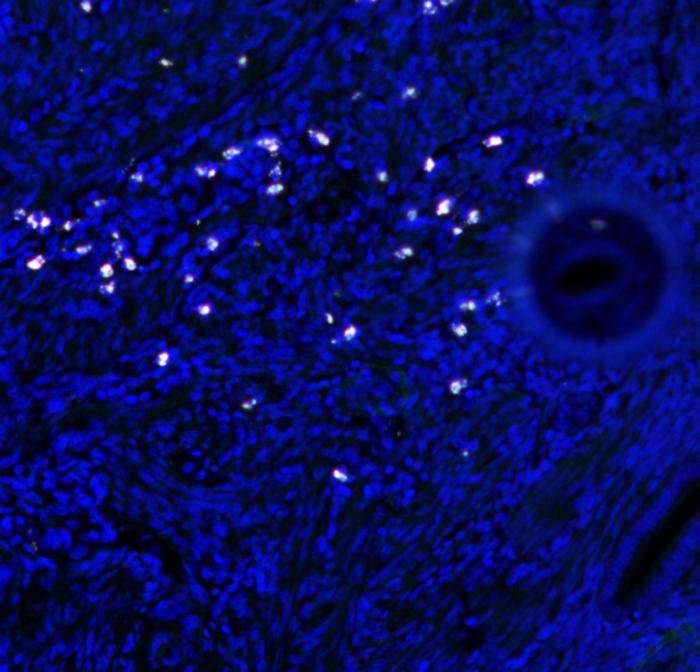
Credit: Professor Yutaka Kondo
A research group from the Graduate School of Medicine and iGCORE at Nagoya University in Japan, has discovered that using an antibiotic to target Fusobacterium reduced the formation of lesions associated with endometriosis, a gynecological disorder characterized by endometrial tissue usually found inside the uterus being found outside it. Their findings suggest an alternative treatment for this disorder. The study was published in Science Translational Medicine.
Endometriosis affects one in ten women between the ages of 15 and 49. The disorder can cause lifelong health problems, including pelvic pain and infertility. Although it can be treated using hormone therapy and surgical resection, these procedures sometimes lead to side effects, recurrence, and a significant impact on pregnancy.
The group led by Professor Yutaka Kondo (he, him) and Assistant Professor Ayako Muraoka (she, her) from the Nagoya University Graduate School of Medicine, in collaboration with the National Cancer Center, found that the uterus of mice infected with Fusobacterium had more and heavier lesions. However, mice that had been given an antibiotic to eradicate Fusobacterium saw improved lesion formation.
The team’s findings strongly suggest that targeting Fusobacterium is an effective non-hormonal antibiotic treatment for endometriosis. Dr. Kondo praised the potential for easier diagnosis and treatment. “Eradication of this bacterium by antibiotic treatment could be an approach to treat endometriosis for women who are positive for fusobacteria infection, and such women could be easily identified by vaginal swab or uterus swab,” he said.
This study also shows the benefit of looking at upstream events to determine causative agents. The initial finding was that a protein called transgelin (TAGLN) was often upregulated in patients with endometriosis. This was unsurprising because the protein is associated with processes that are important in the development of endometriosis. However, this finding led them to determine that transforming growth factor beta (TGF-β) seemed to cause the upregulation of TAGLN. Since TGF-β is released by macrophages, the natural anti-inflammatory response and immune regulation cells of the body, this led them to conclude that these macrophages were being activated in response to Fusobacterium.
“In this study, we demonstrated that the Fusobacterium-TAGLN-endometriosis axis is frequently dysregulated in endometriosis,” said Dr. Kondo. “Our data provide a strong and novel rationale for targeting Fusobacterium as a non-hormonal antibiotic-based treatment for endometriosis.”
Clinical trials of antibiotic treatment for human patients are ongoing at the Department of Obstetrics and Gynecology at Nagoya University Hospital.
Journal
Science Translational Medicine
DOI
10.1126/scitranslmed.add1531
Article Title
Fusobacterium infection facilitates the development of endometriosis through the phenotypic transition of endometrial fibroblasts
Article Publication Date
14-Jun-2023