No two brain injuries are alike.
Credit: Virginia Tech
No two brain injuries are alike.
Traumatic brain injury (TBI) can vary significantly in nature, severity, and area of the brain affected. While advanced medical examination methods have improved understanding of it, some differences may not be immediately apparent.
“Clinicians cannot always predict which individuals, even with mild injury, will go on to suffer recurrent or chronic neurological symptoms,” said Michelle Theus, professor of molecular and cellular neurobiology in the Department of Biomedical Sciences and Pathobiology at the Virginia-Maryland College of Veterinary Medicine.
Theus is the program director of the new consortium for neurotrauma research, which has been awarded a $300,000 seed grant by Fralin Life Sciences Institute to build a research team and engage in groundbreaking scientific investigation of TBI and its long-term effects to compete for multimillion-dollar program grants from the National Institutes of Health and the Department of Defense.
“The nature of TBI can vary depending on the brain region affected and the physical forces involved,” Theus said. “While imaging scans are valuable tools for detecting structural abnormalities, they may not always capture the subtle physiological changes associated with certain types of brain trauma. This is particularly relevant in cases where the scans appear normal, but survivors continue to develop symptoms that affect their daily life.”
Researchers and medical professionals are actively exploring alternative methods to identify and assess brain trauma beyond traditional techniques. One avenue being explored is the use of biomarkers that can be measured objectively and accurately. Biomarkers involve the detection of various proteins in bodily excretions or functional changes that can be used as prognostic indicators of how the body may respond to an injury, infection, or illness.
Virginia Tech is home to internationally recognized experts in brain science, biomechanics, and bioinformatics working collaboratively to expand basic and translational research on the neuroimmune aspects of TBI, including different forms of injury across the age spectrum.
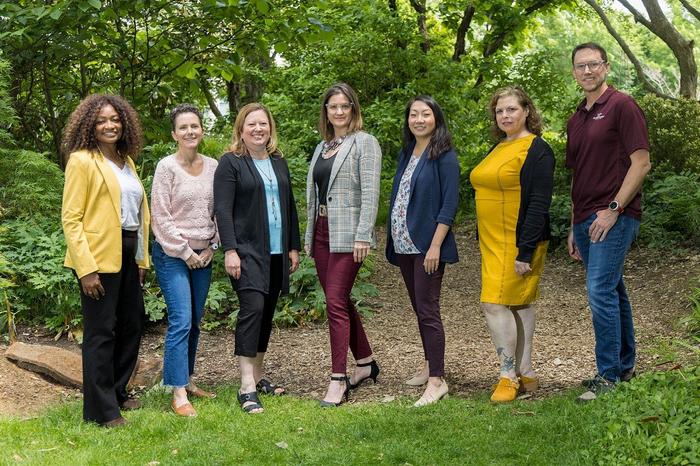
The neurotrauma consortium includes faculty from multiple colleges engaged in various aspects of brain trauma, computational biology, and neuroimmune research: Pam VandeVord, College of Engineering; Michelle Olsen, College of Science; Kylene Kehn-Hall, Virginia-Maryland College of Veterinary Medicine; Mike Fox, College of Science; Susan Campbell, College of Agriculture and Life Sciences; Alicia Pickrell, College of Science; Georgia Hodes, College of Science; David Xie, Virginia-Maryland College of Veterinary Medicine; and Eric Marvin, Carilion Brain Injury Center.
“The neurotrauma consortium is an interdisciplinary collaboration between biomedical sciences, biomedical engineering, the School of Neuroscience, CALS [College of Agriculture and Life Sciends], and the Carilion Brain Injury Center,” Theus said. “Using a cross-disciplinary approach, the program will identify new prognostic targets associated with chronic TBI sequelae using tools such as machine learning to analyze and integrate large datasets across our well-defined models.”
With the $300,000 grant and any additional funds the consortium can raise, Theus hopes to expand support for additional infrastructure required to perform a comprehensive analysis of chronic neurological sequela, including the creation of a Virginia Tech data repository and training opportunities for undergraduate and graduate students.