• HOME
  • NEWS
  • EXPLORE
    • CAREER
      • Companies
      • Jobs
    • EVENTS
    • iGEM
      • News
      • Team
    • PHOTOS
    • VIDEO
    • WIKI
  • BLOG
  • COMMUNITY
    • FACEBOOK
    • INSTAGRAM
    • TWITTER
Saturday, February 7, 2026
BIOENGINEER.ORG
No Result
View All Result
  • Login
  • HOME
  • NEWS
  • EXPLORE
    • CAREER
      • Companies
      • Jobs
        • Lecturer
        • PhD Studentship
        • Postdoc
        • Research Assistant
    • EVENTS
    • iGEM
      • News
      • Team
    • PHOTOS
    • VIDEO
    • WIKI
  • BLOG
  • COMMUNITY
    • FACEBOOK
    • INSTAGRAM
    • TWITTER
  • HOME
  • NEWS
  • EXPLORE
    • CAREER
      • Companies
      • Jobs
        • Lecturer
        • PhD Studentship
        • Postdoc
        • Research Assistant
    • EVENTS
    • iGEM
      • News
      • Team
    • PHOTOS
    • VIDEO
    • WIKI
  • BLOG
  • COMMUNITY
    • FACEBOOK
    • INSTAGRAM
    • TWITTER
No Result
View All Result
Bioengineer.org
No Result
View All Result
Home NEWS Science News Health

How eating natto might help to distress

Bioengineer by Bioengineer
May 26, 2023
in Health
Reading Time: 3 mins read
0
Influence of Bacillus subtilis var. natto intake
Share on FacebookShare on TwitterShare on LinkedinShare on RedditShare on Telegram

Health is wealth as the saying goes and new research now shows that it is possible to have a healthy, less stressed society through familiar and inexpensive foods. One such food might be the Japanese natto which is made from softened soybeans that have been boiled or steamed and fermented with a bacteria called Bacillus subtilis var. natto. Bacillus subtilis var. natto is found in soil, plants, animals, and the human stomach and intestines. Most of the natto consumed in Japan is made from the Miyagino strain.
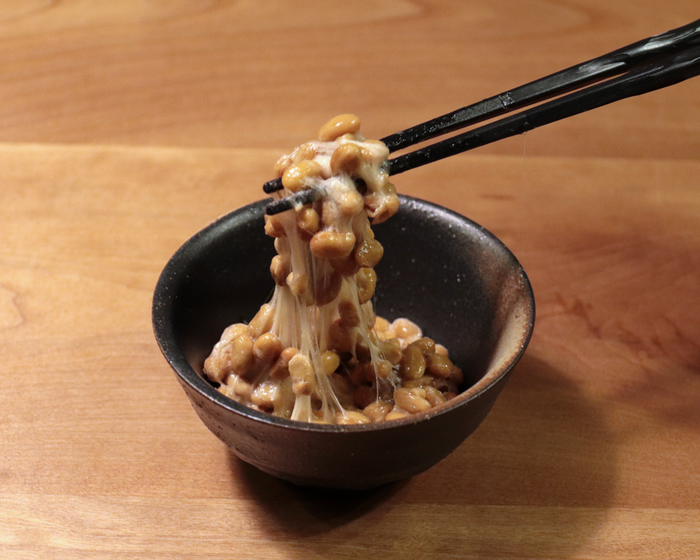
Influence of Bacillus subtilis var. natto intake

Credit: Osaka Metropolitan University

Health is wealth as the saying goes and new research now shows that it is possible to have a healthy, less stressed society through familiar and inexpensive foods. One such food might be the Japanese natto which is made from softened soybeans that have been boiled or steamed and fermented with a bacteria called Bacillus subtilis var. natto. Bacillus subtilis var. natto is found in soil, plants, animals, and the human stomach and intestines. Most of the natto consumed in Japan is made from the Miyagino strain.

A research group led by Professor Eriko Kage-Nakadai at the Graduate School of Human Life and Ecology, Osaka Metropolitan University, examined the effects of Bacillus subtilis var. natto consumption on the lifespan of the host using Caenorhabditis elegans worms. The researchers found that Caenorhabditis elegans fed Bacillus subtilis var. natto had a significantly longer lifespan than those fed the standard diet, and further elucidated that the p38 MAPK pathway and insulin/IGF-1-like signaling pathway, which are known to be involved in innate immunity and lifespan, were involved in the lifespan-enhancing effects of Bacillus subtilis var. natto. They also examined stress tolerance, which has been shown to have a correlation with longevity, and found that resistance to UV light and oxidative stress is enhanced.

Professor Nakadai concluded, “For the first time, we were able to demonstrate the possibility of lifespan-extending effects of Caenorhabditis elegans through the ingestion of Bacillus subtilis var. natto. We hope that future experiments on mammals and epidemiological studies will help to realize a healthy and longer-living society if we can apply this research to humans.”

The research results were published online in the Journal of Applied Microbiology on April 20, 2023.

###

About OMU 

Osaka Metropolitan University is the third largest public university in Japan, formed by a merger between Osaka City University and Osaka Prefecture University in 2022. OMU upholds “Convergence of Knowledge” through 11 undergraduate schools, a college, and 15 graduate schools. For more research news visit https://www.omu.ac.jp/en/ or follow us on Twitter: @OsakaMetUniv_en, or Facebook.


Journal

Journal of Applied Microbiology

DOI

10.1093/jambio/lxad082

Method of Research

Experimental study

Subject of Research

Animals

Article Title

Impacts of Bacillus subtilis var. natto on the lifespan and stress resistance of Caenorhabditis elegans

Article Publication Date

20-Apr-2023
Share12Tweet8Share2ShareShareShare2

Related Posts

Evaluating Pediatric Emergency Care Quality in Ethiopia

February 7, 2026

TPMT Expression Predictions Linked to Azathioprine Side Effects

February 7, 2026

Improving Dementia Care with Enhanced Activity Kits

February 7, 2026

Decoding Prostate Cancer Origins via snFLARE-seq, mxFRIZNGRND

February 7, 2026

POPULAR NEWS

  • Robotic Ureteral Reconstruction: A Novel Approach

    Robotic Ureteral Reconstruction: A Novel Approach

    82 shares
    Share 33 Tweet 21
  • Digital Privacy: Health Data Control in Incarceration

    63 shares
    Share 25 Tweet 16
  • Study Reveals Lipid Accumulation in ME/CFS Cells

    57 shares
    Share 23 Tweet 14
  • Breakthrough in RNA Research Accelerates Medical Innovations Timeline

    53 shares
    Share 21 Tweet 13

About

We bring you the latest biotechnology news from best research centers and universities around the world. Check our website.

Follow us

Recent News

Evaluating Pediatric Emergency Care Quality in Ethiopia

TPMT Expression Predictions Linked to Azathioprine Side Effects

Improving Dementia Care with Enhanced Activity Kits

Subscribe to Blog via Email

Success! An email was just sent to confirm your subscription. Please find the email now and click 'Confirm' to start subscribing.

Join 73 other subscribers
  • Contact Us

Bioengineer.org © Copyright 2023 All Rights Reserved.

Welcome Back!

Login to your account below

Forgotten Password?

Retrieve your password

Please enter your username or email address to reset your password.

Log In
No Result
View All Result
  • Homepages
    • Home Page 1
    • Home Page 2
  • News
  • National
  • Business
  • Health
  • Lifestyle
  • Science

Bioengineer.org © Copyright 2023 All Rights Reserved.