To know when it’s time for a meal – and when to stop eating again – is important to survive and to stay healthy, for humans and animals alike. Researchers at the Max Planck Institute for Biological Intelligence investigated how the brain regulates feeding behavior in mice. The team found that the hormone ghrelin activates specialized nerve cells in a brain region known as the amygdala. Here, the interaction between ghrelin and the specialized neurons promotes food consumption and conveys hunger and the pleasant and rewarding feelings associated with eating.
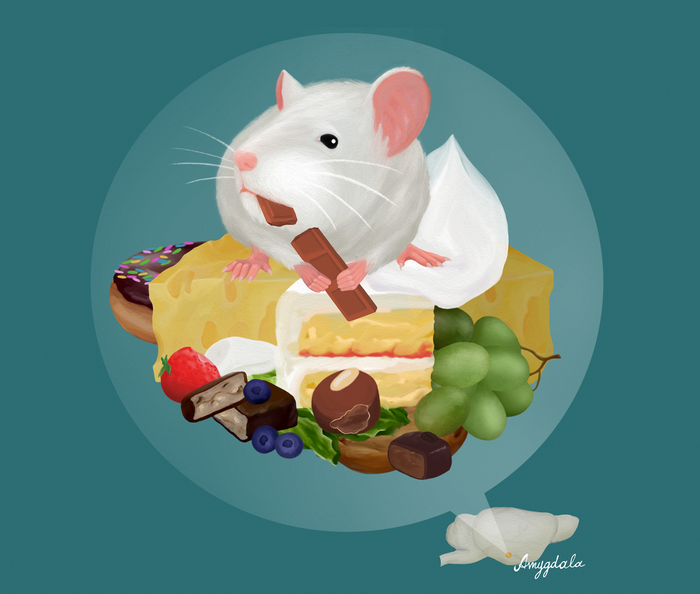
Credit: MPI f. Biological Intelligence/ Julia Kuhl
To know when it’s time for a meal – and when to stop eating again – is important to survive and to stay healthy, for humans and animals alike. Researchers at the Max Planck Institute for Biological Intelligence investigated how the brain regulates feeding behavior in mice. The team found that the hormone ghrelin activates specialized nerve cells in a brain region known as the amygdala. Here, the interaction between ghrelin and the specialized neurons promotes food consumption and conveys hunger and the pleasant and rewarding feelings associated with eating.
Hunger is a powerful sensation with important biological underpinnings. It signals the body to look for food, which is a crucial behavior to prevent starvation and ensure survival. When we’re hungry, we crave for food – and when we finally get to eat, our body rewards us with pleasant feelings and a general state of happiness.
A network of brain circuits and signaling pathways orchestrates the eating behavior of humans and animals and elicits the associated sensations. One of the central players in this network is the hormone ghrelin. It is released by stomach cells when humans and animals are hungry or fasting, and promotes feeding behavior.
The department of Rüdiger Klein at the Max Planck Institute for Biological Intelligence studies the brain networks that underly feeding behavior in mice. To this end, the researchers conducted a thorough analysis of the different cell types in a brain region known as the central amygdala. “Previously, the amygdala had mostly been studied in the context of feelings like fear and reward, while the regulation of feeding was thought to happen in different parts of the brain, such as the hypothalamus,” says Christian Peters, a postdoctoral researcher in the department.
Nine cell clusters
Peters and his colleagues analyzed individual cells in the central amygdala, studying messenger RNA molecules – the cell’s working copies of their genes. The analysis revealed that the cells are organized into nine different cell clusters. Some of these clusters promote appetite while others inhibit it, and they adjust their production of messenger RNAs when the mice are fed or fasting.
“We now have a much better understanding of the diversity of cell types and the physiological processes that promote feeding in the central amygdala,” says Rüdiger Klein. “Our research uncovers for the first time that the ‘hunger hormone’ ghrelin also acts on cells in the central amygdala.” There, it activates a small subset of cell clusters, collectively marked by the presence of the protein Htr2a, to increase feeding.
Multiple functions for ghrelin
The scientists found that the Htr2a neurons became active after an overnight fast or when stimulated by the hormone ghrelin. The cells also responded when the researchers presented food to the mice. “We think that ghrelin performs multiple functions,” explains Christian Peters. “When mice are hungry, ghrelin activates the appetitive brain regions to predispose the animals for eating. In addition, the hormone enhances the activity in brain circuits, such as the amygdala, that confer rewards, which is likely an incentive to eat additional food.” This way, ghrelin increases the palatability of food in proportion to how satiated the mice currently are.
After a fasting diet, when the animals were very hungry the activity of Htr2a neurons was not needed to start feeding, presumably because the tastiness of food is less important under these conditions. “Other brain circuits, for example the hypothalamus, which regulate the body’s metabolism, take over and signal the mice that it’s important to eat in order to survive,” says Christian Peters.
Feeling hungry or satiated has profound impacts on physical but also on emotional wellbeing, as probably everyone knows by the pleasures associated with eating tasty food. “The neuronal networks that convey these feelings are obviously linked to those that control eating, yet it is not fully understood how exactly they influence each other,” says Rüdiger Klein.
“If we figure out these connections, we will better understand the neuronal processes that are involved in pathological eating behaviors, such as overeating,” concludes Christian Peters. “There are numerous biological factors that contribute to such a complex behavior and we have to look at the physiological processes to understand these factors.” Ultimately, this knowledge might lead to novel therapeutic approaches to alleviate eating disorders. For now, the research lays the groundwork for further studies to investigate how specific neuron populations are involved in the neuronal circuits that control feeding. It also adds another important piece to the puzzle of understanding how the brain orchestrates behavior.
Journal
Science Advances
DOI
10.1126/sciadv.adf6521
Method of Research
Meta-analysis
Subject of Research
Cells
Article Title
Transcriptomics reveals amygdala neuron regulation by fasting and ghrelin thereby promoting feeding
Article Publication Date
24-May-2023