Flow cytometry, a laser-based technique employed to detect and analyze the chemical and physical characteristics of cells or particles, is already widely used for the assessment of animal sperm integrity and can be repurposed to analyze human sperm, especially to predict potential male fertility more accurately than traditional methods, according to an article published in the journal Reproductive Toxicology.
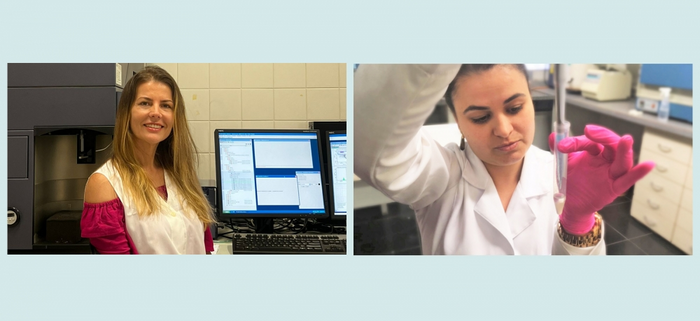
Credit: CERAN/UNESP & ReproTox
Flow cytometry, a laser-based technique employed to detect and analyze the chemical and physical characteristics of cells or particles, is already widely used for the assessment of animal sperm integrity and can be repurposed to analyze human sperm, especially to predict potential male fertility more accurately than traditional methods, according to an article published in the journal Reproductive Toxicology.
The article is by researchers at São Paulo State University (UNESP) in Brazil, who report the first-ever successful use of flow cytometry for the functional analysis of human sperm. There are no precedents in the scientific literature, the authors claim.
The study involved the use of a cytometer, an optoelectronic device equipped with lasers that excite fluorophores (light re-emitting chemical compounds) and filters that detect fluorescence in different colors, with the various wavelengths corresponding to specific characteristics of cells relating to fertility.
They used flow cytometry to test all of the following in a single sample: the integrity and stability of the sperm plasma membrane, which is vital to its survival in the female genital tract and to its ability to merge with the egg; the status of the acrosome, the sperm tip containing enzymes that facilitate penetration of the egg; mitochondrial potential, to produce the energy that propels the sperm’s flagellum through the female genital tract; and production in the mitochondrial matrix of superoxide anion, an oxidizing compound required for the sperm to bind to the egg but harmful in excess.
Human sperm count has continuously declined in recent decades, and this in turn has influenced the fall in births and the decline of the global fertility rate. Clinical assessment of these cells is the essential basis both for identifying cases of infertility and for working with assisted reproduction technologies such as in vitro fertilization (IVF), in which women’s eggs are fertilized outside the body.
One type of IVF involves intracytoplasmic sperm injection (ICSI), where a single sperm is selected for direct injection with a microscopic needle into a mature egg. The main challenge is the difficulty of testing multiple attributes simultaneously in a single cell so as to enhance the accuracy of fertility prediction.
The latest edition (2021) of the World Health Organization’s manual on the examination and processing of human semen acknowledges that the conventional approach to sperm assessment in a clinical laboratory by spermiogram is incapable of accurately predicting male fertility potential and that many cases remain idiopathic (unexplained).
“You can count a small number of cells – around 100 or 200 per sample – under the microscope, but the number soars to at least 20,000 when you use a flow cytometer. You can observe more than one part of the sperm at the same time, making the analysis far more precise as a basis for targeted, assertive treatment,” said Josiane de Lima Rosa, first author of the article alongside Camila de Paula Freitas Dell’Aqua. The study was supported by FAPESP.
“The results of this study, added to previous experience in veterinary medicine at facilities that work with bovine semen, present a new possibility for the use of flow cytometry in human reproduction laboratories,” Dell’Aqua said.
To ensure that the analysis protocol they developed can be widely used, the researchers tested two types of cytometer in the study, a more robust one with three lasers (red, blue and violet), and a simpler one with two lasers.
New partnerships
In addition to developing a more effective technique for the analysis of fertility potential, the aim of the study was to foster an exchange of information between professionals in human and veterinary medicine so as to help develop novel procedures.
“Veterinary medicine requires less bioethical rigor in obtaining samples and can more easily conduct trials in search of alternative tools. This can be passed on translationally to human medicine. It’s essential to combine the two fields in order to advance,” said Fabiana Ferreira de Souza, a professor and researcher in the Department of Veterinary Surgery and Animal Reproduction at UNESP’s School of Veterinary Medicine and Animal Science (FMVZ).
About São Paulo Research Foundation (FAPESP)
The São Paulo Research Foundation (FAPESP) is a public institution with the mission of supporting scientific research in all fields of knowledge by awarding scholarships, fellowships and grants to investigators linked with higher education and research institutions in the State of São Paulo, Brazil. FAPESP is aware that the very best research can only be done by working with the best researchers internationally. Therefore, it has established partnerships with funding agencies, higher education, private companies, and research organizations in other countries known for the quality of their research and has been encouraging scientists funded by its grants to further develop their international collaboration. You can learn more about FAPESP at www.fapesp.br/en and visit FAPESP news agency at www.agencia.fapesp.br/en to keep updated with the latest scientific breakthroughs FAPESP helps achieve through its many programs, awards and research centers. You may also subscribe to FAPESP news agency at http://agencia.fapesp.br/subscribe.
Journal
Reproductive Toxicology
DOI
10.1016/j.reprotox.2023.108353
Article Title
Multiple flow cytometry analysis for assessing human sperm functional characteristics
Article Publication Date
18-Feb-2023