• HOME
  • NEWS
  • EXPLORE
    • CAREER
      • Companies
      • Jobs
    • EVENTS
    • iGEM
      • News
      • Team
    • PHOTOS
    • VIDEO
    • WIKI
  • BLOG
  • COMMUNITY
    • FACEBOOK
    • INSTAGRAM
    • TWITTER
Tuesday, August 18, 2026
BIOENGINEER.ORG
No Result
View All Result
  • Login
  • HOME
  • NEWS
  • EXPLORE
    • CAREER
      • Companies
      • Jobs
        • Lecturer
        • PhD Studentship
        • Postdoc
        • Research Assistant
    • EVENTS
    • iGEM
      • News
      • Team
    • PHOTOS
    • VIDEO
    • WIKI
  • BLOG
  • COMMUNITY
    • FACEBOOK
    • INSTAGRAM
    • TWITTER
  • HOME
  • NEWS
  • EXPLORE
    • CAREER
      • Companies
      • Jobs
        • Lecturer
        • PhD Studentship
        • Postdoc
        • Research Assistant
    • EVENTS
    • iGEM
      • News
      • Team
    • PHOTOS
    • VIDEO
    • WIKI
  • BLOG
  • COMMUNITY
    • FACEBOOK
    • INSTAGRAM
    • TWITTER
No Result
View All Result
Bioengineer.org
No Result
View All Result
Home NEWS Science News Health

The hidden power of Japanese food ― inhibiting the development of liver fibrosis

Bioengineer by Bioengineer
April 26, 2023
in Health
Reading Time: 2 mins read
0
The relationship between Japanese food and NAFLD
Share on FacebookShare on TwitterShare on LinkedinShare on RedditShare on Telegram

Japanese food is popular worldwide and has been registered as a UNESCO Intangible Cultural Heritage. There is a scoring system named “the 12-component modified Japanese Diet Index (mJDI12),” which focuses on the intake of the Japanese diet pattern. It includes 12 foods and food groups: rice, miso soup, pickles, soy products, green and yellow vegetables, fruits, seafood, mushrooms, seaweed, green tea, coffee, and beef and pork. Scores range from 0 to 12, with higher scores indicating a diet that conforms to the Japanese food pattern.
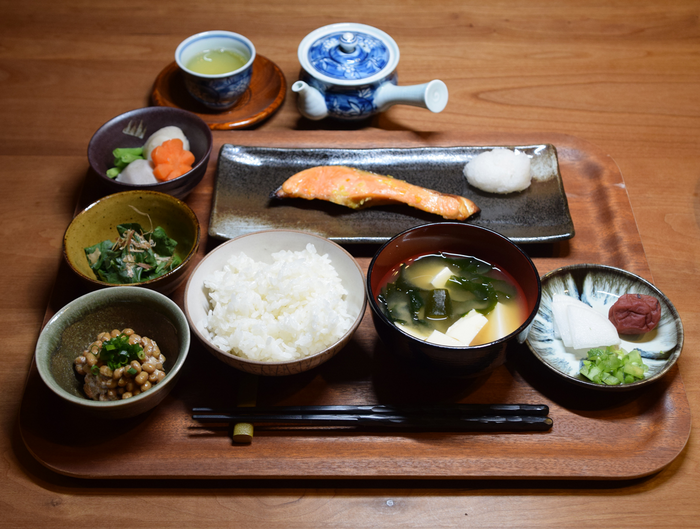
The relationship between Japanese food and NAFLD

Credit: Osaka Metropolitan University

Japanese food is popular worldwide and has been registered as a UNESCO Intangible Cultural Heritage. There is a scoring system named “the 12-component modified Japanese Diet Index (mJDI12),” which focuses on the intake of the Japanese diet pattern. It includes 12 foods and food groups: rice, miso soup, pickles, soy products, green and yellow vegetables, fruits, seafood, mushrooms, seaweed, green tea, coffee, and beef and pork. Scores range from 0 to 12, with higher scores indicating a diet that conforms to the Japanese food pattern.

A research group led by Dr. Hideki Fujii M.D. and Associate Professor Yoshinari Matsumoto at the Osaka Metropolitan University analyzed the relationship between meals rated by mJDI12, muscle mass, and liver fibrosis progression in 136 patients with nonalcoholic fatty liver disease (NAFLD) attending the Osaka Metropolitan University Hospital.

The research group found the following: the group with a higher mJDI12 showed a lower degree of liver fibrosis progression. Moreover, among the Japanese diet patterns, a high intake of soy products, seafood, and seaweed showed a suppressive effect on liver fibrosis progression. In addition, the group with a higher intake of soy products had higher muscle mass, and the group with higher muscle mass had a lower degree of liver fibrosis progression.

 “This study indicates that the Japanese diet pattern may be effective as a dietary treatment for NAFLD patients. We hope that further intervention studies will lead to the establishment of an effective diet for those patients,” concluded Professor Matsumoto.

Their findings were published in Nutrients.

###

About OMU 

Osaka Metropolitan University is a new public university established in April 2022, formed by merger between Osaka City University and Osaka Prefecture University. For more research news visit https://www.omu.ac.jp/en/ or follow @OsakaMetUniv_en and #OMUScience.


Journal

Nutrients

DOI

10.3390/nu15051175

Method of Research

Observational study

Subject of Research

People

Article Title

Severity of Liver Fibrosis Is Associated with the Japanese Diet Pattern and Skeletal Muscle Mass in Patients with Nonalcoholic Fatty Liver Disease

Article Publication Date

26-Feb-2023
Share14Tweet9Share2ShareShareShare2

Related Posts

Real-world study confirms TB preventive treatment works for people with HIV

August 18, 2026

Global genomic surveillance reveals emerging WHO-priority antibiotic resistance patterns in invasive Salmonella

August 18, 2026

Experts warn AHRQ cuts threaten US healthcare quality and patient safety

August 18, 2026

Severe mental illness tied to higher dementia risk and earlier strokes

August 18, 2026

POPULAR NEWS

  • UL Research Institutes names Chao-Yang Wang electrochemical safety institute executive director

    29 shares
    Share 12 Tweet 7
  • Alliance reports first randomized trial results for radiopharmaceutical treatment in kidney cancer

    29 shares
    Share 12 Tweet 7
  • Real-world study confirms TB preventive treatment works for people with HIV

    29 shares
    Share 12 Tweet 7
  • 3D-Printed Cellulose Hydrogel Keeps Wearable Sensors Flexible Below Freezing

    29 shares
    Share 12 Tweet 7

About

We bring you the latest biotechnology news from best research centers and universities around the world. Check our website.

Follow us

Recent News

UL Research Institutes names Chao-Yang Wang electrochemical safety institute executive director

Alliance reports first randomized trial results for radiopharmaceutical treatment in kidney cancer

Real-world study confirms TB preventive treatment works for people with HIV

Subscribe to Blog via Email

Enter your email address to subscribe to this blog and receive notifications of new posts by email.

Join 85 other subscribers
  • Contact Us

Bioengineer.org © Copyright 2023 All Rights Reserved.

Welcome Back!

Login to your account below

Forgotten Password?

Retrieve your password

Please enter your username or email address to reset your password.

Log In
No Result
View All Result
  • Homepages
    • Home Page 1
    • Home Page 2
  • News
  • National
  • Business
  • Health
  • Lifestyle
  • Science

Bioengineer.org © Copyright 2023 All Rights Reserved.