Credit: A.K. Plumptre, Wildlife Conservation Society
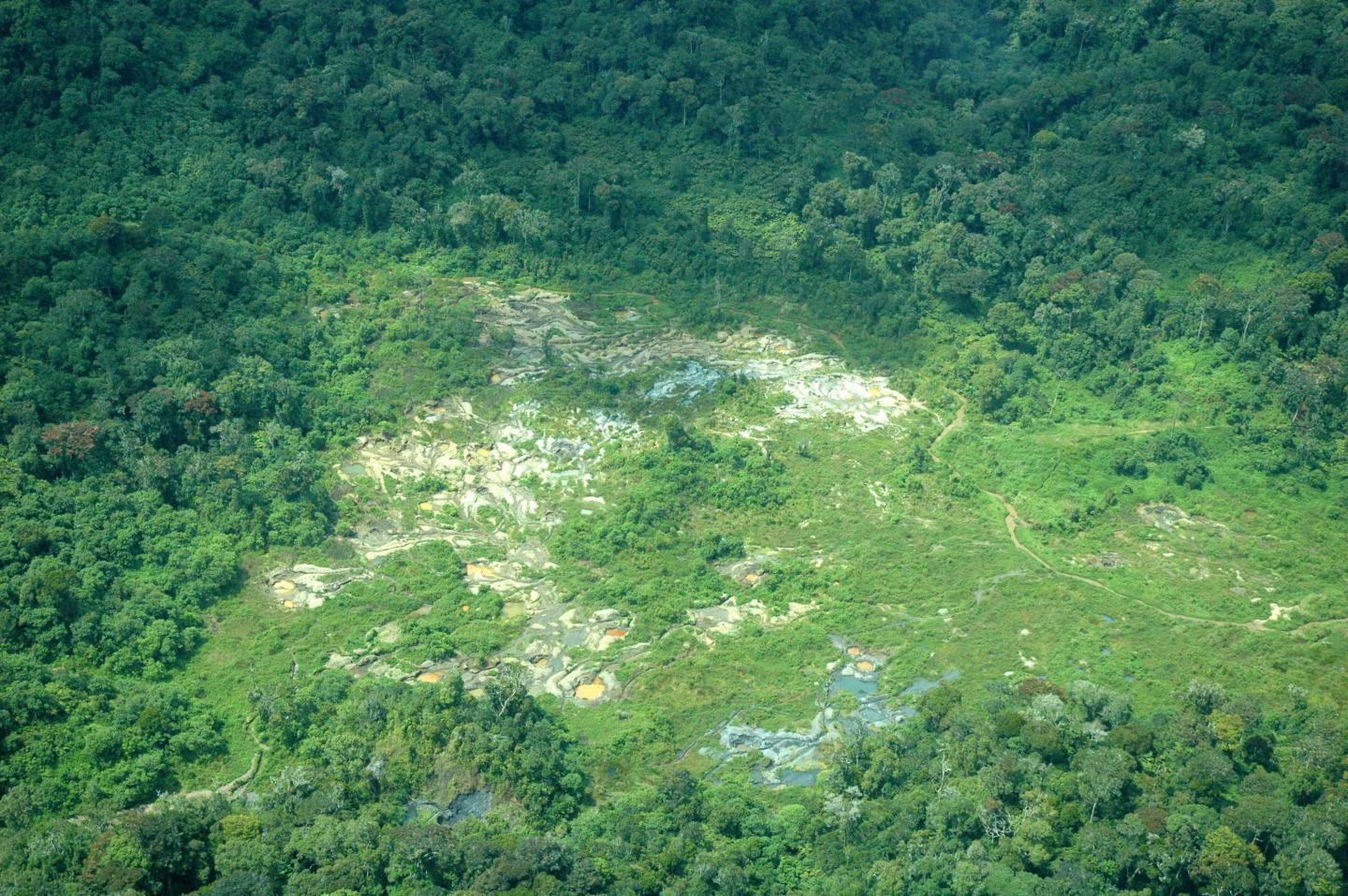
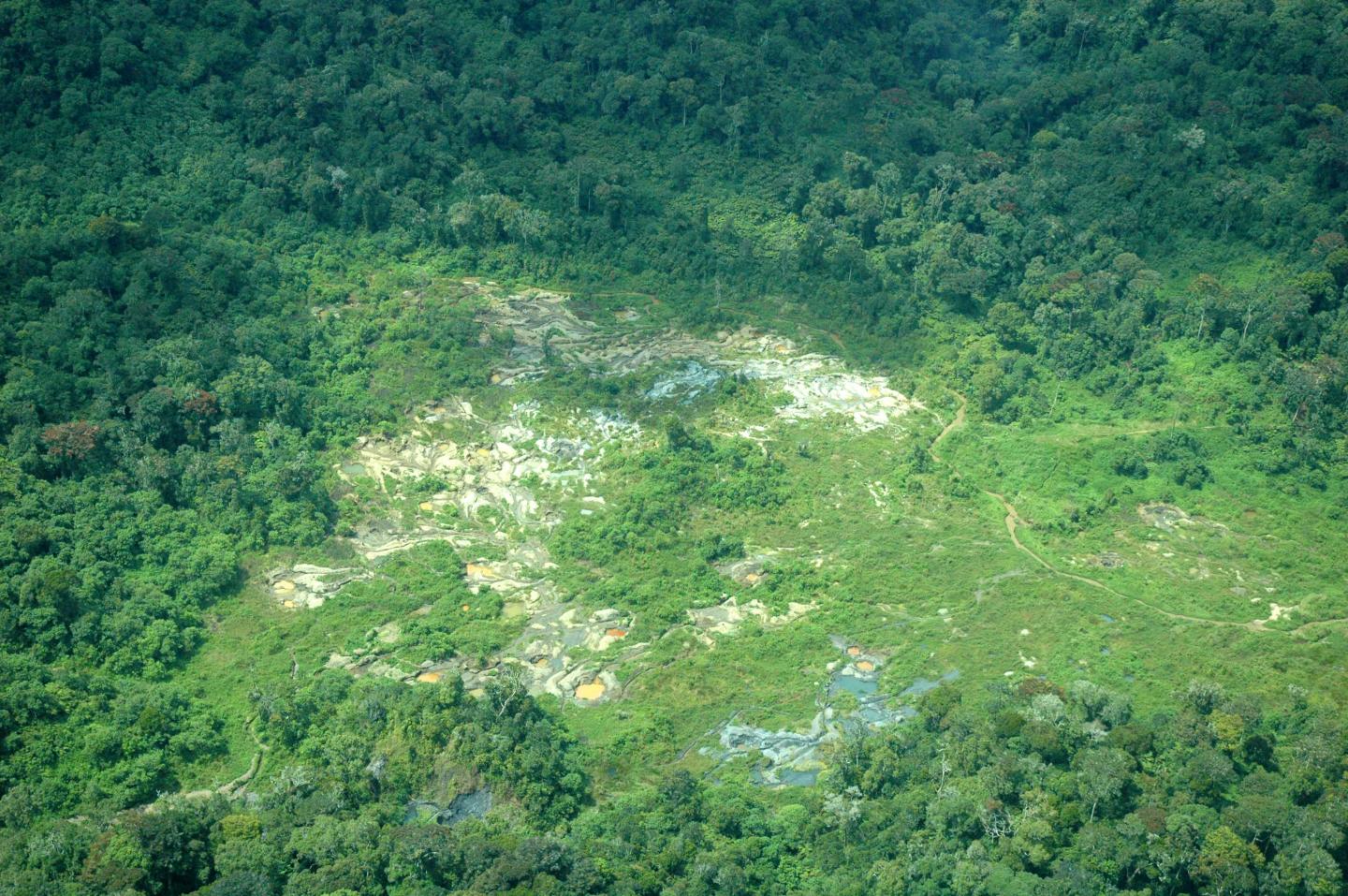
A University of Queensland-led international study published today warns that more than 100 Natural World Heritage Sites are being destroyed by encroaching human activities.
Lead author and UQ School of Earth and Environmental Sciences PhD student James Allan said Natural World Heritage Sites should be maintained and protected fully.
"For a site to lose 10 or 20 per cent of its forested area in two decades is alarming and must be addressed," Mr Allan said.
He said Natural World Heritage Sites, via the process driven by UNESCO (the United Nations Educational, Scientific and Cultural Organisation), were globally recognised as containing some of the Earth's most valuable natural assets.
The authors looked at human pressure (using the updated global Human Footprint) such as roads, agriculture, urbanisation and industrial infrastructure, along with forest loss, over time.
They found that the Human Footprint has increased in 63 per cent of Natural World Heritage Sites across all continents except Europe over the past two decades.
The most impacted Natural World Heritage Sites were found in Asia including: Manas Wildlife Sanctuary in India, Komodo National Park in Indonesia, and Chitwan National Park in Nepal; along with Simien National Park in Ethiopia.
In terms of forest loss, highly impacted parks included Río Plátano Biosphere Reserve in Honduras, which suffered 365 km2 (8.5 percent) of deforestation since 2000.
Even celebrated locations like Yellowstone were impacted, losing approximately six per cent of its forests.
Meanwhile, Waterton Glacier International Peace Park – crossing the Canadian and USA border – lost almost one quarter of its forested area (23 per cent or 540 km2).
Senior author, Dr James Watson of UQ and the Wildlife Conservation Society said any place listed as a World Heritage site was a globally important asset to all of humanity.
"The world would never accept the Acropolis being knocked down, nor a couple of pyramids being flattened for housing estates or roads, yet right now, across our planet, we are letting many of our Natural World Heritage Sites be fundamentally altered," he said.
The authors said by highlighting Natural World Heritage Sites in immediate danger, the study provided useful baseline data for future monitoring and conservation efforts.
The UNESCO World Heritage Committee meets again in July in Poland, and the authors said the study should be used to stimulate further action.
"It is clearly time for the global community to stand up and hold governments to account so that they take the conservation of Natural World Heritage Sites seriously," Mr Allan said.
"We urge the World Heritage Committee to immediately assess the highly threatened sites we have identified.
"Urgent intervention is needed to save these places and their outstanding natural universal values."
The authors said Natural World Heritage Sites such as the Sinharaja Forest Reserve and Mana Pools National Park that showed minimal change in forest loss or human pressure, were in the minority.
###
The study by an international team from The University of Queensland, Wildlife Conservation Society University of Northern British Columbia and the International Union for Conservation of Nature appears in the journal Biological Conservation.
Media Contact
James Allan
[email protected]
61-424-982-651
@uq_news
http://www.uq.edu.au
############
Story Source: Materials provided by Scienmag