• HOME
  • NEWS
  • EXPLORE
    • CAREER
      • Companies
      • Jobs
    • EVENTS
    • iGEM
      • News
      • Team
    • PHOTOS
    • VIDEO
    • WIKI
  • BLOG
  • COMMUNITY
    • FACEBOOK
    • INSTAGRAM
    • TWITTER
Monday, October 5, 2026
BIOENGINEER.ORG
No Result
View All Result
  • Login
  • HOME
  • NEWS
  • EXPLORE
    • CAREER
      • Companies
      • Jobs
        • Lecturer
        • PhD Studentship
        • Postdoc
        • Research Assistant
    • EVENTS
    • iGEM
      • News
      • Team
    • PHOTOS
    • VIDEO
    • WIKI
  • BLOG
  • COMMUNITY
    • FACEBOOK
    • INSTAGRAM
    • TWITTER
No Result
View All Result
Bioengineer.org
No Result
View All Result
Home NEWS Science News

The world’s first heat-driven transistor

Bioengineer by Bioengineer
January 31, 2017
in Science News
Reading Time: 3 mins read
0
Share on FacebookShare on TwitterShare on LinkedinShare on RedditShare on Telegram
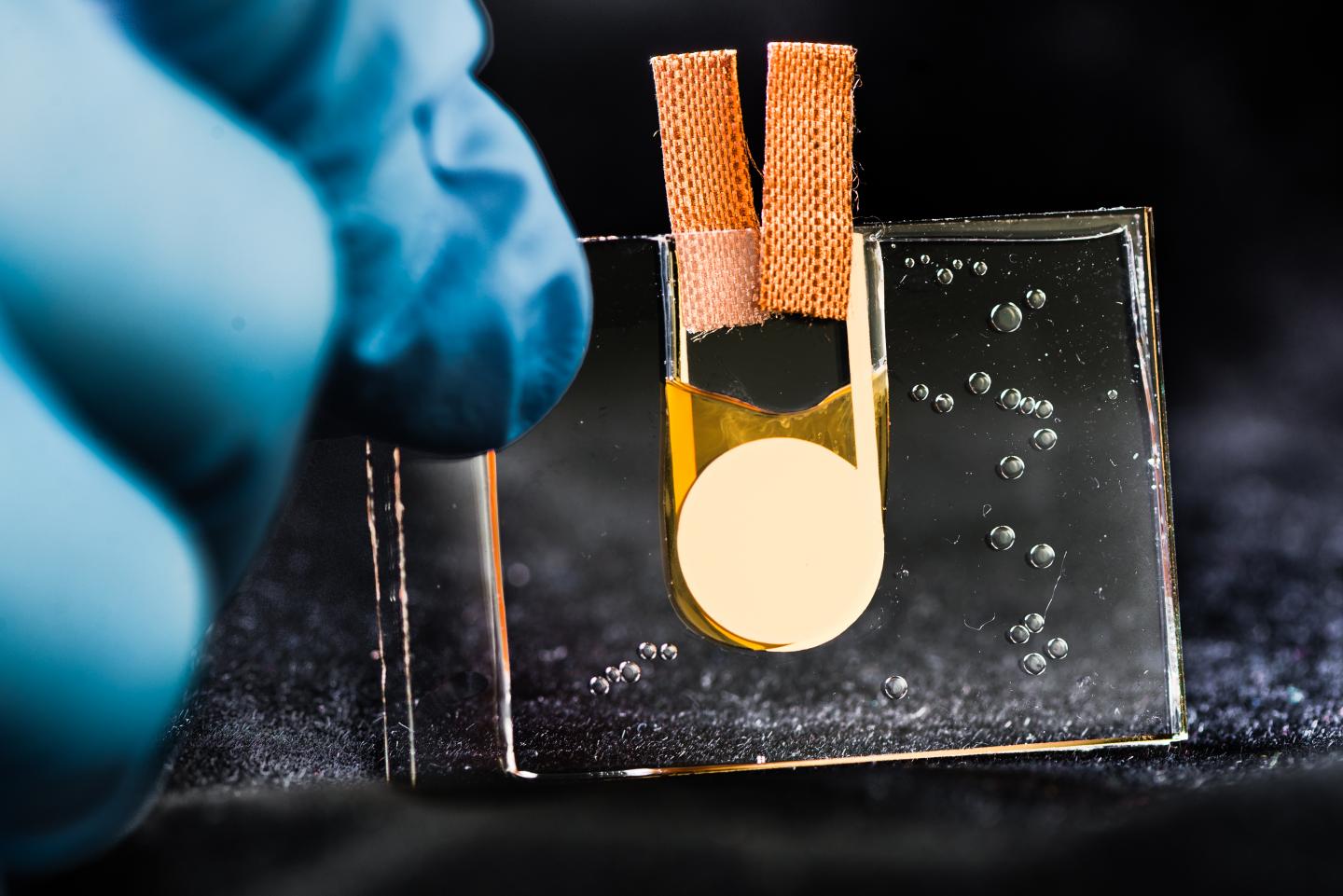
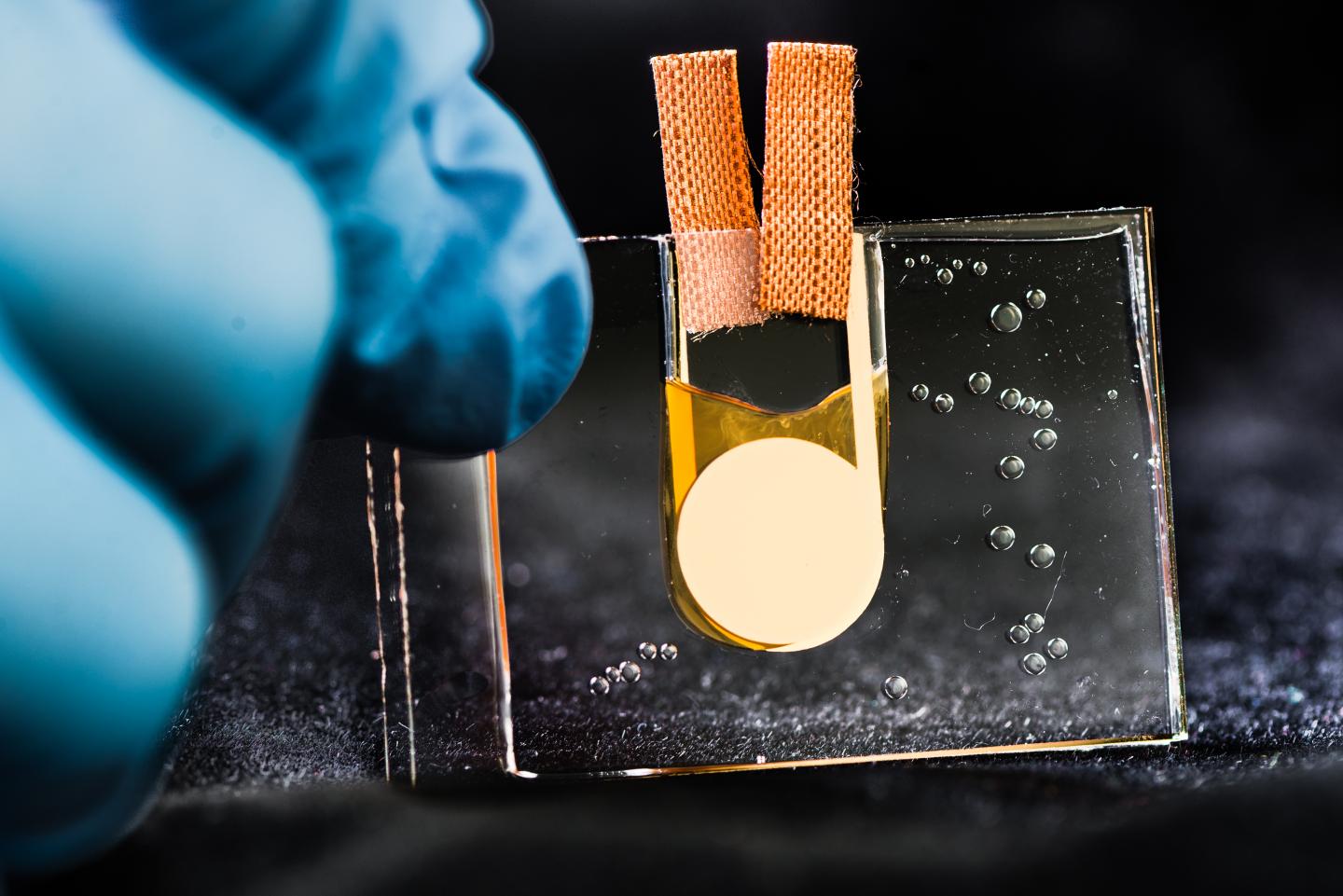
IMAGE

Credit: Thor Balkhed

"We are the first in the world to present a logic circuit, in this case a transistor, that is controlled by a heat signal instead of an electrical signal," states Professor Xavier Crispin of the Laboratory of Organic Electronics, Linköping University.

The heat-driven transistor opens the possibility of many new applications such as detecting small temperature differences, and using functional medical dressings in which the healing process can be monitored.

It is also possible to produce circuits controlled by the heat present in infrared light, for use in heat cameras and other applications. The high sensitivity to heat, 100 times greater than traditional thermoelectric materials, means that a single connector from the heat-sensitive electrolyte, which acts as sensor, to the transistor circuit is sufficient. One sensor can be combined with one transistor to create a "smart pixel".

A matrix of smart pixels can then be used, for example, instead of the sensors that are currently used to detect infrared radiation in heat cameras. With more developments, the new technology can potentially enable a new heat camera in your mobile phone at a low cost, since the materials required are neither expensive, rare nor hazardous.

The heat-driven transistor builds on research that led to a supercapacitor being produced a year ago, charged by the sun's rays. In the capacitor, heat is converted to electricity, which can then be stored in the capacitor until it is needed.

The researchers at the Laboratory of Organic Electronics had searched among conducting polymers and produced a liquid electrolyte with a 100 times greater ability to convert a temperature gradient to electric voltage than the electrolytes previously used. The liquid electrolyte consists of ions and conducting polymer molecules. The positively charged ions are small and move rapidly, while the negatively charged polymer molecules are large and heavy. When one side is heated, the small ions move rapidly towards the cold side and a voltage difference arises.

"When we had shown that the capacitor worked, we started to look for other applications of the new electrolyte," says Xavier Crispin.

Dan Zhao, principal research engineer, and Simone Fabiano, senior lecturer, have shown, after many hours in the laboratory, that it is fully possible to build electronic circuits that are controlled by a heat signal.

###

Since 2014 the research has been financed by the Knut and Alice Wallenberg Foundation as part of the "Tail of the sun" project.

The Laboratory of Organic Electronics

The Laboratory of Organic Electronics, Linköping University, is located on Campus Norrköping, and is the birthplace of the world's first organic transistor and the world's first chemical chip, together with several other organic electronic components. Professor Magnus Berggren is head of the laboratory.

The article:

Ionic thermoelectric gating organic transistors, Dan Zhao, Simone Fabiano, Magnus Berggren and Xavier Crispin, Linköping University, Campus Norrköping, Nature Communications 2017. DOI 10.1038/ncomms14214

Related links:

Here heat is stored as electricity, Research News, Linköping University http://liu.se/forskning/forskningsnyheter/1.675552?l=sv

Contact

Professor Xavier Crispin [email protected] +46 11 36 34 85

Media Contact

Xavier Crispin
[email protected]
46-113-63485
@liu_universitet

http://www.liu.se

############

Story Source: Materials provided by Scienmag

Share12Tweet8Share2ShareShareShare2

Related Posts

Self-Taught AI Reads Blockchain Money Trails to Catch Crypto Laundering

Self-Taught AI Reads Blockchain Money Trails to Catch Crypto Laundering

October 5, 2026
Baby Born Missing an Entire Lung Mistaken for Pneumonia in Rare Case

Baby Born Missing an Entire Lung Mistaken for Pneumonia in Rare Case

October 5, 2026

Random Corrosion Pits Reveal Hidden Weaknesses in Bridge Cable Steel Wires

October 5, 2026

How Your Face Ages: Genes, Inflammation and Blood Fats Reveal the Biology of Looking Older

October 5, 2026
Please login to join discussion

POPULAR NEWS

  • Alloys That Shrink Their Own Grains: New PIX Mechanism Refines Metals With Heat Alone

    Alloys That Shrink Their Own Grains: New PIX Mechanism Refines Metals With Heat Alone

    29 shares
    Share 12 Tweet 7
  • Endurance Exercise Reshapes the Liver in Males and Females Through Distinct Molecular Routes

    29 shares
    Share 12 Tweet 7
  • Single Transcription Factor PU.1 Rapidly Converts Fibroblasts into Macrophage-Lineage Cells

    29 shares
    Share 12 Tweet 7
  • New Scale Measures How Ready Nurse Educators Really Are for the AI Era

    29 shares
    Share 12 Tweet 7

About

We bring you the latest biotechnology news from best research centers and universities around the world. Check our website.

Follow us

Recent News

Alloys That Shrink Their Own Grains: New PIX Mechanism Refines Metals With Heat Alone

Endurance Exercise Reshapes the Liver in Males and Females Through Distinct Molecular Routes

Single Transcription Factor PU.1 Rapidly Converts Fibroblasts into Macrophage-Lineage Cells

Subscribe to Blog via Email

Success! An email was just sent to confirm your subscription. Please find the email now and click 'Confirm' to start subscribing.

Join 85 other subscribers
  • Contact Us

Bioengineer.org © Copyright 2023 All Rights Reserved.

Welcome Back!

Login to your account below

Forgotten Password?

Retrieve your password

Please enter your username or email address to reset your password.

Log In
No Result
View All Result
  • Homepages
    • Home Page 1
    • Home Page 2
  • News
  • National
  • Business
  • Health
  • Lifestyle
  • Science

Bioengineer.org © Copyright 2023 All Rights Reserved.