• HOME
  • NEWS
  • EXPLORE
    • CAREER
      • Companies
      • Jobs
    • EVENTS
    • iGEM
      • News
      • Team
    • PHOTOS
    • VIDEO
    • WIKI
  • BLOG
  • COMMUNITY
    • FACEBOOK
    • INSTAGRAM
    • TWITTER
Saturday, May 2, 2026
BIOENGINEER.ORG
No Result
View All Result
  • Login
  • HOME
  • NEWS
  • EXPLORE
    • CAREER
      • Companies
      • Jobs
        • Lecturer
        • PhD Studentship
        • Postdoc
        • Research Assistant
    • EVENTS
    • iGEM
      • News
      • Team
    • PHOTOS
    • VIDEO
    • WIKI
  • BLOG
  • COMMUNITY
    • FACEBOOK
    • INSTAGRAM
    • TWITTER
  • HOME
  • NEWS
  • EXPLORE
    • CAREER
      • Companies
      • Jobs
        • Lecturer
        • PhD Studentship
        • Postdoc
        • Research Assistant
    • EVENTS
    • iGEM
      • News
      • Team
    • PHOTOS
    • VIDEO
    • WIKI
  • BLOG
  • COMMUNITY
    • FACEBOOK
    • INSTAGRAM
    • TWITTER
No Result
View All Result
Bioengineer.org
No Result
View All Result
Home NEWS Science News Chemistry

“Window into the brain”: a simple blood test to diagnose ALS is both robust and repeatable

Bioengineer by Bioengineer
April 13, 2023
in Chemistry
Reading Time: 2 mins read
0
Dr. Rachael Dunlop at qPCR
Share on FacebookShare on TwitterShare on LinkedinShare on RedditShare on Telegram

ALS is a rare paralytic neurological disease that can impact people in the prime of life. Delays in receiving a definitive diagnosis can be devastating for patients who typically survive only 2–5 years post-diagnosis. 
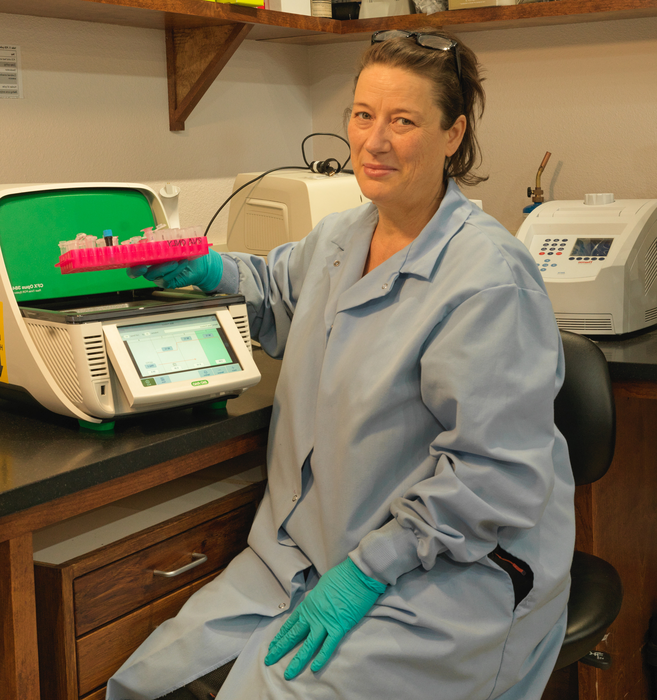
Dr. Rachael Dunlop at qPCR

Credit: Paul Alan Cox, Brain Chemistry Labs

ALS is a rare paralytic neurological disease that can impact people in the prime of life. Delays in receiving a definitive diagnosis can be devastating for patients who typically survive only 2–5 years post-diagnosis. 

Currently, an ALS diagnosis requires multiple clinical examinations by a neurologist to determine disease progression. Unfortunately, misdiagnosis can occur, resulting in a delay of treatment. 

A simple blood test for ALS that could be administered in a doctor’s office could accelerate referrals to neurological specialists for confirmation. Based on analysis of small genetic fragments called microRNA, such a test has been developed by scientists at the non-profit, Brain Chemistry Labs, in Jackson Hole. The test accurately identifies patients with ALS, based on analysis of blood samples from seventy ALS patients, and seventy controls. 

The microRNA is extracted from small particles in the bloodstream called extracellular vesicles, which protect the genetic cargo from degradation. A unique protein, L1CAM, allows concentration of particles that are diagnostic of ALS. 

The test is robust and repeatable, as described this week in the journal RNA Biology. 

“This test will assist neurologists in making a definitive and rapid diagnosis of ALS,” lead author Dr. Rachael Dunlop said. 

Early diagnosis means patients can receive treatment sooner. “Time is of the essence for ALS patients,” explains co-author Dr. Sandra Banack.

The test can also be used in clinical trials to determine the efficacy of new drug treatments for ALS––a disease for which there is currently no cure. 

The study, “L1CAM immunocapture generates a unique extracellular vesicle population with a reproducible miRNA fingerprint,” appears in the journal RNA Biology. https://doi.org/10.1080/15476286.2023.2198805


Journal

RNA Biology

DOI

10.1080/15476286.2023.2198805

Method of Research

Experimental study

Subject of Research

Human tissue samples

Article Title

L1CAM immunocapture generates a unique extracellular vesicle population with a reproducible miRNA fingerprint

Article Publication Date

11-Apr-2023

Share12Tweet8Share2ShareShareShare2

Related Posts

Using Epigenetics to Monitor Environmental Arsenic Exposure — Chemistry

Using Epigenetics to Monitor Environmental Arsenic Exposure

May 1, 2026
Innovative Nanoreactor Design Enhances Catalysis by Optimizing Transport and Reaction Kinetics — Chemistry

Innovative Nanoreactor Design Enhances Catalysis by Optimizing Transport and Reaction Kinetics

May 1, 2026

Swift Creation of Conductive Organic Compounds via Mechanochemistry

May 1, 2026

Scientists Reveal Atomic Mechanism Behind Water-Induced Hydroxylation in CoOx Nanostructures

May 1, 2026

POPULAR NEWS

  • Research Indicates Potential Connection Between Prenatal Medication Exposure and Elevated Autism Risk

    832 shares
    Share 333 Tweet 208
  • New Study Reveals Plants Can Detect the Sound of Rain

    714 shares
    Share 285 Tweet 178
  • Scientists Investigate Possible Connection Between COVID-19 and Increased Lung Cancer Risk

    67 shares
    Share 27 Tweet 17
  • Salmonella Haem Blocks Macrophages, Boosts Infection

    61 shares
    Share 24 Tweet 15

About

We bring you the latest biotechnology news from best research centers and universities around the world. Check our website.

Follow us

Recent News

Physical Disorders, ADLs, Cognition, Depression in Nursing Homes

Precise Spatiotemporal Cardiac Repair and Regeneration

Paul and Shelia Schlosberg Family Foundation Advances Military Brain Health with Pioneering $3 Million Grant

Subscribe to Blog via Email

Enter your email address to subscribe to this blog and receive notifications of new posts by email.

Join 82 other subscribers
  • Contact Us

Bioengineer.org © Copyright 2023 All Rights Reserved.

Welcome Back!

Login to your account below

Forgotten Password?

Retrieve your password

Please enter your username or email address to reset your password.

Log In
No Result
View All Result
  • Homepages
    • Home Page 1
    • Home Page 2
  • News
  • National
  • Business
  • Health
  • Lifestyle
  • Science

Bioengineer.org © Copyright 2023 All Rights Reserved.