Credit: OHSU/Kristyna Wentz-Graff
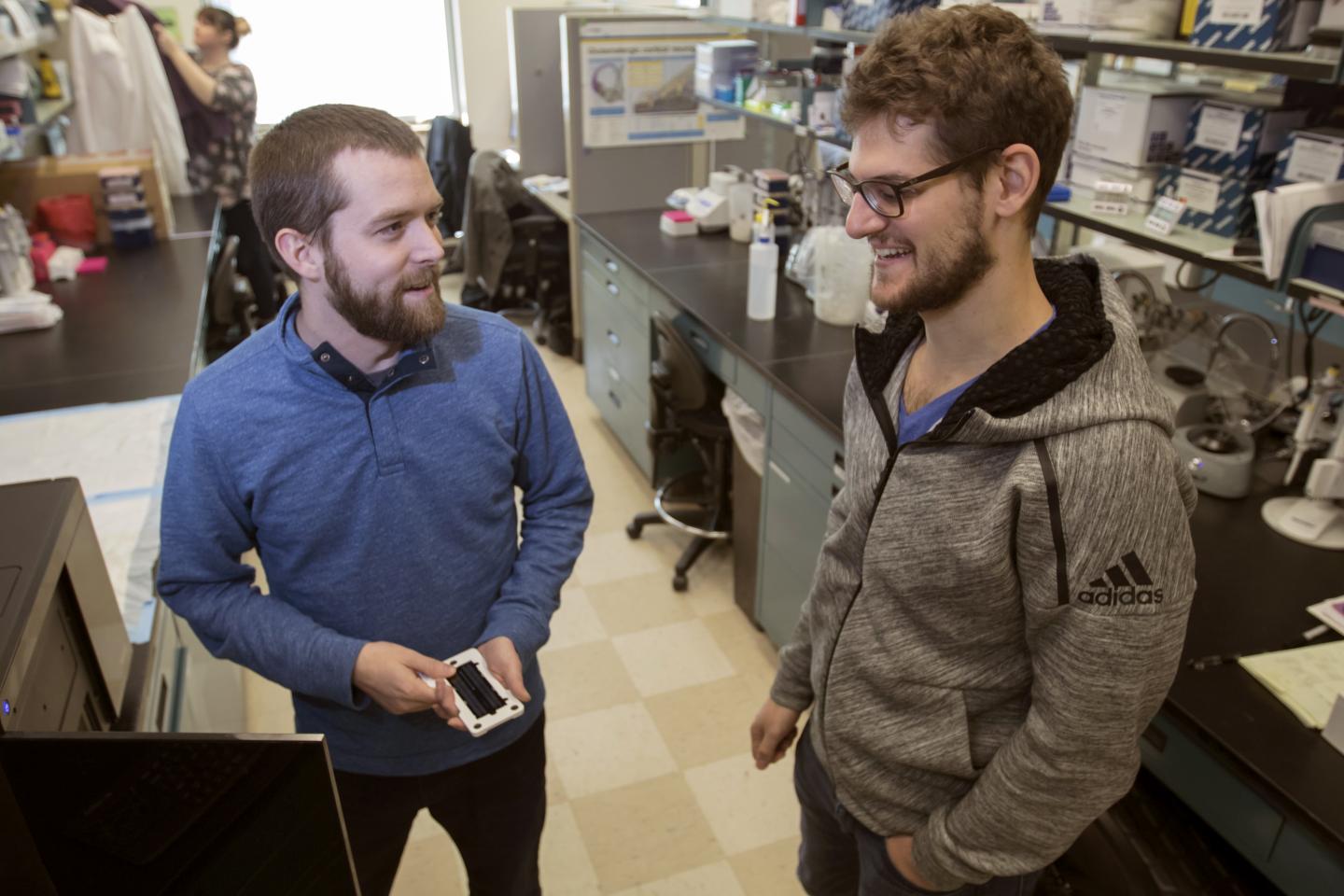
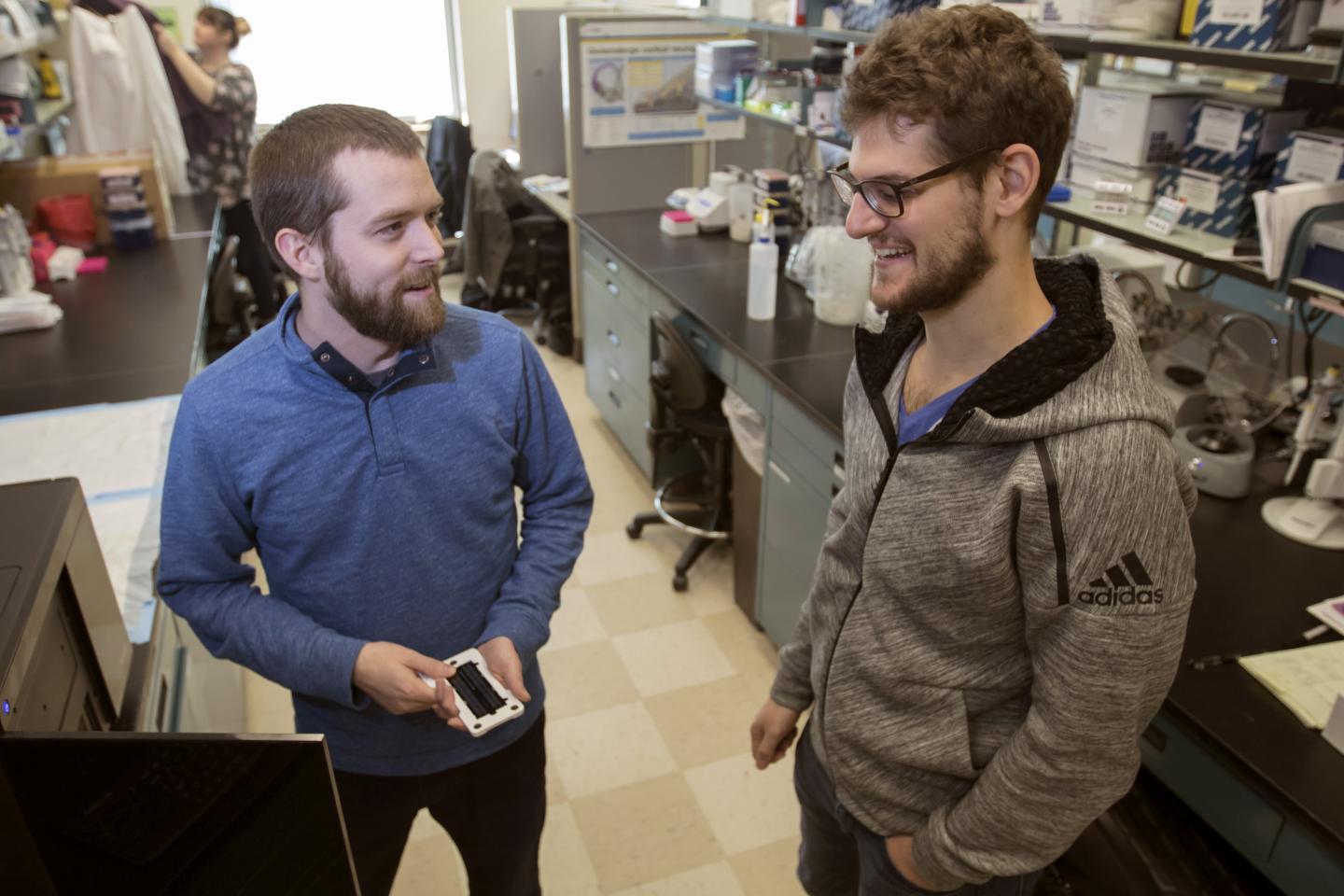
OHSU scientists have uncovered a method for quickly and efficiently mapping the genome of single cells within the body. Their findings, to be published Jan. 30 in the journal Nature Methods, clears the way for a significant advance in precision medicine, including cancer, and many other disease areas.
Single-cell genome sequencing has proved valuable for detecting variations within cells, particularly within tumors. However, the lack of an efficient, cost-effective method to map the genome of large numbers of single cells has made it difficult to conduct the kind of robust analysis necessary to characterize the specific genetic makeup of cancerous tumors affecting individuals, or other cell types in the body.
The study demonstrates a method of barcoding cells multiple times and then sequencing them. The method greatly expands the number of single cells that can be mapped.
"A tumor is constantly evolving and constantly changing," said senior author Andrew Adey, Ph.D., an assistant professor of molecular and medical genetics in the OHSU School of Medicine. "If we're able to break down the distinct cellular components of a tumor, we can target the cancer much more precisely."
Using their cell indexing method, researchers constructed genomic libraries for 16,698 single cells – approximately two orders of magnitude beyond what could be achieved using conventional methods. In the next phase of work, Adey hopes to expand on the types of information that can be accessed in single cells, including epigenetic properties that vary greatly between different cell types in the body.
"This will enable big advances," Adey said. "Through collaboration with other researchers at OHSU, we hope to begin using this tool fairly quickly in a clinical research setting."
###
Primary authors include Adey, Sarah A. Vitak and Kristof A. Torkenczy, all with the Department of Molecular and Medical Genetics in the OHSU School of Medicine. Additional OHSU authors include Jimi L. Rosenkrantz, Andrew J. Fields, Melissa H. Wong, Lucia Carbone; and Lena Christiansen and Frank J. Steemers of the Advanced Research Group of Illumina Inc., in San Diego.
Funding for the research was supported by the Knight Cardiovascular Institute and the Department of Molecular & Medical Genetics, OHSU School of Medicine.
In the interest of ensuring the integrity of our research and as part of our commitment to public transparency, OHSU actively regulates, tracks and manages relationships that our researchers may hold with entities outside of OHSU. In regards to this research, Andrew Adey is the inventor of technology licensed to Illumina, Inc., a company that may have a commercial interest in the results of this research and technology. Review details of OHSU's conflict of interest program to find out more about how we manage these business relationships.
Media Contact
Erik Robinson
[email protected]
503-494-7986
@ohsunews
http://www.ohsu.edu
############
Story Source: Materials provided by Scienmag