From seed germination to healthy bones, all life processes on Earth are influenced by gravity. Studying biology in conditions where gravity forces are extremely low – for example in the International Space Station or other orbiting spacecraft – can reveal new fundamental insights about life on Earth, paving the way for new industrial applications.
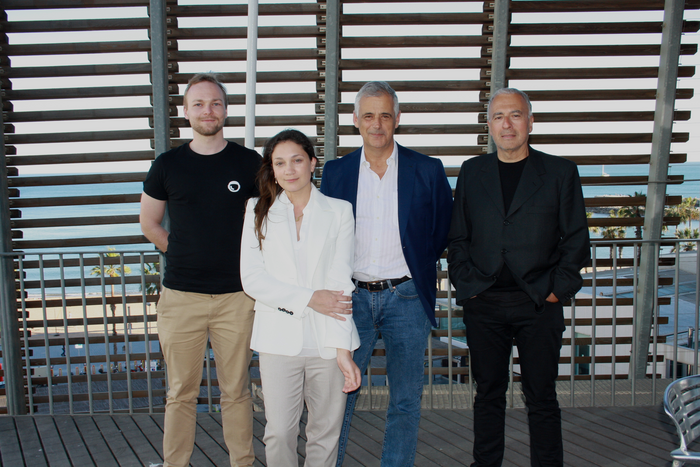
Credit: Centre for Genomic Regulation
From seed germination to healthy bones, all life processes on Earth are influenced by gravity. Studying biology in conditions where gravity forces are extremely low – for example in the International Space Station or other orbiting spacecraft – can reveal new fundamental insights about life on Earth, paving the way for new industrial applications.
A new collaboration between the Centre for Genomic Regulation (CRG), an international biomedical research institute in Barcelona, and yuri GmbH, a commercial space biotechnology company in Germany, will bring together researchers to harness the power of microgravity conditions in space and study its impact on human health, cells, and plant biology.
“In microgravity, certain biological processes can be accelerated, leading to the rapid maturation of organisms. This can be useful in many different life science fields, for example agriculture and food production research, as well as for drug discovery and treatment of various diseases,” explains Daniela Bezdan, Chief Scientific Officer at Yuri GmbH.
The collaboration’s initial lines of research will explore the potential of bacteria to survive and thrive in space environments. Eventually, the researchers will leverage the extreme conditions in space to create new strains of ‘space bacteria’, a process that could lead to the creation of materials and products never seen before with industrial applications ranging from new sources of energy to food production. The collaboration will begin by analyzing strains of ‘space bacteria’ that have been sourced from the International Space Station, with the samples expected to return for analysis to Barcelona on the 15th of April.
The projects will be guided by Daniela Bezdan, and Yuri researchers will join Roderic Guigó’s research group at the Centre for Genomic Regulation’s headquarters at the Barcelona Biomedical Research Park (PRBB). Dr. Guigó is Group Leader in the Computational Biology and Health Genomics research program.
Reacting to news of the agreement, Dr. Guigó says: “With the launch of its nanosatellite program, Catalonia is already emerging as a new player in the space economy. This collaboration will help partner our growing local expertise with ambitious global innovators with the objective of comprehensively understanding how extreme environments shape biology at the fundamental level. The long-term success of humanity may depend on it.”
“This is the first joint commercial space lab of its kind. These kinds of collaborations will be key to pushing humanity into the boundaries of space,” says Prof. Christopher Mason, Scientific Advisory Board member of yuri GmbH, Professor at Weill Cornell Medicine in New York, a PI for the NASA Twins Study, and Member of the National Academy of Sciences (NAS) Decadal Survey for Life and Physical Sciences Research in Space 2023-2032.
The collaboration is part of a wider trend of researchers using microgravity environments to learn more about the way the world around us works for the benefit of life on Earth. Microgravity experiments have already led to important advances in many other fields such as material sciences, for example through the creation of metals with unique mechanical and chemical properties for use in catalysts or turbine blades in jet engines.
Conducting microgravity experiments is getting increasingly accessible thanks to lower costs of sending materials into space. In recent years, yuri has established itself as a routine service provider, having launched more than 151 space experiments to the International Space Station to date in collaboration with organizations like NASA, ESA, GlaxoSmithKline and Charité Berlin University of Medicine Hospital. In early 2024, yuri is expected to launch ScienceTaxi, a life science incubator facility which will enable different types of microgravity experiments onboard spacecraft.
“This commercial agreement is one small step for space biology but one giant leap for the Centre for Genomic Regulation. Open, affordable access to experiments in low-orbit space offers are ushering in an exciting new era of research in space and Barcelona will play a role in that,” concludes Dr. Luis Serrano, Director of the Centre for Genomic Regulation.