A global maternal immunization program for group B Streptococcus – strep B – would save millions in healthcare costs by reducing death and disability, but without tiered pricing, equitable access would likely not be achieved. Several vaccines are currently under development, and an assessment of the impact and value of a global program is publishing March 14th in the open access journal PLOS Medicine. It finds that this could avert over 200,000 cases and more than 31,000 deaths, and reduce disability in children.
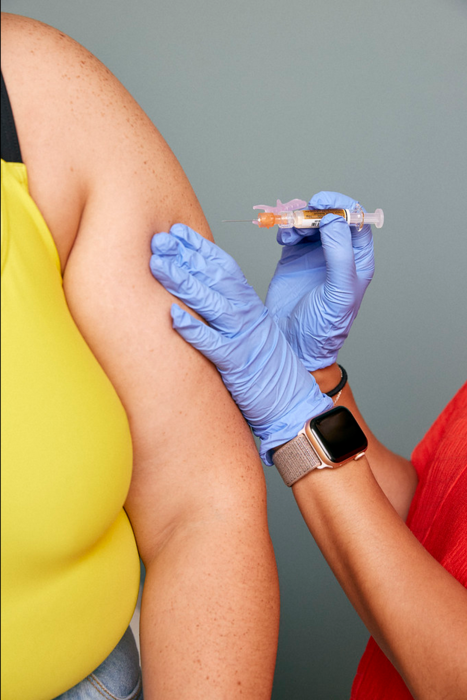
Credit: Heather Hazzan, SELF MAGAZINE (CC-BY 2.0, https://creativecommons.org/licenses/by/2.0/)
A global maternal immunization program for group B Streptococcus – strep B – would save millions in healthcare costs by reducing death and disability, but without tiered pricing, equitable access would likely not be achieved. Several vaccines are currently under development, and an assessment of the impact and value of a global program is publishing March 14th in the open access journal PLOS Medicine. It finds that this could avert over 200,000 cases and more than 31,000 deaths, and reduce disability in children.
Strep B can infect pregnant women and their babies, causing sepsis and meningitis in newborns, and sometimes leading to death or disability. It is linked to increased risks of stillbirth and preterm births. As vaccines get closer to approval, a global economic evaluation of vaccination will inform investment decisions in further vaccine development as well as guide fair financing and pricing.
Simon Procter of London School of Hygiene & Tropical Medicine, United Kingdom, and colleagues developed a model to assess the cost-effectiveness of Strep B vaccines in 140 million pregnant women in 183 countries in 2020. They used recent global estimates of the health burden of strep B in pregnant women and their children and estimated costs to healthcare systems, calculating quality-adjusted life years lost due to infant mortality and long-term disability.
Based on the World Health Organization’s published list of preferred features for a Strep B vaccine, the team assumed that the vaccine would prevent infection in 80% of women vaccinated, and that women receiving at least four antenatal visits would get vaccinated. They assumed a cost of $50 a dose in high income countries, $15 in upper-middle income and $3.50 in low- and lower-middle income countries. Vaccination could avert 127,000 early-onset and 87,300 late-onset infant iGBS cases, 31,100 deaths, 17,900 cases of moderate and severe neurodevelopmental impairment, and 23,000 stillbirths.
The study is limited by a lack of some data, such as on the impact of Step B on health-related quality of life and long-term costs of disability, but it estimates that a 1-dose vaccine program could cost $1.7 billion globally, while saving $385 million in healthcare costs. The team caution that regional sensitivities to vaccine prices could affect policy decisions and that tiered vaccine pricing would enable equitable access.
Dr. Procter adds, “By reducing severe GBS infections, an effective maternal GBS vaccine deployed worldwide could prevent tens of thousands of newborn deaths and stillbirths each year. Our findings suggest maternal vaccination against GBS could be cost-effective in most countries, and we hope this will encourage the further investment needed to bring GBS vaccines to market.”
#####
In your coverage, please use this URL to provide access to the freely available paper in PLOS Medicine: http://journals.plos.org/plosmedicine/article?id=10.1371/journal.pmed.1004068
Citation: Procter SR, Gonçalves BP, Paul P, Chandna J, Seedat F, Koukounari A, et al. (2023) Maternal immunisation against Group B Streptococcus: A global analysis of health impact and cost-effectiveness. PLoS Med 20(3): e1004068. https://doi.org/10.1371/journal.pmed.1004068
Author Countries: United Kingdom, Switzerland, China
Funding: SRP, BPG, PP, JC, FS, AK, JEL and MJ were supported by funding from a grant (INV-009018) to the London School of Hygiene & Tropical Medicine (PI JEL) from the Bill & Melinda Gates Foundation. The funders had no role in study design, data collection and analysis, decision to publish, or preparation of the manuscript.
Journal
PLoS Medicine
DOI
10.1371/journal.pmed.1004068
Method of Research
Computational simulation/modeling
Subject of Research
Not applicable
COI Statement
Competing interests: I have read the journal’s policy and the authors of this manuscript have the following competing interests: FS is employed by the UK NSC which developed the policy recommendation for maternal GBS screening. RH is member of the World Health Organisation.