• HOME
  • NEWS
  • EXPLORE
    • CAREER
      • Companies
      • Jobs
    • EVENTS
    • iGEM
      • News
      • Team
    • PHOTOS
    • VIDEO
    • WIKI
  • BLOG
  • COMMUNITY
    • FACEBOOK
    • INSTAGRAM
    • TWITTER
Saturday, February 7, 2026
BIOENGINEER.ORG
No Result
View All Result
  • Login
  • HOME
  • NEWS
  • EXPLORE
    • CAREER
      • Companies
      • Jobs
        • Lecturer
        • PhD Studentship
        • Postdoc
        • Research Assistant
    • EVENTS
    • iGEM
      • News
      • Team
    • PHOTOS
    • VIDEO
    • WIKI
  • BLOG
  • COMMUNITY
    • FACEBOOK
    • INSTAGRAM
    • TWITTER
  • HOME
  • NEWS
  • EXPLORE
    • CAREER
      • Companies
      • Jobs
        • Lecturer
        • PhD Studentship
        • Postdoc
        • Research Assistant
    • EVENTS
    • iGEM
      • News
      • Team
    • PHOTOS
    • VIDEO
    • WIKI
  • BLOG
  • COMMUNITY
    • FACEBOOK
    • INSTAGRAM
    • TWITTER
No Result
View All Result
Bioengineer.org
No Result
View All Result
Home NEWS Science News Health

Artificial intelligence with a human touch

Bioengineer by Bioengineer
February 28, 2023
in Health
Reading Time: 2 mins read
0
Hien Van Nguyen, University of Houston associate professor of electrical and computer engineering
Share on FacebookShare on TwitterShare on LinkedinShare on RedditShare on Telegram

Despite the remarkable progress in artificial intelligence (AI), several studies show that AI systems do not improve radiologists’ diagnostic performance. In fact, diagnostic errors contribute to 40,000 – 80,000 deaths annually in U.S. hospitals. This lapse creates a pressing need: Build next-generation computer-aided diagnosis algorithms that are more interactive to fully realize the benefits of AI in improving medical diagnosis. 
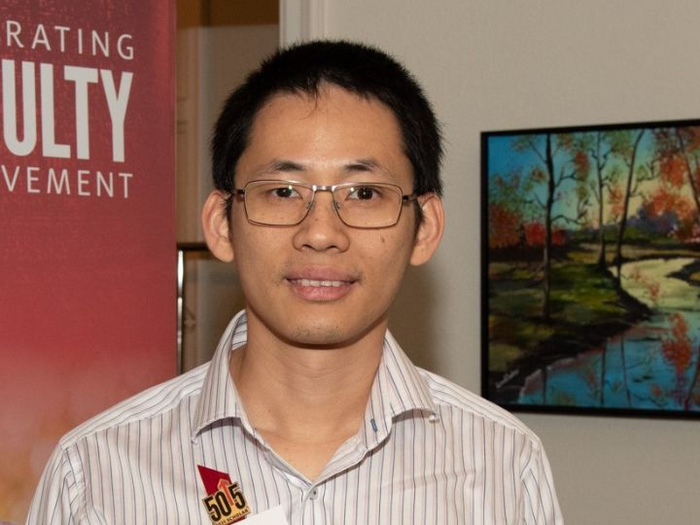
Hien Van Nguyen, University of Houston associate professor of electrical and computer engineering

Credit: University of Houston

Despite the remarkable progress in artificial intelligence (AI), several studies show that AI systems do not improve radiologists’ diagnostic performance. In fact, diagnostic errors contribute to 40,000 – 80,000 deaths annually in U.S. hospitals. This lapse creates a pressing need: Build next-generation computer-aided diagnosis algorithms that are more interactive to fully realize the benefits of AI in improving medical diagnosis. 

That’s just what Hien Van Nguyen, University of Houston associate professor of electrical and computer engineering, is doing with a new $933,812 grant from the National Cancer Institute. He will focus on lung cancer diagnostics. 

“Current AI systems focus on improving stand-alone performances while neglecting team interaction with radiologists,” said Van Nguyen. “This project aims to develop a computational framework for AI to collaborate with human radiologists on medical diagnosis tasks.” 

That framework uses a unique combination of eye-gaze tracking, intention reverse engineering and reinforcement learning to decide when and how an AI system should interact with radiologists. 

To maximize time efficiency and minimize the amount of distraction on the clinical work, Van Nguyen is designing a user-friendly and minimally interfering interface for radiologist-AI interaction.  

The project evaluates the approaches on two clinically important applications: lung nodule detection and pulmonary embolism. Lung cancer is the second most common cancer, and pulmonary embolism is the third most common cause of cardiovascular death.  

“Studying how AI can help radiologists reduce these diseases’ diagnostic errors will have significant clinical impacts,” said Van Nguyen. “This project will significantly advance the knowledge of the field by addressing important, but largely under-explored questions.”  

The questions include when and how AI systems should interact with radiologists and how to model radiologist visual scanning process. 

“Our approaches are creative and original because they represent a substantive departure from the existing algorithms. Instead of continuously providing AI predictions, our system uses a gaze-assisted reinforcement learning agent to determine the optimal time and type of information to present to radiologists,” said Van Nguyen.  

“Our project will advance the strategies for designing user interfaces for doctor-AI interaction by combining gaze-sensing and novel AI methodologies.”  



Share12Tweet8Share2ShareShareShare2

Related Posts

Barriers and Boosters of Seniors’ Physical Activity in Karachi

February 7, 2026

Evaluating Pediatric Emergency Care Quality in Ethiopia

February 7, 2026

TPMT Expression Predictions Linked to Azathioprine Side Effects

February 7, 2026

Improving Dementia Care with Enhanced Activity Kits

February 7, 2026

POPULAR NEWS

  • Robotic Ureteral Reconstruction: A Novel Approach

    Robotic Ureteral Reconstruction: A Novel Approach

    82 shares
    Share 33 Tweet 21
  • Digital Privacy: Health Data Control in Incarceration

    63 shares
    Share 25 Tweet 16
  • Study Reveals Lipid Accumulation in ME/CFS Cells

    57 shares
    Share 23 Tweet 14
  • Breakthrough in RNA Research Accelerates Medical Innovations Timeline

    53 shares
    Share 21 Tweet 13

About

We bring you the latest biotechnology news from best research centers and universities around the world. Check our website.

Follow us

Recent News

Barriers and Boosters of Seniors’ Physical Activity in Karachi

Evaluating Pediatric Emergency Care Quality in Ethiopia

TPMT Expression Predictions Linked to Azathioprine Side Effects

Subscribe to Blog via Email

Enter your email address to subscribe to this blog and receive notifications of new posts by email.

Join 73 other subscribers
  • Contact Us

Bioengineer.org © Copyright 2023 All Rights Reserved.

Welcome Back!

Login to your account below

Forgotten Password?

Retrieve your password

Please enter your username or email address to reset your password.

Log In
No Result
View All Result
  • Homepages
    • Home Page 1
    • Home Page 2
  • News
  • National
  • Business
  • Health
  • Lifestyle
  • Science

Bioengineer.org © Copyright 2023 All Rights Reserved.