“The definition of low-risk WNT-pathway medulloblastoma may need to be refined in light of recent clinical data and newer biological information.”
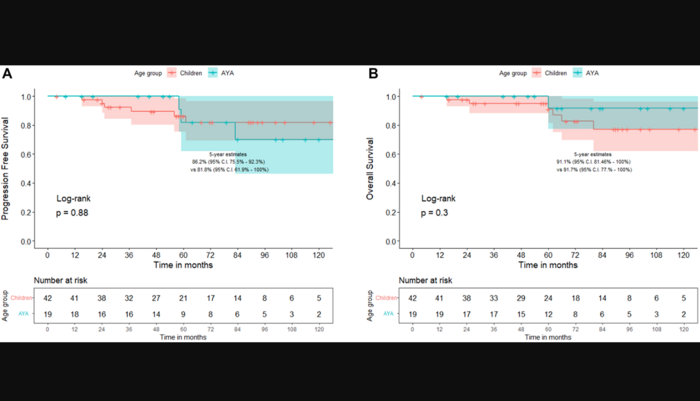
Credit: 2023 Mani et al.
“The definition of low-risk WNT-pathway medulloblastoma may need to be refined in light of recent clinical data and newer biological information.”
BUFFALO, NY- February 27, 2023 – A new research perspective was published in Oncotarget’s Volume 14 on February 7, 2023, entitled, “WNT-pathway medulloblastoma: what constitutes low-risk and how low can one go?”
Novel biological insights have established that medulloblastoma is a heterogenous disease comprising four broad molecular subgroups – WNT, SHH, Group 3, and Group 4 respectively, resulting in the incorporation of molecular/genetic information in 5th edition of WHO classification and contemporary risk-stratification. Concerns regarding therapy-related late toxicity in long-term survivors have led to systematic attempts at treatment de-intensification in good-risk medulloblastoma.
Given the excellent survival (>90%) of WNT-pathway medulloblastoma, prospective clinical trials have focused on optimization of therapy to balance survival versus quality of survival. The currently accepted definition of low-risk WNT-pathway medulloblastoma includes children <16 years of age with residual tumour <1.5 cm2 and no evidence of metastases. This systematically excludes adolescents and young adults who have been perceived to have worse outcomes.
In a previous study, researchers Shakthivel Mani, Abhishek Chatterjee, Archya Dasgupta, Neelam Shirsat, Sridhar Epari, Girish Chinnaswamy, and Tejpal Gupta from Homi Bhabha National Institute (HBNI) in Mumbai, India, reported long-term survival of an adolescent and young adult cohort that was largely comparable to childhood medulloblastoma. In their current research perspective, the researchers now report on molecularly characterized WNT-subgroup patients treated between 2004–2020 with risk-stratified multi-modality therapy to identify differences between childhood (<15 years) versus adolescent and young adults (>15 years).
Despite modest differences in disease status at presentation and treatment modality, there were no significant differences in patterns of failure or survival between childhood versus adolescent and young adult WNT-pathway medulloblastoma. Two de-intensification trials in low-risk WNT-pathway medulloblastoma – first testing omission of upfront craniospinal irradiation and second a primary chemotherapy approach after surgery – had to be terminated prematurely due to unacceptably high relapse rates suggesting that craniospinal irradiation remains an integral component of treatment. The presence of TP53 mutations and OTX2 gains have recently been reported as independent negative prognostic factors in a multi-institutional cohort of WNT-pathway medulloblastoma, raising questions on eligibility of such patients for de-escalation trials.
“Concerns regarding therapy-related late toxicity have prompted systematic attempts at treatment de-intensification in good-risk MB over the last four decades. However, results of prior studies should be used to inform and guide controlled de-intensification of therapy even in low-risk and favourable biology disease. The definition of low-risk WNT-MB may need to be further refined in light of recent clinical data and newer biological information.”
DOI: https://doi.org/10.18632/oncotarget.28360
Correspondence to: Tejpal Gupta
Email: [email protected]
Keywords: de-intensification, medulloblastoma, molecular, survival, toxicity
About Oncotarget: Oncotarget (a primarily oncology-focused, peer-reviewed, open access journal) aims to maximize research impact through insightful peer-review; eliminate borders between specialties by linking different fields of oncology, cancer research and biomedical sciences; and foster application of basic and clinical science.
To learn more about Oncotarget, visit Oncotarget.com and connect with us on social media:
- YouTube
- LabTube
- Soundcloud
For media inquiries, please contact: [email protected].
Oncotarget Journal Office
6666 East Quaker Str., Suite 1A
Orchard Park, NY 14127
Phone: 1-800-922-0957 (option 2)
###
Journal
Oncotarget
DOI
10.18632/oncotarget.28360
Method of Research
Commentary/editorial
Subject of Research
People
Article Title
WNT-pathway medulloblastoma: what constitutes low-risk and how low can one go?
Article Publication Date
7-Feb-2023