• HOME
  • NEWS
  • EXPLORE
    • CAREER
      • Companies
      • Jobs
    • EVENTS
    • iGEM
      • News
      • Team
    • PHOTOS
    • VIDEO
    • WIKI
  • BLOG
  • COMMUNITY
    • FACEBOOK
    • INSTAGRAM
    • TWITTER
Friday, July 10, 2026
BIOENGINEER.ORG
No Result
View All Result
  • Login
  • HOME
  • NEWS
  • EXPLORE
    • CAREER
      • Companies
      • Jobs
        • Lecturer
        • PhD Studentship
        • Postdoc
        • Research Assistant
    • EVENTS
    • iGEM
      • News
      • Team
    • PHOTOS
    • VIDEO
    • WIKI
  • BLOG
  • COMMUNITY
    • FACEBOOK
    • INSTAGRAM
    • TWITTER
  • HOME
  • NEWS
  • EXPLORE
    • CAREER
      • Companies
      • Jobs
        • Lecturer
        • PhD Studentship
        • Postdoc
        • Research Assistant
    • EVENTS
    • iGEM
      • News
      • Team
    • PHOTOS
    • VIDEO
    • WIKI
  • BLOG
  • COMMUNITY
    • FACEBOOK
    • INSTAGRAM
    • TWITTER
No Result
View All Result
Bioengineer.org
No Result
View All Result
Home NEWS Science News Biology

Ancestral variation guides future environmental adaptations

Bioengineer by Bioengineer
January 27, 2023
in Biology
Reading Time: 3 mins read
0
A clump of sea campions next to some thrift or sea pinks.
Share on FacebookShare on TwitterShare on LinkedinShare on RedditShare on Telegram

The speed of environmental change is very challenging for wild organisms. When exposed to a new environment individual plants and animals can potentially adjust their biology to better cope with new pressures they are exposed to – this is known as phenotypic plasticity.
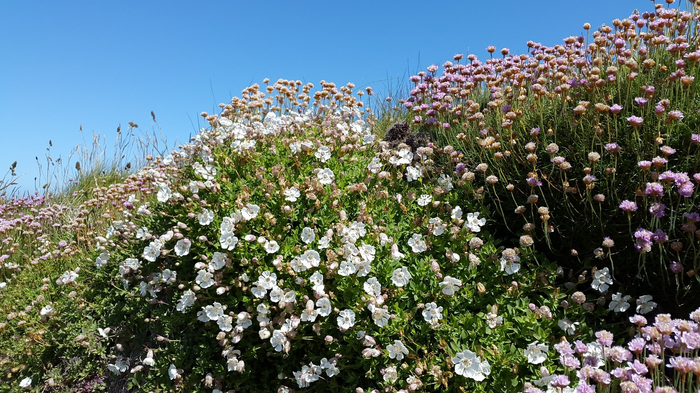
A clump of sea campions next to some thrift or sea pinks.

Credit: Bangor University

The speed of environmental change is very challenging for wild organisms. When exposed to a new environment individual plants and animals can potentially adjust their biology to better cope with new pressures they are exposed to – this is known as phenotypic plasticity.

Plasticity is likely to be important in the early stages of colonising new places or when exposed to toxic substances in the environment. New research published in Nature Ecology & Evolution, shows that early plasticity can influence the ability to subsequently evolve genetic adaptations to conquer new habitats.

Sea campion, a coastal wildflower from the UK and Ireland has adapted to toxic, zinc rich industrial-era mining waste which kills most other plant species. The zinc-tolerant plants have evolved from zinc-sensitive, coastal populations separately in different places, several times.

To understand the role of plasticity in rapid adaptation, a team of researchers lead by Bangor University conducted experiments on sea campion.

As zinc-tolerance has evolved several times, this gave the researchers the opportunity to investigate whether ancestral plasticity made it more likely that the same genes would be used by different populations that were exposed to the same environment.

By exposing the tolerant and sensitive plants to both benign and zinc contaminated environments and measuring changes in the expression of genes in the plant’s roots, the researchers were able to see how plasticity in the coastal ancestors has paved the way for adaptation to take place very quickly.

Dr Alex Papadopulos, senior lecturer at Bangor University explained:

“Sea campion usually grow on cliffs and shingle beaches, but mining opened up a new niche for them that other plants weren’t able to exploit. Our research has shown that some of the beneficial plasticity in the coastal plants has helped the mine plants to adapt so quickly.”

Alex added,

“Remarkably, if a gene responds to the new environment in a beneficial way in the ancestral plants, it is much more likely that that gene will be reused in all of the lineages that are independently adapting to the new environment. Phenotypic plasticity may make it more likely that there would be the same evolutionary outcome if the tape of life were replayed. If we understand the plastic responses that species have to environmental change, we may be better equipped to predict the impacts of climate change on biodiversity.”


Journal

Nature Ecology & Evolution

DOI

10.1038/s41559-022-01975-w

Method of Research

Experimental study

Subject of Research

Cells

Article Title

Genetic assimilation of ancestral plasticity during parallel adaptation to zinc contamination in Silene uniflora

Article Publication Date

26-Jan-2023

COI Statement

The authors declare no competing interests

Share12Tweet8Share2ShareShareShare2

Related Posts

Drosophila as a Key Genetic Model for Studying Extracellular Vesicles

Drosophila as a Key Genetic Model for Studying Extracellular Vesicles

July 10, 2026
BU receives $4.6M grant to advance lung science research training

BU receives $4.6M grant to advance lung science research training

July 10, 2026

Unmedicated Depressed Women Show Reduced Heat Tolerance Compared to SSRI Users

July 10, 2026

Balancing Pollinator Protection and Climate Change Efforts

July 9, 2026

POPULAR NEWS

  • Detection of EDCs in Breast Milk and Infant Urine Up to Six Months Highlights Early Exposure Risks

    77 shares
    Share 31 Tweet 19
  • New Drug Candidate Developed at McMaster Shows Potential for Treating Brain Cancer

    58 shares
    Share 23 Tweet 15
  • KTU Researchers Explore Ultrasound’s Role in Enhancing Blood Flow Beyond Diagnostics

    53 shares
    Share 21 Tweet 13
  • 高齢者の骨粗鬆症治療の持続性比較

    51 shares
    Share 20 Tweet 13

About

We bring you the latest biotechnology news from best research centers and universities around the world. Check our website.

Follow us

Recent News

Studying Oral Inflammation Reveals Insights into Other Human Diseases

Solar Oscillations, Flares, and Tornadoes Unveiled by Scientists

Ear Acupuncture Shows Promise for Migraine Relief

Subscribe to Blog via Email

Enter your email address to subscribe to this blog and receive notifications of new posts by email.

Join 84 other subscribers
  • Contact Us

Bioengineer.org © Copyright 2023 All Rights Reserved.

Welcome Back!

Login to your account below

Forgotten Password?

Retrieve your password

Please enter your username or email address to reset your password.

Log In
No Result
View All Result
  • Homepages
    • Home Page 1
    • Home Page 2
  • News
  • National
  • Business
  • Health
  • Lifestyle
  • Science

Bioengineer.org © Copyright 2023 All Rights Reserved.