Spring is the sweet spot for breeding songbirds in California’s Central Valley – not too hot, not too wet. But climate change models indicate the region will experience more rainfall during the breeding season, and days of extreme heat are expected to increase. Both changes threaten the reproductive success of songbirds, according to a study from the University of California, Davis.
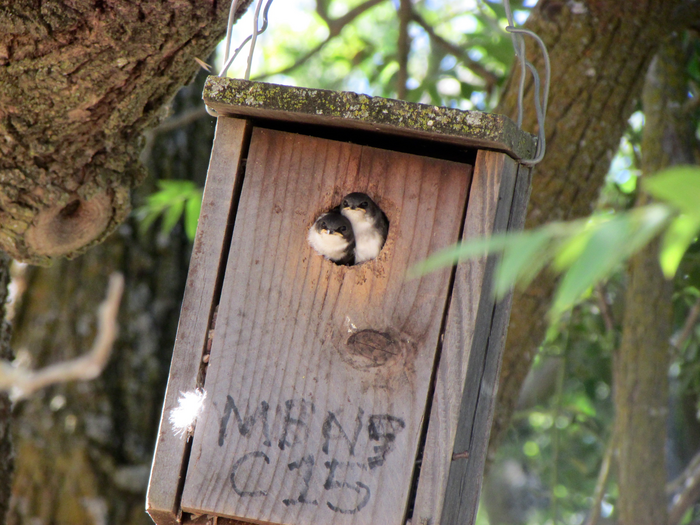
Credit: (Evelien de Greef, UC Davis)
Spring is the sweet spot for breeding songbirds in California’s Central Valley – not too hot, not too wet. But climate change models indicate the region will experience more rainfall during the breeding season, and days of extreme heat are expected to increase. Both changes threaten the reproductive success of songbirds, according to a study from the University of California, Davis.
The study, published January 16 in the journal Biological Conservation, details how extreme heat and rainfall patterns have impacted songbirds along the Putah Creek Nestbox Highway in Yolo County.
While centered in the Central Valley, the study serves as a warning for other Mediterranean ecosystems.
“The changes happening in California’s Central Valley — increasing temperatures, wetter springs, greater variability — those impacts are happening across Mediterranean landscapes,” said lead author Jason Riggio, a postdoctoral scholar with the UC Davis Museum of Wildlife and Fish Biology. “In spaces where birds are already in an extremely variable climate, small changes will make a big difference.”
The study also offers signs that some birds adapt to modified systems. For example, western bluebirds and tree swallows are finding as much reproductive success in orchards near Putah Creek as in their natural habitat. For these species, the orchards are not the ecological traps researchers initially expected them to be. Other species prefer to build their homes in riparian forest and grassland habitats.
Nestboxes of data
Climate models predict that regional precipitation is expected to decrease from October-January and to increase from February-April – pushing into the birds’ breeding season. Also, an estimated 5.4 degrees Fahrenheit (3 degrees Celsius) increase in average maximum temperature by 2100 will challenge species already at their temperature limits.
To study the impacts of these changes on songbirds, the researchers analyzed 11 years-worth of data collected by Nestbox Highway project staff and its cadre of undergraduate interns from the UC Davis Museum of Fish and Wildlife. This included 2,305 nesting attempts and more than 7,100 nestlings across four species of cavity-nesting songbirds – western bluebirds, house wrens, tree swallows and ash-throated flycatchers.
They found that bird fitness declined amid extreme precipitation or temperatures. Wetter nesting periods lowered reproductive success and nestling weight in house wrens, tree swallows and western bluebirds. Higher temperatures during the breeding season also resulted in lower reproductive success and nestling weight for all four species.
“Across these results, it appears the effects of climate change in California’s Central Valley —and in Mediterranean systems globally – are likely to have broad and mostly negative impacts on cavity-nesting songbird reproduction,” Riggio said.
He adds that there are still pockets of songbirds doing well in both natural and modified habitats, and that protecting the fragments of habitat left can benefit species confronting environmental changes.
Build a box, bring back a bird
Study co-author Melanie Truan, a research ecologist with the UC Davis Museum of Wildlife and Fish Biology, began the Nestbox Highway in 2000 as a graduate student in an effort to bring songbirds back to Putah Creek.
Many native cavity-nesting songbirds had lost their nesting opportunities as non-native birds increased and as large trees with the holes they favored were replaced by agricultural and other land uses. Western bluebirds, once abundant in the region, had become largely non-existent in the area.
One hundred nest boxes were installed that first year, attracting a family of bluebirds, among other birds. Now, more than 200 boxes draw hundreds of bluebirds—and several other bird species—to Putah Creek and the surrounding region. Staff and undergraduate interns check the boxes weekly to record the progress of nesting attempts, eggs and nestlings. Before fledging, all nestlings are measured and banded.
“The Nestbox Highway project is the most uplifting and encouraging part of what I do,” said Truan. “I’m so happy this project that started as a let’s-see-what-happens conservation and education project is turning into something that can provide data for research.”
The study also highlights the importance of long-term data sets to help unravel the impacts of climate and land-use change on birds and other species.
The study’s additional coauthors include Andrew Engilis Jr., Hanika Cook, Evelien de Greef and Daniel Karp of UC Davis.
The study was funded by the Solano County Water Agency. It would not have been possible without the support of participating landowners and land managers, and the interns and staff of the UC Davis Museum of Wildlife and Fish Biology.
Journal
Biological Conservation
DOI
10.1016/j.biocon.2022.109885
Method of Research
Meta-analysis
Article Title
Long-term monitoring reveals the impact of changing climate and habitat on the fitness of cavity-nesting songbirds
Article Publication Date
16-Jan-2023